%20(2)_edited.png)

What Are Behavioral Assessments? A Guide to Proactive Risk Prevention

At its core, a behavioral assessment is a structured method for a company to understand how a potential or current employee might act in specific situations, especially in sensitive roles. For decision-makers in Compliance, Risk, and HR, it's a tool for proactively managing human-factor risk—not a way to conduct psychological profiling or "catch" employees doing something wrong.
The new standard in ethical assessments is designed to identify potential conflicts of interest, compliance gaps, or insider risks before they escalate into costly business liabilities.
What Are Behavioral Assessments in a Modern Business?
When leaders in HR, Compliance, and Risk ask about behavioral assessments, they’re seeking a reliable method to gauge how an individual might behave on the job. These tools are built to offer insights into a person's tendencies around integrity, decision-making, and adherence to company policy, directly impacting governance and reputation protection.
The goal isn't to judge someone's character. It's to identify behavioral patterns that could introduce human-factor risk into the organization. For example, an assessment might reveal a tendency to bypass protocols under pressure or a disposition that could lead to a conflict of interest. That kind of information is invaluable for proactive internal threat detection and prevention.
Moving Beyond Outdated and Invasive Methods
Let's be clear—in the past, some assessments felt more like interrogations. They bordered on invasive or coercive techniques, creating a minefield of legal and ethical issues. But the field has evolved. Today’s leading solutions are all about ethical, non-intrusive methods that respect employee dignity and comply with strict regulations like the Employee Polygraph Protection Act (EPPA).
This modern approach is defined by what it doesn’t do:
No Surveillance: It is not about secretly monitoring or spying on employees.
No Coercion: It avoids any kind of psychological pressure or aggressive questioning.
No Lie Detection: It is absolutely not a polygraph replacement and makes no claims about "truthfulness" or "honesty."
Instead, platforms like Logical Commander provide a framework for understanding professional conduct and human-factor risk in a controlled, respectful way. For instance, our tools explore how an individual approaches ethical dilemmas, giving the company business-critical insight without passing moral judgment. You can explore many of our articles on modern integrity assessments to see how this works in practice.
A Surging Market for Ethical Solutions
The demand for these advanced, compliant tools is exploding. The global behavioral assessment market hit roughly $3.5 billion in 2025 and is projected to grow at a powerful compound annual growth rate of 12% through 2033. This isn't just a trend; it's a clear signal that enterprises are prioritizing proactive and responsible governance to mitigate internal threats.
Modern assessments also go beyond just technical skills. A great example is understanding emotional intelligence—the ability to manage one's own emotions and recognize them in others. This has become a critical factor in evaluating how well an employee might handle the complex, human-to-human dynamics of the workplace.
By focusing on observable behaviors and professional conduct rather than trying to analyze someone's psyche, modern assessments give organizations the tools to prevent internal risk without resorting to invasive or legally questionable tactics. This is the new standard for ethical risk management.
Why Traditional Assessments Create Unacceptable Business Risks
Wanting to understand employee behavior is a sound business goal. How you get there, however, is where things can go sideways, fast. Many traditional behavioral assessments are built on outdated, intrusive methods that aren't just ethically questionable—they're a legal minefield, exposing your organization to massive liability.

These legacy tools often wander dangerously close to lie detection or coercive analysis, putting them in direct violation of federal law. This isn't a minor compliance footnote; it's a strategic flaw that can trigger severe penalties, poison employee morale, and, ironically, deliver completely unreliable data that fails to prevent internal threats.
The EPPA Compliance Minefield
The Employee Polygraph Protection Act (EPPA) is a federal law with teeth. It strictly forbids most private employers from using lie detector tests for hiring or during employment. The problem is, many companies unknowingly bring in tools that function as de facto lie detectors, creating a huge and costly compliance gap.
So, what counts as an EPPA-sensitive practice? It’s not just about hooking someone up to a machine. An assessment falls into this category if it:
Uses psychological pressure or coercive tactics to guess if someone is being truthful.
Claims it can measure honesty or detect deception.
Frames employees as suspects or tries to interrogate them.
Even without a traditional polygraph, using methods that check these boxes can spark costly lawsuits, regulatory fines, and do irreparable harm to your company’s reputation and ability to attract top talent.
An assessment that creates an atmosphere of distrust or feels like an interrogation is not a risk management tool; it is a liability. It erodes the psychological safety necessary for a healthy and productive workforce, directly impacting retention, engagement, and the bottom line.
The Flawed Logic of Intrusive Methods
Legal dangers aside, intrusive assessments are just bad business strategy. When employees feel like they’re being judged, monitored, or put under a microscope, they naturally become guarded. This leads to poor data quality, which makes the whole exercise useless for genuine internal threat detection.
This flawed, reactive approach creates a vicious cycle of negative business impacts:
Erosion of Trust: Intrusive tools send a clear message: "We don't trust you." This makes employees feel undervalued and disengaged.
Increased Turnover: Top talent won't stick around in an environment that treats them with suspicion, driving up recruitment and training costs.
Unreliable Insights: Data gathered under duress is skewed. It can give you a false sense of security or, even worse, lead to poor personnel decisions based on flawed intelligence.
These outdated tools are fundamentally reactive. They’re designed to "catch" bad actors instead of proactively identifying the behavioral risk indicators that lead to misconduct in the first place.
A New Standard for Ethical Risk Management
Relying on legacy assessments is like using a sledgehammer to perform surgery. It’s clumsy, destructive, and creates more problems than it solves. The modern answer to what are behavioral assessments has to be built on ethical, non-intrusive, and EPPA-compliant platforms.
Instead of trying to police their staff, forward-thinking organizations are adopting AI human risk mitigation tools that analyze risk indicators without resorting to invasive tactics. These systems focus on professional conduct and alignment with company policies, helping to spot potential conflicts of interest or compliance risks before they blow up. This proactive stance doesn't just keep you on the right side of the law; it builds a resilient and ethical company culture. It shifts the focus from punitive reaction to intelligent prevention, protecting both the company and its most valuable asset—its people.
The Proactive Shift to AI-Driven Risk Prevention
The old way of using behavioral assessments is dying, and for good reason. The legal exposure and complete erosion of employee trust that come with traditional tools have forced a much-needed change. Forward-thinking companies are moving on. They're making a proactive shift to AI-driven risk prevention, leaving the flawed "catch them in the act" mentality behind for a smarter, more ethical model that protects the bottom line.
Think of your internal risk strategy like fire safety. Outdated methods are the fire alarm—it screams for help only after the fire has started and the damage is well underway. Modern, ethical AI platforms are the advanced smoke detectors. They give you early, actionable warnings so you can address the human-factor risk before it ever ignites into a full-blown crisis.
The New Standard in Ethical Risk Management
This proactive approach isn't about surveillance or policing employees. It's about using AI to analyze behavioral risk indicators in a structured, non-intrusive, and EPPA-compliant way. Platforms like Logical Commander's E-Commander module are setting a new benchmark by focusing on observable, work-related behavioral patterns, not by trying to psychoanalyze an individual.
This method delivers powerful business benefits that reactive tools just can't touch:
Early Identification: It flags potential conflicts of interest, integrity risks, or misconduct concerns at the earliest possible stage, preventing financial and reputational loss.
Actionable Intelligence: It gives leaders clear, ethical intelligence to make informed decisions, not ambiguous data from coercive tools.
Reputation Protection: By preventing incidents before they happen, it safeguards your brand from the reputational damage of a public scandal.
This strategic shift is fueling explosive market growth. The behavior analytics market is projected to skyrocket from USD 6.26 billion in 2025 to USD 15.22 billion by 2030. This surge is a direct result of old-school surveillance failing under tighter privacy laws and the urgent need for ethical alternatives. You can find more insights on this trend in Mordor Intelligence's full report on the behavior analytics market.
How AI Delivers Prevention Without Intrusion
The power of this modern approach lies in its methodology. Instead of monitoring employee communications or using high-pressure questioning, ethical AI platforms use sophisticated algorithms to analyze data from structured, non-coercive interactions. The system identifies patterns that correlate with known risk indicators—like a tendency to disregard compliance protocols or an inclination toward conflicts of interest—all starting and finishing with the human factor, not cyber data.
This technology empowers organizations to move from a state of reactive damage control to proactive risk mitigation. The goal is to prevent financial loss and protect the organization's integrity while upholding the dignity and privacy of its workforce.
The focus is always on professional conduct and its potential impact on the business. This keeps the entire process objective, fair, and perfectly aligned with the principles of good governance. To get a deeper look at the frameworks that make this possible, you can explore our articles covering key topics in AI ethics.
For specific examples of companies leading this proactive shift to AI-driven risk prevention, consider offerings like those from Parakeet AI.
Ultimately, AI-driven prevention is more than a tech upgrade; it's a fundamental change in philosophy. It redefines what are behavioral assessments, transforming them from a high-risk, reactive tool into a strategic asset for building a more resilient, ethical, and secure organization. In a world where internal threats are a primary business risk, this is the new competitive advantage.
Implementing a Compliant Behavioral Assessment Program
Launching a behavioral assessment program isn't just about rolling out new software; it's a strategic move that demands careful planning to be both effective and ethical. For leaders in Compliance, HR, and Risk, the mission is to build a system that gets ahead of human-factor risk without creating new legal headaches or torpedoing employee morale. Success hinges on sharp objectives, rigorous vendor selection, and crystal-clear communication.
The first step is to move away from a vague desire for "better insights" and define the exact, business-critical risks you're trying to shut down. Vague goals get you generic, ineffective solutions. Targeted objectives, on the other hand, deliver real, measurable value and a clear ROI.
Defining Your Objectives and Scope
Before you even look at a single platform, your leadership team must be aligned on the program’s purpose. Are you trying to stamp out internal fraud in the finance department? Mitigate conflicts of interest among senior executives? Or ensure safety protocols are followed to the letter in your operational roles?
When your goals are clearly defined, you can tailor the scope of the program with precision. For instance:
For hiring: Focus assessments on roles that require high levels of integrity or involve access to sensitive data, like finance managers or IT administrators.
For promotions: Use assessments to spot behavioral indicators crucial for leadership, like sound decision-making under pressure or a solid commitment to ethical governance.
For ongoing risk management: Implement periodic assessments for employees in high-risk positions to ensure they remain aligned with your compliance standards over time.
This targeted approach doesn't just make the program more effective; it also makes it far more defensible from a legal and ethical standpoint. It shows a clear business necessity for asking employees to participate in the first place.
Selecting an EPPA-Aligned Vendor
Choosing the right technology partner is the single most critical decision you'll make. With the steep penalties that come with violating the Employee Polygraph Protection Act (EPPA), your number-one filter must be compliance. A lot of vendors throw around vague claims about being "ethical," but you need to dig much deeper.
When you're vetting potential Risk Assessments Software vendors, ask them pointed questions about their methods and technology:
How does your platform analyze behavioral risk without using coercive tactics or psychological pressure?
What specific measures do you take to guarantee your assessments don't function as de facto lie detectors?
Can you show me documentation on how your AI models are built to be non-intrusive and respect employee privacy?
How is our data stored, who can access it, and what are your data destruction policies?
If a vendor can't give you clear, confident answers, that's a massive red flag. Real compliance isn't a marketing buzzword; it's baked into the core architecture of the platform. For a detailed look at what genuine compliance entails, you can review Logical Commander's comprehensive EPPA Compliance Statement.
To make this distinction clearer, here's a direct comparison of the old way versus the new standard of ethical risk management.
Traditional vs Modern Ethical Assessment Platforms
Feature | Traditional High-Risk Assessments | Logical Commander's Ethical Platform |
|---|---|---|
Methodology | Often relies on intrusive psychological profiling or "truth verification" that mimics polygraphs. | Uses non-intrusive, AI-driven analysis of risk indicators through consent-based interactions. |
EPPA Compliance | High risk of violating EPPA, leading to severe legal and financial penalties. | Designed from the ground up to be 100% EPPA-compliant, avoiding all prohibited practices. |
Employee Experience | Creates suspicion, anxiety, and a culture of distrust. Feels invasive and punitive. | Fosters a culture of integrity and transparency. Respects employee dignity and privacy. |
Focus | Reactive and often used after an incident, creating a "guilty until proven innocent" environment. | Proactive and preventive, focused on identifying potential risks before they cause harm. |
Data & Insights | Can produce subjective, legally indefensible data that is difficult to act on responsibly. | Delivers objective, actionable intelligence that supports fair and consistent decision-making. |
This table highlights a fundamental shift. It's about moving away from legally dubious methods that create a toxic work environment and toward a modern, ethical approach that protects both the company and its people.
Communicating with Transparency and Purpose
How you introduce a behavioral assessment program to your team is just as important as the tech you choose. Botch the communication, and you'll breed suspicion and resentment, painting the whole initiative as a punitive surveillance tool. Instead, it needs to be framed for what it is: a protective measure for both the company and its employees.
The infographic below illustrates how modern, AI-driven platforms achieve proactive risk prevention—a key message for your workforce.
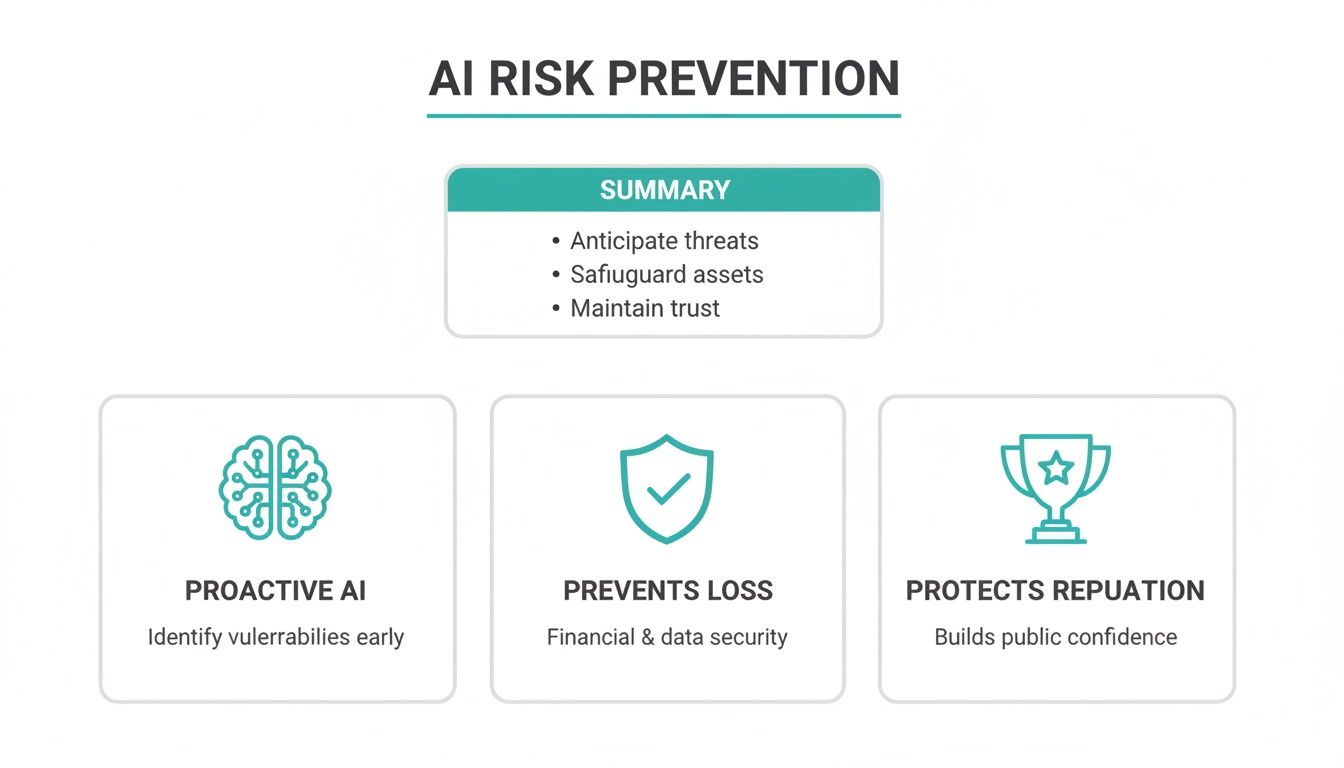
This visual makes it clear that the goal isn't to police individuals. It's about using proactive intelligence to prevent loss and protect everyone's reputation.
Your communication strategy has to be built on a foundation of transparency. Explain what the program is, what it isn't, and exactly why it’s being implemented. Emphasize that it's a tool to uphold the organization's shared values and ensure a fair, safe, and ethical work environment for everyone. When employees understand the "why" and see the program as a part of good governance rather than a tool of distrust, they are far more likely to engage with it constructively.
Calculating the High Cost of Reactive Investigations
Waiting for an internal threat to fully materialize before acting is a gamble no modern organization can afford to take. It’s an outdated and dangerous strategy that exposes you to staggering financial, operational, and reputational damage. Kicking off an investigation only after the harm is done is like calling the fire department once the building has already burned to the ground.

The costs start piling up immediately, and they go way beyond a single line item on a budget. Leaders in Compliance and Risk need to understand the full spectrum of consequences that come from a failure to prevent human-factor risk.
The Direct Financial Drain of Reaction
The most obvious costs are the direct financial haymakers an organization takes when it’s forced to react to misconduct. These hits are immediate, tangible, and often astronomical, draining resources that should have been fueling growth and innovation.
Key direct costs include:
Legal and Forensic Fees: The moment you hire external counsel and forensic accountants to piece together what went wrong, the meter starts running. These investigations can drag on for months, racking up massive bills.
Regulatory Fines: Non-compliance with industry regulations can trigger crippling fines from government bodies, often hitting millions of dollars for serious breaches.
Settlements and Judgments: Lawsuits from clients, shareholders, or employees can lead to incredibly costly settlements or court-ordered payments.
These expenses are just the tip of the iceberg. The real damage runs much deeper, impacting the very foundation of the business. You can explore a full breakdown in our guide on the true cost of reactive investigations.
The Hidden Costs That Cripple Operations
Beyond the immediate financial bleed, a reactive stance inflicts severe indirect damage. These hidden costs disrupt day-to-day operations, destroy morale, and can take years to fix—if they can be fixed at all.
This operational fallout shows up in several ways:
Reputational Harm: A public scandal involving internal fraud or misconduct can demolish decades of brand trust overnight. Winning that trust back is a long, expensive, and uncertain road.
Lost Client Confidence: Clients, especially in regulated industries, demand stability and integrity. An internal incident signals a lack of control, often sending them straight to your competitors.
Employee Morale Collapse: Investigations create a climate of suspicion and anxiety. Productivity plummets, and you start losing top talent who refuse to work in a toxic environment.
The failure of traditional forensic investigations isn't just a financial issue; it's a strategic one. They are slow, disruptive, and often inconclusive, leaving organizations exposed to future incidents while damaging the internal culture.
The market’s rapid expansion reflects this urgent need for better tools. The broader assessment services market, which includes what are behavioral assessments, was valued at $12.03 billion in 2025 and is projected to more than double to $25.24 billion by 2033. This growth is driven by rising misconduct rates and the corporate world's pivot toward proactive, integrity-focused risk management. Discover more about this trend in SkyQuest's market analysis.
Ultimately, clinging to a reactive posture is an unsustainable risk. The only logical path forward is to adopt a proactive, preventive model—one that leverages ethical risk management platforms like E-Commander to mitigate human-factor risks before they escalate into crises. This shift doesn't just save money; it builds a more resilient and trustworthy organization from the inside out.
Partner with Us to Lead in Ethical Risk Prevention
Once you understand what behavioral assessments really are, the line between outdated, high-risk methods and the new standard of ethical, AI-driven prevention becomes crystal clear. While traditional tools open you up to legal exposure and destroy employee trust, a proactive approach built on EPPA compliant platforms protects your organization from the inside out.
Logical Commander is at the forefront of this movement, offering a solution built for the real-world complexity of modern enterprise risk management. Our platform delivers the actionable intelligence that Compliance, HR, and Risk leaders need to get ahead of human-factor risk before it ignites into a full-blown crisis.
We provide this critical insight without resorting to surveillance, psychological pressure, or any method that compromises employee dignity. This is how you build a resilient, ethical workplace culture.
Join the PartnerLC Ecosystem
We’re inviting a select group of B2B SaaS providers, consultants, and technology partners to join our mission through the PartnerLC program. By integrating Logical Commander’s unique capabilities into your offerings, you can give your clients the market’s leading solution for non-intrusive internal threat detection.
Partnering with us allows you to:
Expand Your Service Portfolio: Offer a powerful, compliant risk management tool that perfectly complements your existing solutions and solves a critical—and growing—client need.
Create New Revenue Streams: Generate significant recurring revenue by reselling or integrating a high-demand platform trusted by enterprises in the most demanding regulated industries.
Lead the Industry Shift: Position your brand as a true leader in ethical governance and proactive risk prevention, helping your clients finally move beyond costly and ineffective reactive investigations.
The future of internal risk management isn't about policing employees; it's about intelligent, ethical prevention. By joining the PartnerLC ecosystem, you can help define this new standard, delivering unmatched value to your clients while growing your business.
Let’s build a more secure and ethical corporate world together.
Behavioral Assessments: Your Questions Answered
When you're exploring what are behavioral assessments, you're bound to have some tough questions. It’s a big decision. Getting straight answers is the only way to build a program that genuinely protects your organization without creating new problems.
Let's cut through the noise and tackle the most common concerns we hear from leaders in Compliance, HR, and Security.
Are All Behavioral Assessments Legal?
No, they are absolutely not. This is the first and most important question to ask. Any assessment that acts like a lie detector, applies psychological pressure, or uses coercive tactics can put you in direct violation of the federal Employee Polygraph Protection Act (EPPA). The legality of any platform comes down to its methodology, full stop.
It is absolutely critical to choose solutions that were built from the ground up to be non-intrusive and EPPA-compliant. This means the system focuses squarely on professional conduct and business-related risk indicators, not on trying to measure abstract personal qualities like "honesty" or "truthfulness."
Ethical platforms like Logical Commander are engineered from day one to align with these strict legal standards, ensuring you stay on solid ground.
How Can AI Assessments Work Without Being Invasive?
This is a fair question, and it gets to the heart of the ethical divide in the industry. The right way to do it is with a foundation of respect and transparency. It means completely avoiding surveillance, secret monitoring, or digging through personal communications.
Instead, a modern, ethical assessment uses structured, consent-based methods to understand an individual's behavioral tendencies in specific, work-related situations.
The AI isn't making a judgment call on a person's character. It’s analyzing response patterns to flag potential risk factors that require a human review, like a high propensity for conflicts of interest or a tendency to sidestep compliance protocols. This gives leaders actionable, preventive intelligence without ever crossing critical privacy boundaries or breaking employee trust.
Do Behavioral Assessments Replace Background Checks?
Not at all. Think of them as essential partners. A background check is a reactive tool that tells you about a person’s past—it’s a look in the rearview mirror. A proactive, modern behavioral assessment gives you predictive insight into potential future behavior and how someone might align with your company’s values under pressure.
A robust assessment can flag critical risks that a background check would miss every single time, such as a disposition that could lead to misconduct when the pressure is on.
When you use them together, you get a far more complete and holistic risk management strategy. This layered approach is designed to significantly reduce the frequency of incidents that would later demand costly, disruptive, and often inconclusive reactive investigations.
At Logical Commander Software Ltd., we provide the new standard in ethical, proactive risk prevention. Our AI-driven platform helps you identify internal threats and mitigate human-factor risks without resorting to invasive, EPPA-sensitive methods.
Ready to move from reactive investigations to proactive prevention?
Request a demo of our platform to get platform access.
Contact our team for enterprise deployment and explore joining our PartnerLC ecosystem.
Start your journey toward a more secure and ethical organization today.