%20(2)_edited.png)

A Guide to the Ethics of Workplace Culture
- Marketing Team

- Dec 3, 2025
- 17 min read
Updated: Dec 6, 2025
Workplace ethics are the moral principles that guide how people behave inside an organization. Think of it as the unwritten operating system for your company culture—it dictates what’s right and wrong, especially when no one is watching. Getting this right is absolutely essential for building trust, creating a positive environment, and driving long-term success.
Defining Your Ethical Foundation
A strong ethical framework is like a well-built house. It’s not a set of rules tacked onto a bulletin board; it’s a living structure that protects your entire organization from the inside out. When every part works together, you create a resilient and trustworthy business. This is why getting workplace ethics right is a core strategic function, not just a compliance checkbox.
The Anatomy of an Ethical House
Just like a house needs a solid frame to stand up to a storm, a business needs a clear ethical structure to withstand pressure. This structure can be broken down into three essential parts that have to work together:
The Foundation (Core Values): These are the non-negotiable principles your company is built on, like integrity, honesty, and respect. They have to be solid and unshakeable, forming the base for every single decision.
The Walls (Clear Policies): These are your codes of conduct, anti-harassment policies, and data privacy guidelines. They create protective barriers, setting firm boundaries for what is and isn't acceptable behavior.
The Roof (Leadership Behavior): This is how leaders model ethical conduct day in and day out. Their actions provide cover for the entire organization, proving that the standards apply to everyone, no exceptions.
This model makes it easy to see how a failure in one area can bring the whole structure down. For instance, strong policies (the walls) are useless if leadership behavior (the roof) is inconsistent and fails to protect the people inside. A holistic approach is the only way forward, and you can learn more about building one in our in-depth guide on implementing workplace ethics.
Bridging the Gap Between Policy and Practice
Unfortunately, a huge gap often exists between a company's stated values and what actually happens on a daily basis. The research reveals a startling disconnect: only 31% of organizations formally evaluate ethical behavior as part of their employee performance reviews.
This gap is a critical vulnerability. It means ethical principles exist on paper but haven't been woven into the fabric of the company culture. For more on this, check out the findings from LRN's 2025 Global Study on Ethics & Compliance Program Maturity.
To help close that gap, it’s useful to organize your ethical framework around a few core pillars that are easy to understand and act on.
The table below breaks down the four essential pillars that should form the foundation of any comprehensive ethics program.
The Four Pillars of Workplace Ethics
Pillar | Core Principle | Practical Example |
|---|---|---|
Trustworthiness | Upholding honesty, reliability, and loyalty in all actions. | Accurately representing product capabilities to customers, even if it means losing a sale. |
Respect | Treating every individual with dignity, courtesy, and fairness. | Creating an inclusive meeting environment where all voices are heard and valued, regardless of role. |
Responsibility | Taking ownership of one's duties and the consequences of one's actions. | A manager taking accountability for a team's missed deadline instead of blaming individuals. |
Fairness | Making decisions impartially, without favoritism or discrimination. | Implementing a standardized and transparent process for promotions and pay raises. |
These pillars aren't just abstract concepts; they are the active ingredients of a resilient and ethical workplace. They provide a clear, practical guide for day-to-day decisions.
An ethical culture thrives not on perfectly written policies, but on the consistent, daily actions of its people. When values are lived from the boardroom to the front lines, they become more than just words—they become a competitive advantage.
Ultimately, the ethics of the workplace define your organization’s character. It shapes everything from employee morale and brand reputation to customer loyalty and long-term profitability. Building this ethical house is an ongoing commitment, but it’s one that pays dividends in trust and sustainability.
Navigating Common Ethical Dilemmas at Work
Theory is great, but the real test of workplace ethics happens in the trenches. Day in and day out, employees and leaders run into messy situations where the "right" answer isn't printed in a manual. These ethical dilemmas demand more than just knowing the rules; they require sharp, practical judgment.
Imagine a long-term client offers you a lavish gift right before a major contract renewal. Accepting it could look like a conflict of interest, but refusing might damage a valuable relationship. This is a classic example of where abstract policies crash into real-world complexity.
Or consider a manager pressuring a team member to use customer data in a way that technically violates privacy policy to hit an urgent deadline. The employee is stuck between following a direct order and upholding their duty to protect customer information.
A Framework for Clear Decision-Making
When you hit these crossroads, having a structured way to think through the problem can stop you from making a bad call under pressure. A simple decision-making framework acts like a mental checklist, making sure you look at the situation from all angles before you act. Over time, it helps build "ethical muscle memory," so you can respond correctly more instinctively.
The process is straightforward: pause to evaluate the situation, check it against existing policies, and then choose your course of action. This simple visual breaks down an effective way to approach ethical conduct.
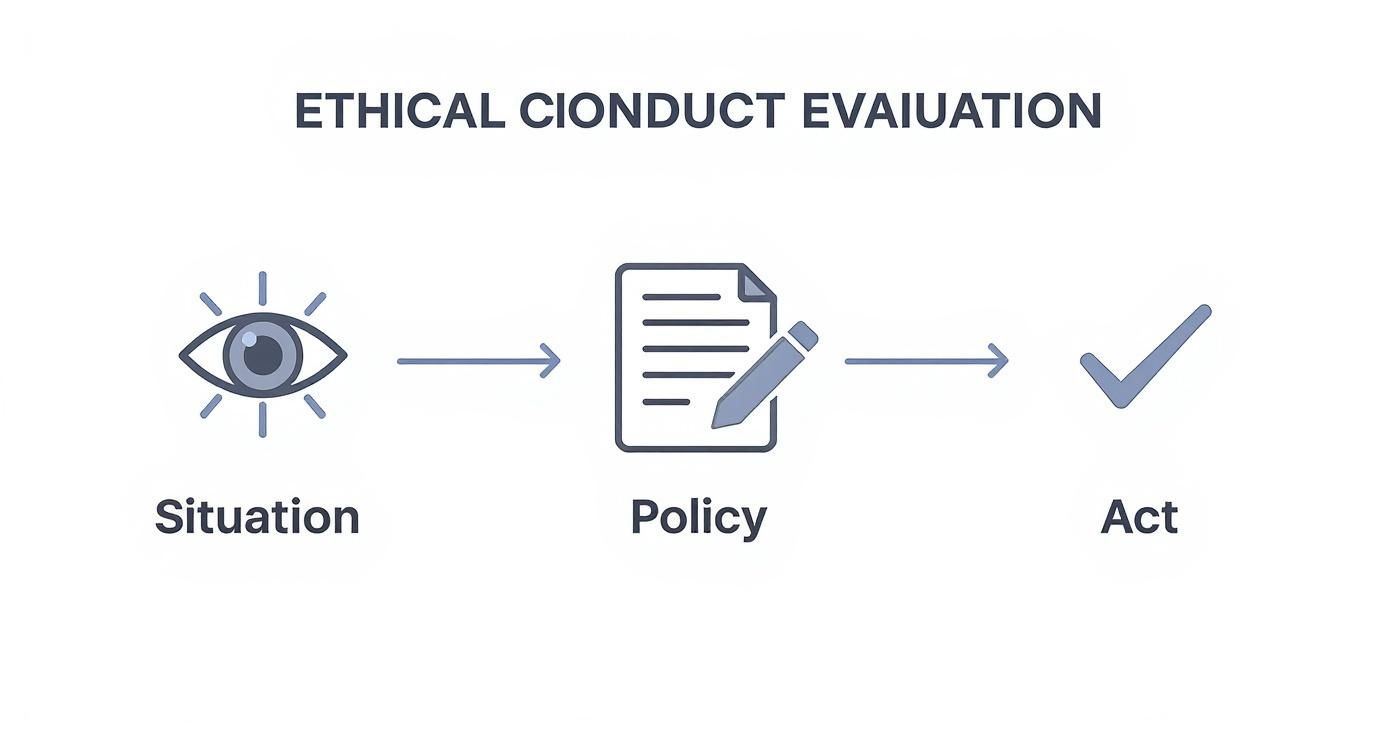
This model shows that a thoughtful response starts with observing the situation, moves to reviewing guidelines, and ends with a deliberate action, creating a clear pathway for integrity.
Common Dilemmas and How to Approach Them
Let's apply this thinking to a few relatable situations. By breaking them down, we can see how a consistent approach brings clarity to the ethics of the workplace.
1. The "Harmless" Expense Report Fudge
An employee thinks about adding a personal meal to a company expense report, figuring it's too small for anyone to notice. It might seem minor, but it's a direct hit to their trustworthiness.
Who's affected? The company, the finance team, the employee, and their colleagues.
What could happen? Potential disciplinary action, a loss of trust from management, and setting a terrible example.
The ethical move: Stick to the expense policy, no matter how small the amount. Honesty in the little things builds the foundation for integrity when the stakes are much higher.
2. Pressure to Overlook a Safety Violation
A team is behind schedule, and a supervisor suggests skipping a required safety check to save time. This puts productivity in direct conflict with employee well-being, creating a serious ethical problem.
Who's affected? The employees on site, the supervisor, the company, and even future customers.
What could happen? Risk of injury or even death, huge legal liability, reputational ruin, and a culture of fear.
The ethical move: Refuse to skip the safety check and immediately escalate the issue through the proper channels. Safety is non-negotiable. For a deeper dive, explore our guide on identifying and addressing workplace unethical behavior.
3. Witnessing Subtle Harassment
An employee overhears a colleague repeatedly making inappropriate jokes at another's expense. The target looks uncomfortable but stays quiet, leaving the bystander to decide whether to get involved.
Over 90% of workers prioritize employers who value their well-being. A culture that tolerates harassment directly undermines that sense of safety and respect. Ignoring it contributes to a toxic environment.
The bystander has a few good options:
Address the person making the jokes directly but non-confrontationally.
Privately check in with the targeted colleague to offer support.
Report the behavior to HR or a manager with specific examples.
In every case, the goal is to shift from being a passive observer to an active participant in maintaining a respectful workplace. Navigating these moments successfully is what transforms a company’s code of conduct from a document into a living, breathing culture of integrity.
Building a Culture of Psychological Safety and Trust
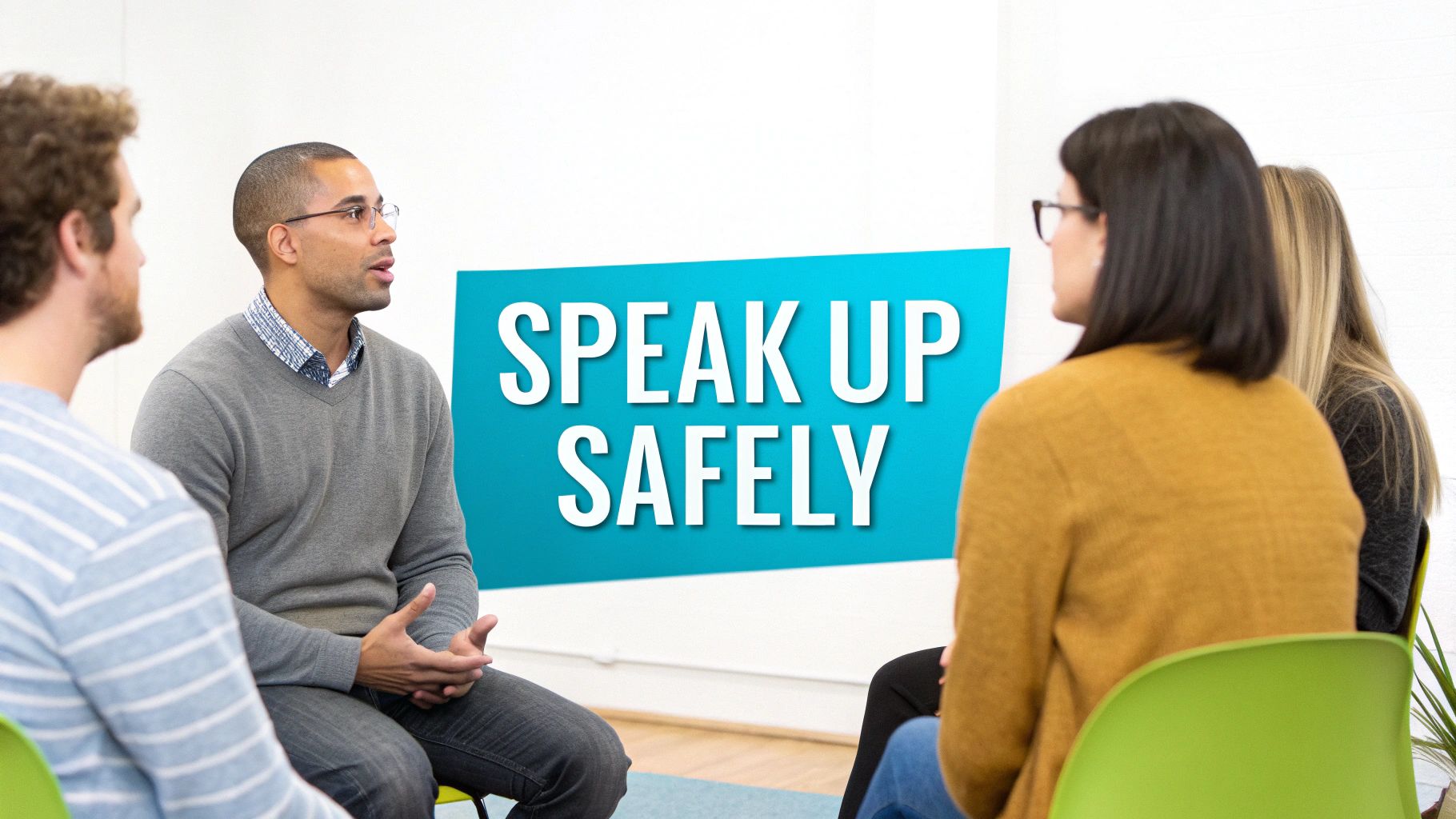
A company’s code of conduct is only as powerful as the culture of trust it’s built on. Workplace ethics aren’t sustained by policies gathering dust in a folder; they come alive in an environment where people feel safe enough to speak up, ask questions, and even admit mistakes without getting thrown under the bus. This is what we call psychological safety.
Think of a "speak-up" culture as the immune system for your business. It's constantly on the lookout for threats—like misconduct, fraud, or harassment—and deals with them before they can cause real damage. But when fear runs the show, that immune system shuts down. Employees stay silent, problems fester, and you lose your single most valuable defense mechanism: your own people.
Without psychological safety, an organization’s entire ethical framework is fragile. When employees are more afraid of retaliation than they are committed to doing the right thing, they’ll choose self-preservation over integrity every time. That’s how a company goes blind to its biggest risks.
The Direct Link Between Safety and Motivation
The connection between feeling safe and performing well isn't just some feel-good HR theory; it’s backed by hard data. When employees feel secure, they’re more engaged, more innovative, and more committed to the company's success. This creates a positive feedback loop where ethical behavior becomes the natural outcome of a healthy, supportive environment.
Recent data from PwC's Global Workforce Hopes and Fears Survey 2025 drives this home, showing that employees with high psychological safety are 72% more motivated than those who feel the least safe. Yet a massive trust gap persists. Only 55% of employees say their direct managers follow through on promises, and just 50% believe top management lives up to their commitments.
This is exactly where ethical cultures start to crumble. If leadership doesn’t consistently "walk the talk," employees quickly learn that policies are just suggestions, not actual commitments. Closing this gap is the first and most critical step in building an environment where workplace ethics can actually thrive.
Actionable Strategies for Fostering Trust
Building psychological safety is an active, ongoing process. It demands deliberate action from leaders at every level to create and maintain an atmosphere of genuine trust and openness. It's about moving from a culture of fear to a culture of feedback.
Here are three practical strategies to get started:
Promote Radical Transparency in Decision-Making: When leaders are open about the "why" behind their decisions—especially the tough ones—it demystifies the process and builds trust. Even if employees disagree with an outcome, understanding the logic keeps them from assuming the worst.
Reframe Failures as Learning Opportunities: An organization that punishes honest mistakes just teaches people to hide their problems. Instead, when a project fails or an error is made, leaders should guide a blameless post-mortem focused on one question: "What can we learn from this?" This encourages smart risks and real accountability.
Ensure Leadership Models Vulnerability: When leaders openly admit their own mistakes or acknowledge what they don’t know, it gives their teams permission to do the same. This behavior makes it clear that perfection isn't expected, but honesty and growth are.
A psychologically safe environment is one where employees feel comfortable being their authentic selves, taking calculated risks, and challenging the status quo without fear of negative consequences. It is the bedrock of a high-integrity workplace.
Putting these strategies into practice is foundational to developing a workplace where integrity is the default. To learn more about creating this type of environment, check out our guide on building a high-integrity workplace framework.
Ultimately, a culture of trust and psychological safety transforms the idea of workplace ethics from a top-down mandate into a shared responsibility. It empowers every single employee to be a guardian of the company's values, creating a resilient organization that can spot issues and correct its course with integrity.
The Role of Leadership in Upholding Ethics
An organization’s ethical foundation is poured and set by its leadership. It’s a simple truth, but a powerful one: a company's commitment to integrity is a direct reflection of the values its top executives live out every day. This is often called the "tone at the top," and it’s the single biggest factor in shaping workplace ethics.
Employees are always watching. They look to leaders for cues on what the company really values, beyond the posters on the wall. When leaders consistently model ethical behavior, they send a clear message that integrity isn't up for debate. But when they bend the rules or apply policies inconsistently, they instantly destroy trust and give everyone else unspoken permission to do the same.
In fact, inconsistent enforcement of rules from the top can poison employee confidence faster than almost anything else. It breeds cynicism, turning official policies into mere suggestions instead of core commitments.
From Words on a Page to Lived Values
A true ethics program is far more than a code of conduct handbook collecting dust on a shelf. It’s a living, breathing system of governance that demands active engagement from the very top. A strong program doesn't just aim for passive compliance; it embeds ethical thinking into the very mechanics of the business.
This is about translating abstract values into concrete, operational realities. For instance, a robust ethics and compliance program isn't just an HR function—it’s driven by leadership through several key actions:
Active Board Oversight: The board must do more than just rubber-stamp the program. They need to champion it, review its effectiveness, and hold senior management accountable for making it work.
Continuous Risk Assessments: Leadership has to mandate regular assessments to hunt for emerging ethical risks, whether it’s a new data privacy vulnerability or a weak link in the supply chain.
Integration with Performance Management: Ethical conduct has to be a formal part of performance reviews, promotion decisions, and how people are compensated.
When ethical behavior is rewarded and unethical actions have clear, unavoidable consequences, the message from leadership becomes unmistakable. The culture shifts from one that simply avoids penalties to one that actively pursues integrity as a strategic advantage.
An ethical tone at the top isn't about giving a single speech on values. It's the cumulative effect of thousands of small decisions leaders make every single day—especially when it's hard—that show an unwavering commitment to doing the right thing.
The Strategic Value of Diverse Leadership
Strengthening ethical oversight also means bringing different perspectives to the decision-making table. A leadership team where everyone looks and thinks the same is dangerously susceptible to groupthink. This is a well-known phenomenon where the desire for consensus overrides critical thinking and ethical scrutiny.
On the other hand, diverse leadership teams bring a wider range of experiences, viewpoints, and ways of solving problems. This diversity naturally challenges assumptions and introduces a healthy friction that can uncover ethical blind spots. It forces a more thorough debate, leading to more resilient and well-rounded decisions.
The evidence is clear: diverse leadership tends to correlate with stronger governance. For example, Ethisphere's 2025 report notes that while 68% of organizations evaluate their ethics programs annually, major corporate failures keep reminding us of the dangers of insufficient oversight. This is contrasted by positive trends in S&P 500 boardrooms, where increased diversity correlates with a rise in female CEO representation, suggesting that different perspectives can strengthen ethical decision-making. You can explore more about these trends in Ethisphere’s latest program report.
Practical Steps for Ethical Leadership
Leaders can take concrete, tangible steps to build and sustain an ethical culture. Effective leadership is critical not only for defining the standards but for actively creating a positive workplace culture through practical leadership where those standards can truly thrive.
Here are three commitments every leader can make today:
Lead by Example: Follow all company policies without exception. Admit your mistakes openly and take full accountability when your team falls short.
Communicate Openly and Often: Regularly talk about the importance of ethics, share real-world examples of tough dilemmas, and celebrate employees who show outstanding integrity.
Empower Your Team: Create safe channels for employees to raise concerns without any fear of retaliation. Then, make sure every single report is taken seriously and investigated thoroughly.
At the end of the day, leaders are the primary architects of workplace ethics. Their actions—or their inaction—set the standard for the entire company, determining whether its values are just words on a wall or the true north that guides every decision.
Using Technology to Proactively Manage Risk
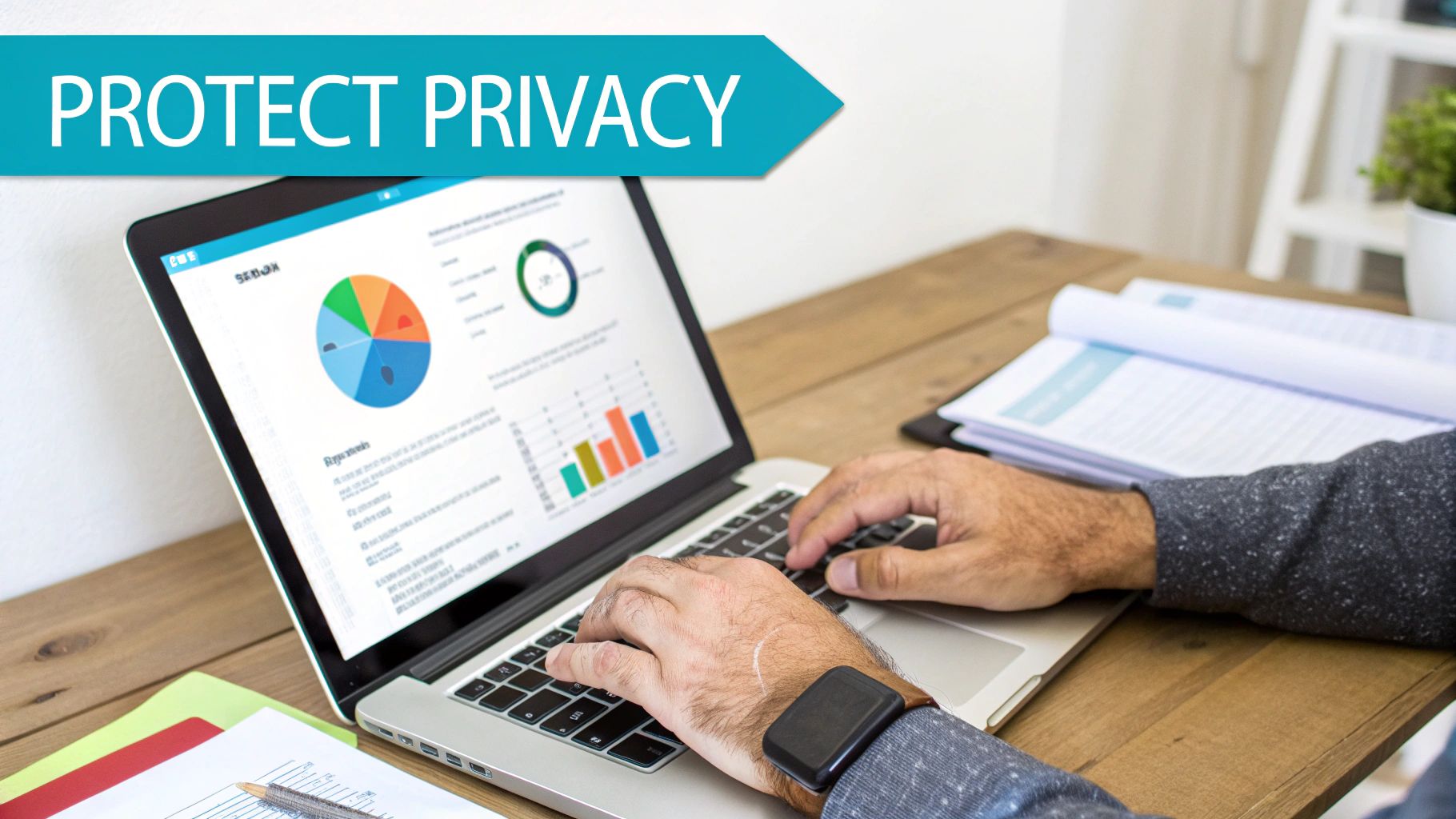
This image gets to the heart of a huge challenge in modern business: How do you manage risk without destroying privacy? It shows that the right technology can be a shield for both the company and its people, not a weapon for invasive oversight.
For far too long, managing internal risk has been a painful, reactive process. It usually meant investigating misconduct after it already happened, trapping companies in a "catch and punish" model that erodes trust and breeds a culture of fear. That approach just doesn't cut it anymore.
Organizations need a way to get ahead of potential issues without turning into Big Brother. This is where a new generation of privacy-preserving technology comes in. Instead of spying on employee communications, these tools analyze operational data and metadata to spot anomalies that signal risk, flipping the script from reactive investigation to proactive, dignified risk management.
A New Model for Ethical Oversight
Think of this modern approach like a responsible librarian managing a huge library. The librarian knows which books are checked out, when they’re due back, and which sections are busiest. They track all this metadata to manage the collection and keep things running smoothly.
But here’s the key: the librarian does not read the private notes you scribble in the margins. In the same way, advanced risk platforms can spot concerning patterns—like a sudden spike in data downloads to an external device—without ever reading the content of the files themselves. Employee privacy is preserved while the organization upholds its duty of care.
This method is about observing the container, not the content. It respects personal boundaries while equipping organizations with the intelligence needed to protect critical assets and uphold their commitment to workplace ethics.
This distinction is crucial. It lets companies shift away from suspicion-based monitoring and toward a trust-based system that honors individual dignity. It’s a smarter, more ethical way to handle the complexities of today's workplace.
Shifting from Reaction to Prevention
The entire goal of this technological shift is to catch the early, subtle signals of risk before they blow up into major incidents. By focusing on patterns and anomalies, organizations can address vulnerabilities before they’re exploited.
Advanced tools, like sentiment analysis techniques, can help organizations process huge volumes of unstructured feedback to spot emerging ethical concerns and potential risks, all without compromising individual identities.
Consider a few real-world examples of how this works:
Policy Violations: The system could flag when an employee in finance repeatedly tries to access sensitive HR files. This indicates a potential policy breach without anyone needing to know why they’re doing it.
Data Exfiltration Risk: It can detect an unusual volume of data being moved to a personal cloud storage account—a classic indicator of intellectual property theft.
Conflict of Interest: A platform can identify communication patterns between an employee and a vendor that fall outside normal business interactions, signaling a potential conflict of interest that needs a closer look.
This evidence-based approach makes the response structured and fair. Instead of launching a wide, invasive investigation, HR or compliance teams can start with a targeted, respectful inquiry based on objective data. It’s a system built for prevention, not punishment, and it turns scattered signals into a traceable, actionable process.
An ethical culture isn't something you can "set and forget." It's a living, breathing part of your organization that needs constant attention. Just like you use a balance sheet to track financial health, you have to measure your ethical health with the right Key Performance Indicators (KPIs).
Good intentions are a great starting point, but getting real results demands a disciplined cycle of measurement and improvement. This is all about turning abstract goals like "fostering integrity" into concrete metrics that show you the true strength of your ethical framework. Only then can you spot the weak points and make targeted fixes.
Identifying Meaningful Key Performance Indicators
To get a clear, honest picture of your company's ethical climate, you have to track metrics that reflect what people are actually doing and thinking, not just whether they clicked "I agree" on a policy document. Think of these KPIs as a dashboard for your culture, helping you spot trends and step in before a small issue becomes a full-blown crisis.
A smart approach mixes leading and lagging indicators:
Leading Indicators: These are your early-warning signs. Think of things like employee engagement scores on ethics-related questions or how quickly new policies are being adopted. They can help you predict future problems.
Lagging Indicators: These metrics show you what’s already happened. This includes numbers like substantiated misconduct reports or employee turnover rates in a specific department.
Using both gives you a rearview mirror and a forward-looking guide, allowing you to steer your ethics program with confidence.
An ethical framework without measurement is just a collection of hopeful statements. A framework backed by data becomes a powerful tool for driving real, sustainable cultural change and strengthening the ethics of the workplace.
Key Performance Indicators for an Ethical Culture
Getting started with measurement doesn't have to be complicated. The key is to choose metrics that give you a real signal about the health of your ethical culture, not just noise.
The table below outlines a few practical KPIs that can give you immediate, actionable insights into how well your ethics and compliance efforts are actually working.
Metric | What It Measures | Why It Matters |
|---|---|---|
Speak-Up Rate | The percentage of employees who report potential misconduct through official channels. | A low rate can signal a fear of retaliation or a lack of trust in the process, pointing to poor psychological safety. |
Investigation Turnaround Time | The average time it takes to resolve a reported concern from the moment it's raised to when it's closed. | Slow investigations destroy trust. They leave both the reporter and the accused in limbo, which is toxic for morale. |
Employee Perception Scores | Data from anonymous surveys asking employees if they believe leadership is truly committed to ethics. | This is a direct measure of trust. It tells you how well the "tone at the top" is actually landing with your people. |
Retaliation Claims | The number of reports filed by employees who believe they were punished for speaking up. | This is a massive red flag. Even a handful of retaliation claims can be enough to silence an entire workforce. |
Tracking these metrics gives you a data-driven foundation to have honest conversations with leadership and make smarter decisions about where to invest your resources.
An Actionable Checklist for Improvement
Once you have your KPIs in place, the real work begins. Continuous improvement is all about creating a steady rhythm of measurement, analysis, and refinement. It's not a one-off project.
Use this checklist to turn that data into deliberate action and actively strengthen your ethical framework:
Conduct a Baseline Ethics Audit: Before you can improve, you have to know where you stand. Use surveys and focus groups to get a feel for employee perceptions and uncover any hidden weak spots.
Refresh Training with Real Scenarios: Ditch the generic, click-through training modules. Use recent, relevant case studies from your industry (anonymized, of course) to make ethical dilemmas feel real, relatable, and memorable.
Establish and Promote Confidential Reporting Channels: Make sure your team has multiple, easy-to-find ways to report concerns without fear. This should include hotlines, web forms, and maybe even a designated ombudsperson.
Review and Act on Your KPIs Quarterly: Treat your ethics metrics with the same seriousness you give your financial reports. Discuss the findings with your leadership team and create clear action plans to tackle any negative trends you see.
This kind of structured approach transforms your ethical framework from a passive document on a shelf into an active, dynamic system that truly protects your organization and its people.
Your Questions, Answered
Even with the best policies in place, real-world ethical questions can be tough. Let's dig into some of the most common dilemmas people face, with straightforward answers to help you navigate them.
What Should I Do If My Manager Asks Me to Do Something Unethical?
This is one of the most difficult spots anyone can be in. The first move is to take a breath and clarify what’s being asked. Sometimes, a request that sounds off is just a simple misunderstanding of the task or its bigger purpose.
But if the request is clearly unethical, you have a couple of paths. You can calmly push back, stating that the action doesn't align with company policy or your personal values. If that doesn't feel safe, it's time to use the confidential channels your company has in place. An ethics hotline or a trusted HR representative can help you escalate the issue without a direct confrontation.
What Are the First Steps After Witnessing Misconduct?
If you see something that clearly violates your company's ethical standards, your main job is to report it. But before you do, take a moment to document the specifics: what you saw, when and where it happened, and who was involved. Just stick to the objective facts.
Next, figure out the right channel. This could be your own manager (as long as they aren't part of the problem), Human Resources, or a dedicated ethics and compliance officer. Reporting it quickly is key—it gives the organization a chance to step in and fix the problem before it spirals.
The biggest thing that stops people from reporting is the fear of retaliation. A truly healthy ethical culture makes it safe for employees to speak up, knowing their concerns will be taken seriously and handled with confidentiality.
What Is the Difference Between Ethics and Compliance?
Let's break it down simply: compliance is about following the rules, while ethics is about doing the right thing. Compliance is the floor—it's the bare minimum standard of behavior required by laws and official policies. Ethics is the ceiling. It's the set of moral principles that guides your choices even when there isn't a specific rulebook to consult.
For example, a company might be technically compliant if it sells a product with a known flaw that isn't legally required to be disclosed. But it certainly wouldn't be ethical. A great organization doesn't choose between the two; it masters compliance while always aiming for higher ethical ground.
How Can We Encourage Ethical Behavior in a Competitive Environment?
Keeping an ethical culture alive in a high-pressure, results-driven world starts at the top. Leadership has to align incentives with honorable conduct, not just raw numbers. If the only thing that gets rewarded is hitting a sales target, you're practically inviting people to cut corners.
Instead, leaders should make a point to publicly celebrate employees who show real integrity, even if it meant missing a goal. Another powerful tool is regular training that uses real-world scenarios, giving teams a chance to practice making tough ethical calls under pressure. It all comes down to building a culture where winning the right way is more valuable than winning at any cost.
At Logical Commander Software Ltd., we believe technology can strengthen your ethical framework without compromising privacy. Our E-Commander platform helps you proactively spot and address internal risks—from policy violations to conflicts of interest—all while protecting employee dignity. It's not about watching people; it's about using intelligence to build a culture of integrity. See how you can know first and act fast at https://www.logicalcommander.com.