%20(2)_edited.png)

Unethical Behavior at the Workplace and How to Stop It

Updated: Dec 2, 2025
Unethical behavior in the workplace is any action that violates company rules, moral principles, or the law, ultimately shattering trust and integrity. It covers everything from blatant offenses like theft to more subtle acts like favoritism, creating a toxic environment that can cripple an organization's culture and reputation.
Getting a handle on what this behavior actually looks like is the first step toward building a healthier, more resilient workplace.
What Is Unethical Workplace Behavior, Really?
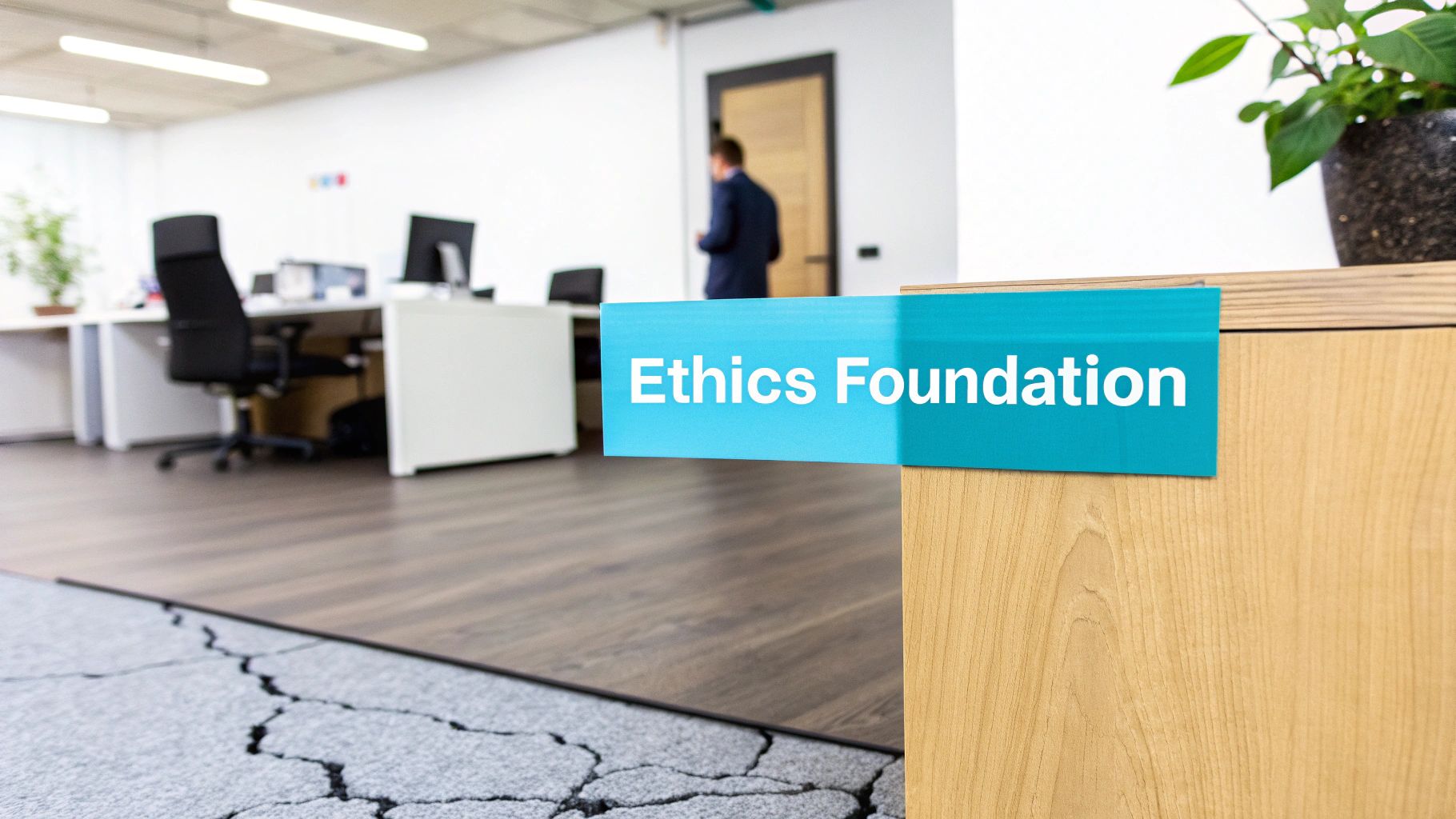
Think of a company's ethical code as the foundation of a building. When it's solid, the entire structure is stable, and everything just works without anyone noticing the principles holding it all together. But the moment that foundation cracks—even a little—it compromises everything built on top, risking a catastrophic failure.
Unethical behavior at the workplace represents those cracks. It undermines the trust, safety, and integrity of the entire organization.
This isn't just about breaking the law. It’s a wide spectrum of actions that go against a company's core values and accepted moral norms. It moves beyond clear-cut crimes like fraud into the murky, nuanced problems that slowly eat away at your culture.
A Breakdown of Common Unethical Behaviors
Unethical conduct isn't always a dramatic, headline-grabbing event. More often, it starts small and festers when left unchecked. To really get a grip on it, it helps to break down the different ways this behavior shows up in the real world.
The table below organizes common unethical actions into categories, with clear examples to help you spot them more easily inside your own organization.
Category | What It Looks Like | Examples |
|---|---|---|
Financial Dishonesty | Misusing company money or resources for personal benefit. | Padding expense reports, stealing office supplies, committing timesheet fraud, embezzlement. |
Interpersonal Misconduct | Harming colleagues through toxic actions that create a hostile environment. | Bullying, sexual harassment, spreading malicious rumors, discrimination based on age, race, or gender. |
Misuse of Position | Abusing authority or influence for personal gain or to benefit favored individuals. | Nepotism in hiring, showing favoritism in promotions, creating a conflict of interest. |
Negligence & Deception | Intentionally cutting corners or misleading stakeholders, putting people or the company at risk. | Ignoring safety protocols to meet a deadline, lying to customers about product features, covering up mistakes. |
Recognizing these patterns is the first step. Unfortunately, these behaviors are becoming more common, not less.
Recent data is alarming, showing that workplace misconduct has hit record highs. Claims of discrimination, harassment, and retaliation have climbed to an unprecedented 14.7 issues per 1,000 employees. This trend highlights a growing problem that no organization can afford to ignore. You can read the full research about these workplace misconduct trends to understand the rising risks.
Why a Clear Definition Is a Non-Negotiable
Defining what is and isn't acceptable is absolutely critical, because ambiguity is where misconduct thrives. When employees don't have a clear framework, they're left to guess, interpreting situations based on personal morals that can vary wildly from person to person.
An organization's ethical compass is only as strong as its clearest, most consistently communicated principles. Without a shared understanding of what is unacceptable, even well-intentioned employees can cross lines they didn't know existed.
Ultimately, establishing this shared understanding isn't about creating a restrictive laundry list of rules. It’s about building a culture where integrity becomes the default setting. This foundation empowers employees to navigate complex situations with confidence and protects the organization from the inside out.
The Most Common Types of Misconduct Explained
Knowing what unethical behavior is in theory and spotting it in the real world are two completely different things. Misconduct often hides in plain sight, brushed off as “just how we do things around here” or dismissed as a minor issue not worth the fuss. But to actually stop misconduct, you have to look past the buzzwords and see the specific ways it poisons a workplace every day.
From the subtle favoritism that slowly erodes team morale to the blatant harassment that turns a workplace into a minefield of fear, each type of misconduct leaves its own trail of damage. By breaking down the most common categories with real-world scenarios, you can learn to spot the warning signs and step in before the damage becomes permanent.
Harassment and Discrimination
Harassment and discrimination are two of the most toxic forms of unethical behavior you’ll find in any organization. They demolish psychological safety and create a hostile environment where no one can do their best work. Harassment is any unwelcome conduct based on protected characteristics, while discrimination is about treating someone unfairly simply because of who they are.
This goes way beyond a few off-color jokes. It shows up in dozens of ways that can make an employee feel isolated, threatened, or worthless. And the problem is bigger than most leaders think. Recent survey data shows that a staggering 52.2 million American workers have been directly bullied at work, while 91% of the U.S. workforce has witnessed or experienced some form of discrimination. You can explore more workplace statistics that highlight the prevalence of these issues.
Here are a few ways this behavior actually surfaces:
Verbal Harassment: A manager constantly makes digs about an older employee's age in team meetings, calling them "old-school" and openly questioning if they can keep up with new tech.
Exclusionary Behavior: A clique of colleagues makes a point of leaving one team member out of important email chains and after-work events because of their race or sexual orientation.
Unequal Opportunities: A supervisor passes over a highly qualified woman for a promotion, giving it to a less-experienced male colleague instead. His reasoning? A vague concern about her "commitment" now that she has a family.
Conflicts of Interest and Nepotism
A conflict of interest happens the moment an individual's personal agenda—whether it's financial, social, or family-related—starts interfering with their professional judgment. It creates a system where decisions are no longer made for the good of the company, but for the benefit of one person.
This kind of behavior is especially corrosive because it attacks the very idea of fairness and merit. It sends a loud and clear message to everyone else that hard work doesn't matter as much as who you know. That’s how you breed cynicism and kill motivation across an entire organization.
When personal relationships dictate professional opportunities, trust is the first casualty. Employees lose faith in leadership's impartiality, and the organization's commitment to fairness becomes just empty words.
Nepotism is the classic example. Just imagine a department head hiring their unqualified nephew for a key role, blowing past a dozen more experienced candidates who actually earned an interview. That single move tells everyone that competence comes second to connections.
It's the same story when a manager accepts expensive gifts from a vendor and then, surprise, awards them a major contract. The decision is tainted. It doesn't matter if that vendor was the best choice or not—the process is compromised, and it likely cost the company money or locked them into a lower-quality service.
Misuse of Company Resources
Misusing company resources can range from seemingly small infractions to outright fraud, but it always boils down to one thing: using company property or time for personal gain. While it might start small, this behavior shows a fundamental lack of respect for company policy and has a nasty habit of escalating.
Think of it like a leaky faucet. A single drop seems like nothing, but over weeks and months, it leads to a huge water bill and rots the foundation. In the same way, seemingly minor misuse of resources adds up, draining finances and fostering a culture where people feel entitled to take what isn't theirs.
Here are a few common examples:
Time Theft: An employee clocks in every morning but spends hours running their personal online store from their work computer, getting paid for a job they aren’t actually doing.
Property Misuse: A team member uses the company’s expensive design software and professional printer to create marketing materials for their weekend freelance business.
Fraudulent Expenses: A salesperson regularly pads their mileage on expense reports and submits receipts for dinners with friends, passing them off as client meetings.
Each of these actions, though different in scale, chips away at the company’s bottom line and its ethical core. Being able to recognize these patterns is the first step toward building accountability and protecting the organization’s assets.
Why Good people Cross Ethical Lines
It’s easy to think that unethical behavior at the workplace is just the work of a few "bad apples"—people with shady character who were always going to cause problems. But while some people are absolutely acting with bad intent, the truth is usually a lot more complicated.
Most ethical breaches aren't committed by villains. They're committed by good, well-meaning employees who get pushed past a moral breaking point by the situations they're in.
Think of your company culture like the soil in a garden. You can have the healthiest seeds, but if you plant them in toxic soil, they’ll struggle, wither, or even get diseased. In the same way, even the most principled employees can find themselves making terrible decisions when they're trapped in a dysfunctional environment full of intense pressure and flawed systems.
Figuring out these root causes is how we stop blaming individuals and start fixing the real problems that let misconduct happen in the first place.
The Power of Pressure
One of the biggest drivers of bad decisions is the relentless pressure to perform. When people are staring down unrealistic targets, impossible deadlines, or pay plans that reward hitting a number no matter the cost, the ethical lines get blurry fast.
The focus shifts from how you get there to just getting there.
This "whatever it takes" mindset is a massive ethical blind spot. An employee who thinks their job is on the line might rationalize skipping a few safety checks to meet a production quota. A salesperson facing a target they can't possibly hit might feel forced to mislead a customer just to close the deal.
When the fear of failure outweighs the commitment to integrity, people begin to see unethical actions not as a choice, but as a necessity for survival. The system itself incentivizes the very behavior it claims to forbid.
This pressure doesn't always come from a direct order. It can be a quiet, unspoken expectation that's just part of the culture. If leaders are always celebrating the top performers without ever asking hard questions about how they got those results, they're sending a loud, clear message: the ends justify the means.
Weak Leadership and Ambiguous Policies
Leaders set the tone. Their behavior tells everyone else what's really acceptable, regardless of what the employee handbook says. When leaders don't model integrity, or when company policies are vague and never enforced, they create a vacuum where unethical behavior can thrive.
If a manager looks the other way on a minor policy violation, they're signaling that the rules are really just suggestions. That starts a slippery slope where small compromises can easily snowball into major ethical disasters over time.
Think about these common leadership failures:
Leading by Poor Example: A manager who pads their own expense report is basically giving their team a green light to do the same.
Lack of Clear Guidelines: Without a clear, easy-to-find code of conduct, employees are left to guess their way through tough ethical calls, often without any real guidance.
Inconsistent Enforcement: When misconduct gets punished sometimes but ignored for others (especially if a high-performer is involved), it kills trust and shows that the rules don't apply to everyone equally.
At the end of the day, preventing unethical behavior at the workplace isn't just about hiring good people. It’s about building an environment where those good people are backed up by clear policies, ethical leaders, and realistic expectations. By fixing these systemic issues, organizations can make sure their "garden" is a place where integrity can actually grow.
How to Spot the Early Warning Signs
Unethical behavior doesn't just show up one day out of the blue. It’s more like a slow leak—it starts with tiny, subtle cracks in a company’s culture that widen over time until something finally bursts.
Learning to spot these early warning signs is like a doctor recognizing the first symptoms of an illness. If you can catch the problem early, you can intervene before it becomes a full-blown crisis. These red flags are almost always behavioral and cultural, showing up in how people talk, act, and interact long before a major scandal hits the news.

A Sudden Spike in Employee Turnover
High turnover is more than just an HR headache; it's a blaring alarm that something is fundamentally broken. When good, long-serving employees start heading for the exits in groups, it’s often a sign that the environment has become toxic.
People rarely leave jobs they love. They leave because of poor leadership, a lack of psychological safety, or a culture where bad behavior is ignored. A rising attrition rate is one of the clearest signals that your organization's ethical foundation might be cracking.
"A revolving door of employees isn't a sign of a dynamic company; it's a symptom of a sick culture. It tells you that the internal environment is pushing good people out faster than you can bring them in."
Increased Gossip and Secrecy
Start paying close attention to how people communicate. An uptick in hushed conversations, rumors, and office gossip usually points to a breakdown in open, trustworthy communication from the top. When people don’t trust the official channels, they create their own.
This kind of secrecy is the perfect breeding ground for unethical behavior, allowing misconduct to fester behind closed doors. A healthy workplace runs on transparency; a toxic one is fueled by whispers. This is where learning about a modern behavioral analytics platform can be useful for spotting these hidden patterns without resorting to invasive monitoring.
A Culture of Fear Around Mistakes
What happens when someone on your team makes a mistake? If the gut reaction is to blame, punish, or publicly shame them, you’ve built a culture of fear. In that kind of environment, employees will do almost anything to avoid admitting they messed up—including covering up errors, fudging numbers, or blaming someone else.
This fear of failure directly incentivizes unethical behavior. It creates a broken system where honesty gets punished and deception becomes a survival tactic. In a truly ethical culture, mistakes are treated as learning opportunities that encourage accountability from everyone.
Checklist for an Ethical Health Check
Use these questions for a quick, informal gut check on your team’s ethical climate. If you find yourself answering "yes" to several, you may have some underlying issues that need a closer look.
Is employee turnover noticeably higher than in previous years?
Do you hear more rumors and gossip than open, constructive dialogue?
Are employees afraid to admit when they’ve made a mistake?
Is there a sense that rules apply to some people but not others?
Do people avoid raising difficult questions in team meetings?
Has there been a noticeable drop in team morale or engagement?
Inconsistent Policy Enforcement
This might be the most corrosive warning sign of all: when the rules are applied to some people but not others. When a star salesperson gets a pass for behavior that would get anyone else fired, it sends a loud and clear message: results matter more than integrity.
This kind of hypocrisy absolutely demolishes trust in leadership and shreds any notion of fairness. It creates an environment where the official rules feel like mere suggestions, and what really matters is who you know or how much revenue you bring in. Consistent, impartial enforcement of the rules is the bedrock of any ethical workplace.
The Real Cost of Looking the Other Way
Ignoring unethical behavior at the workplace isn't a passive choice. It's an active decision with a steep price tag attached. When misconduct is allowed to fester, it sets off a domino effect. A single ethical lapse can trigger a cascade of consequences that ripple through every corner of the organization. The costs aren't just theoretical—they are real, measurable, and often devastating.
Think of it like a small crack in a dam. At first, it’s a minor issue, something you could easily overlook. But over time, the pressure builds, the crack widens, and eventually, the entire structure fails, unleashing a flood that sweeps away everything in its path. In the same way, ignoring unethical acts erodes your company's cultural foundation until a major crisis becomes inevitable.

The Tangible Financial Drain
The most immediate and visible costs are the financial ones. These are the expenses that show up directly on the balance sheet, from messy legal battles to eye-watering regulatory penalties. The numbers are staggering—the EEOC recovered approximately $664 million for workplace harassment victims in 2023 alone, a figure that’s jumped 30% since 2022. Even with these numbers climbing, many companies remain vulnerable because of critical gaps in their investigation processes.
These direct costs often include:
Legal Fees and Settlements: Lawsuits from harassment, discrimination, or wrongful termination can spiral into millions in legal defense costs and payouts.
Regulatory Fines: Government agencies are more than willing to impose heavy fines for compliance failures related to workplace safety, fraud, or labor laws.
Increased Insurance Premiums: A history of claims and lawsuits almost always leads to higher premiums for liability and employment practices insurance.
Reacting to these problems after the fact is always more expensive than preventing them in the first place. You can learn more about the true cost of reactive investigations in our detailed guide.
The Hidden Intangible Damage
While the financial costs are alarming, the intangible damages are often far more destructive and harder to fix. These are the hidden wounds that cripple a company from the inside out, poisoning its culture, reputation, and long-term viability. Once trust is broken, it can take years—or even decades—to rebuild.
An organization's reputation is its most valuable asset, yet it's also its most fragile. It takes years to build and only a moment of ethical failure to shatter.
This hidden damage shows up in a few critical areas:
Damaged Reputation and Lost Trust: News of a scandal can permanently tarnish a brand's image, driving away customers, partners, and investors who no longer trust the company to do the right thing.
Plummeting Employee Morale: When employees see unethical behavior go unpunished, it breeds a culture of cynicism and resentment. Engagement nosedives, and productivity grinds to a halt as people lose faith in their leaders.
Inability to Attract Top Talent: A toxic reputation makes it nearly impossible to recruit high-performing people. The best talent will always choose a workplace known for its integrity over one mired in scandal.
Decreased Innovation: In a culture of fear and distrust, creativity dies. Employees become unwilling to take risks or share new ideas, stalling growth and innovation.
The long-term effects of unaddressed unethical behavior can lead to serious employee well-being issues, including recognizing job burnout. Ultimately, the real cost of looking the other way is the slow, painful decay of the very things that make a company successful: its people, its reputation, and its future.
Your Framework for Taking Action
Seeing something unethical happen at work can leave you feeling stuck, but knowing what to do is the first step toward restoring integrity. Having a clear framework for action is crucial, both for employees who witness misconduct and for the leaders tasked with fixing it. It's all about creating a predictable, safe process that encourages people to speak up without fear of backlash.
For any employee, the gut reaction might be to just look the other way and hope the problem disappears. But silence is what allows unethical behavior to fester and grow. The key is to shift from being a passive bystander to an active participant, armed with a clear and safe plan.
A Guide for Employees Reporting Misconduct
If you witness something that crosses a line—violating company policy or basic ethical standards—a structured approach is the best way to protect yourself and ensure the issue gets handled the right way.
Document Everything: Keep a private, detailed log of exactly what you saw. Write down the date, time, location, who was involved, and a factual, play-by-play description of what happened. Leave out your personal opinions or assumptions; just stick to the observable facts.
Know Your Reporting Channels: Figure out who the right person or department is. This is usually your direct manager, but if they're part of the problem, you need to go to Human Resources, a compliance officer, or an anonymous ethics hotline if your company has one.
Prepare Your Report: When you come forward, present your documented facts clearly and calmly. Explain the impact of the behavior on the team, the company, or other people involved.
A Guide for Leaders Handling Investigations
For leaders, the core responsibility is to build an environment of psychological safety where people feel secure enough to raise a hand. When a report does come in, how you respond sets the tone for the entire organization.
The goal of an investigation isn’t just to find fault; it's to seek truth while protecting all parties involved. A fair, confidential, and unbiased process is non-negotiable for maintaining trust and upholding organizational justice.
Your process absolutely must prioritize these elements:
Confidentiality: Assure the reporting employee that their identity will be protected as much as the law allows.
Prevent Retaliation: Make it crystal clear that any form of retaliation against a whistleblower is a serious offense with severe consequences.
Objectivity: Run a fair and impartial investigation. Gather evidence from all relevant sources before you even think about reaching a conclusion.
It's an interesting paradox: while younger workers are often more willing to report misconduct, they also get punished for it more frequently. Studies show that a shocking 70% of employees aged 18-34 who report issues experience retaliation, compared to 43% for older age groups. Fear of retaliation is still a major barrier for 43% of all workers, which just underscores why building a genuinely safe reporting culture is so critical. You can explore more whistleblowing statistics and trends from Navex.
Ultimately, a culture of integrity isn't about having policies collecting dust in a binder; it’s about putting them into practice every single day. You can find more details in our practical guide to building an integrity workplace and reducing human-factor risk.
Frequently Asked Questions
Navigating the complexities of unethical workplace behavior always brings up tough questions. Let's tackle some of the most common concerns, giving you direct answers that reinforce the key takeaways from this guide.
What Should My First Step Be If I Witness Unethical Conduct?
The very first thing you should do is document exactly what you observed. Create a private, factual record of the incident as soon as you can.
Make sure to include the date, time, location, who was involved, and a clear, objective description of the actions. This documentation is absolutely critical for any formal report you might make later on. Once you have that record, your next move is to find the right reporting channel—be it your direct supervisor, HR, or a dedicated ethics hotline.
What Is the Difference Between a Code of Conduct and an Ethics Policy?
While people often use these terms interchangeably, they serve very different purposes. Think of an ethics policy as your organization's constitution; it outlines the broad moral principles and values that guide big-picture decision-making.
In contrast, implementing a clear code of conduct provides the specific, concrete rules for day-to-day actions. It's the practical playbook for how employees are expected to behave.
Ethics Policy: The "why" behind your company's values.
Code of Conduct: The "what" and "how" of expected employee behavior.
Why Do So Many People Hesitate to Report Misconduct?
Fear. Plain and simple, fear is the primary reason people stay silent. Even with a greater willingness today to speak up, many victims never come forward because they have a legitimate fear of retaliation or simply don't trust the reporting process to work.
The statistics are sobering: 42% of employees who experienced workplace harassment didn't report it. For victims of sexual assault, that number climbs to a staggering 72%. This culture of silence is a massive obstacle to creating a safer, more ethical work environment.
This visual breaks down the core steps for reporting misconduct, from documentation all the way to self-protection.

This structured approach ensures that any report is built on a solid foundation of evidence while keeping personal safety front and center.