%20(2)_edited.png)

AI Emotional Intelligence for Ethical Risk Management

Updated: Jan 15
When we talk about artificial intelligence emotional intelligence, we're not describing a machine that feels happy or sad. We’re discussing AI systems that ethically recognize communication patterns correlated with human behaviors and potential risks. In today's complex work environments, organizations face escalating internal threats like fraud, misconduct, and non-compliance, which traditional tools often miss. Logical Commander solves this by providing an EPPA-compliant, privacy-first platform that detects early risk indicators in anonymized data. Our ethical AI empowers HR, Compliance, and Security teams to shift from reactive damage control to proactive prevention, strengthening integrity and protecting human dignity while delivering a measurable ROI.
Why Traditional Risk Tools Miss Human Behavior
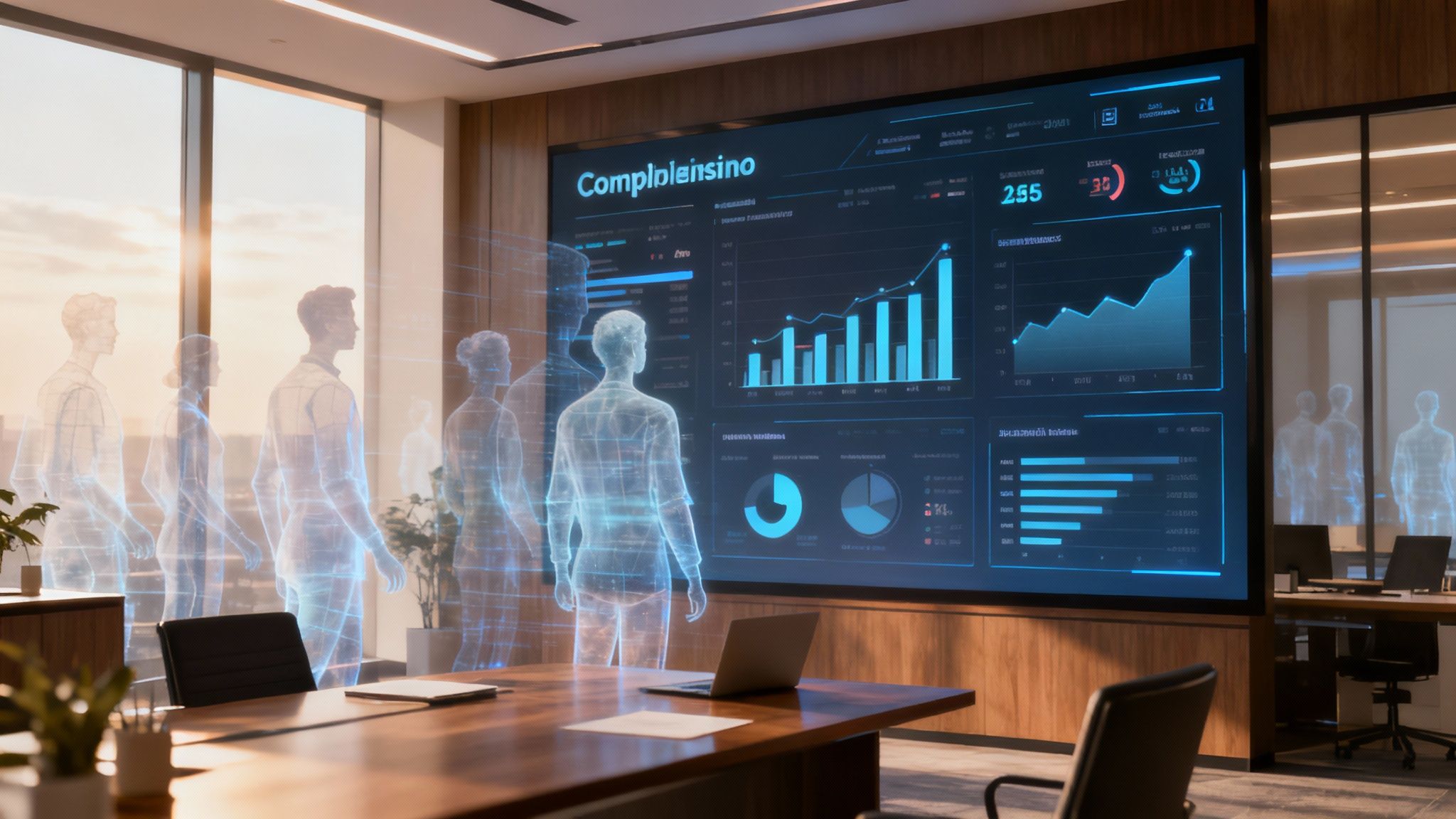
Let's be honest, traditional compliance and risk management tools are great at one thing: tracking black-and-white data. They can monitor access logs, flag keyword violations, and make sure procedural checklists get ticked off. But they operate with a massive blind spot—the subtle, evolving human dynamics that almost always come before a major incident like fraud, misconduct, or an insider threat.
These legacy systems are, by their very nature, reactive. They sound the alarm only after a rule has been broken, which leaves organizations stuck in a constant cycle of damage control. They simply can't analyze the gray areas of human behavior, like a sudden shift in communication style, rising friction within a team, or the quiet signs of disengagement that signal a problem is brewing just beneath the surface.
The Limits of Conventional Methods
This is exactly where artificial intelligence emotional intelligence changes the game. It’s not about monitoring individuals or trying to read their personal feelings—that would be a clear violation of EPPA guidelines. What it is about is detecting objective, data-driven shifts in communication that point to a misalignment with ethical standards or an uptick in organizational risk indicators.
Think about it. A sudden surge in fragmented, negative, or after-hours communication in one department could be an early warning sign of burnout or a project in distress. Your traditional tools would miss that completely. And while conventional methods like security awareness training programs that reduce human risk are designed to patch human vulnerabilities, they often fall short in predicting these subtle behavioral shifts before they happen.
A Proactive, Ethical Alternative
Logical Commander’s EPPA-compliant platform analyzes anonymized data to spot these patterns ethically and effectively. As one of our key differentiators, our ethical and non-intrusive AI focuses on systemic risk indicators instead of individual actions, helping organizations finally shift from reactive incident response to proactive risk prevention. The result is a more secure, collaborative, and resilient work environment.
Our technology gives HR, Compliance, and Security teams the ability to see the underlying drivers of risk. This allows them to get ahead of the problem and address root causes—like excessive pressure or broken communication channels—before they escalate into expensive, damaging incidents. And they can do it all while upholding employee privacy and dignity.
Decoding Human Risk with AI Emotional Intelligence
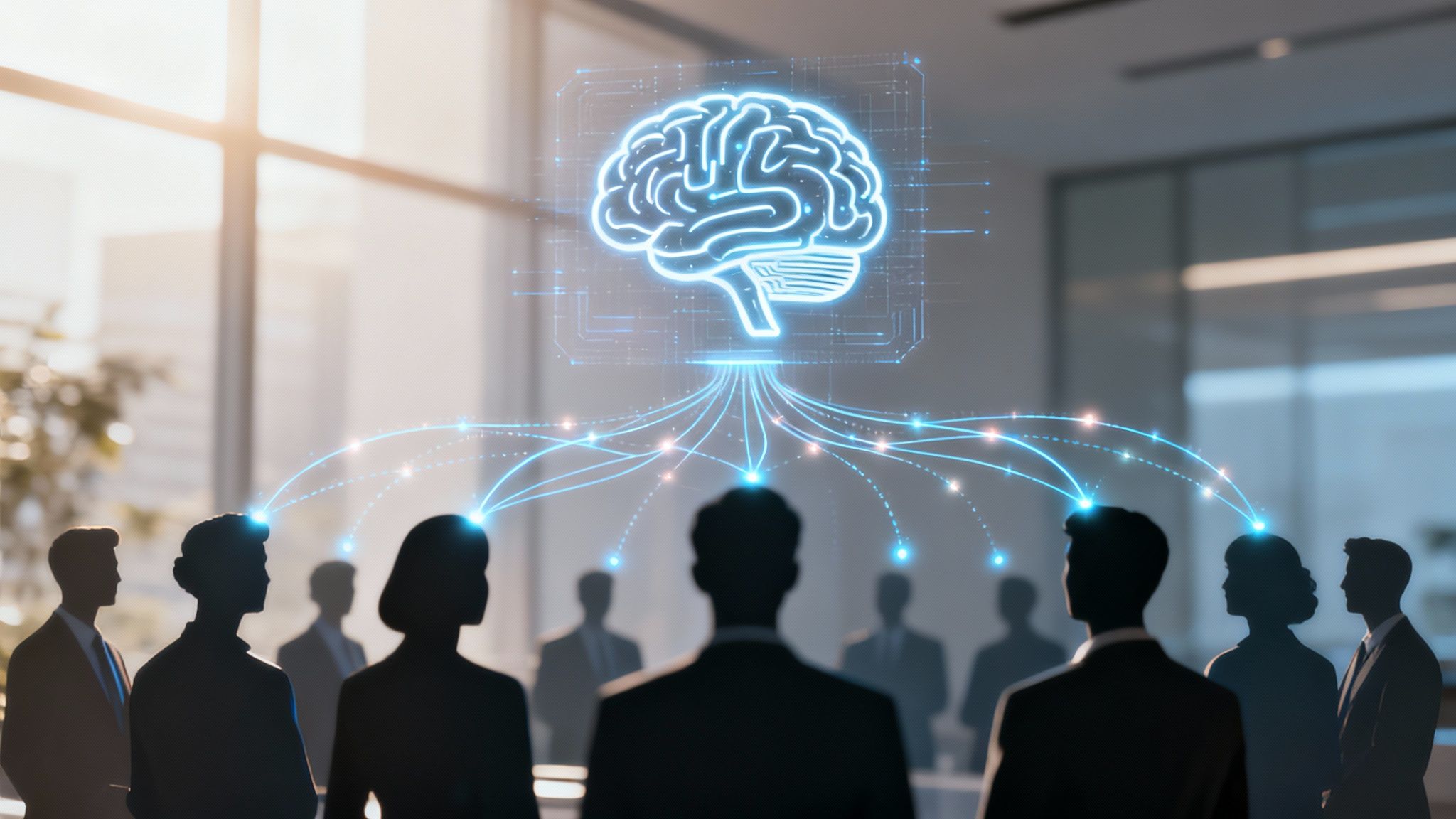
Let's clear something up. When we talk about artificial intelligence emotional intelligence in a business setting, we aren't building machines that "feel." Think of it more like an experienced manager who can walk into a room and immediately sense the tension in a team, just by observing how they interact. It’s pattern recognition.
Logical Commander’s technology is that manager, but operating at enterprise scale. It analyzes anonymized communication data to spot the patterns—the digital body language—that signal rising conflict, disengagement, or even a drift away from ethical norms. This isn't mind-reading. It's objective, data-driven analysis that flags heightened human capital risk before it boils over.
This isn’t a niche concept anymore. The global Emotion AI market was valued at roughly USD 2.9 billion and is expected to grow at a compound annual rate of about 21.7% between 2025 and 2034. That growth is fueled by a pressing need across industries to understand the human behavioral cues hidden in data. For more on this trend, check out the data on the Emotion AI market's growth and drivers.
The Ethical Framework for AI-Driven Insights
Our approach is worlds away from invasive employee surveillance. We never access personal content or monitor individuals. Full stop. The entire system is designed to give leadership a high-level, anonymized view of organizational health, flagging systemic issues long before they become personal crises. This privacy-first design is a core differentiator, backed by ISO 27K, GDPR, and CPRA compliance.
By focusing on group-level behavioral analytics, organizations can pinpoint areas of friction or declining ethical consistency without ever compromising individual privacy. It’s about managing systemic risk, not policing employees.
Platforms like our [E-Commander](https://www.logicalcommander.com/e-commander) solution are built on this principle. We adhere to the strictest privacy-first standards—including ISO 27001/27701, GDPR, and CPRA—to ensure every insight is generated ethically and securely. This commitment is crucial for building trust and creating a culture where technology is seen as a supportive tool, not a disciplinary one.
Actionable Insights for Proactive Risk Management
When you understand these risk indicators, you can finally shift from a reactive to a proactive stance. For a deeper dive into making this shift, take a look at our guide to AI-powered human risk management.
Here are a few ways to turn these insights into action:
Actionable Insight 1: Look for Systemic Patterns. Don’t get bogged down by one-off incidents. Use aggregated data to spot recurring issues in specific departments or teams. That’s where you’ll find the root causes, like a lack of resources or a leadership gap.
Actionable Insight 2: Correlate Communication Data with Outcomes. Start connecting the dots. How do shifts in communication sentiment or frequency line up with project delays or employee turnover? This gives you measurable proof of how human dynamics are hitting the bottom line.
Actionable Insight 3: Promote Cross-Department Collaboration. Get HR, Compliance, and Security talking to each other. Sharing high-level insights allows you to build a unified strategy for tackling risks before they cause real harm.
How AI Sees Risk Before It Becomes a Crisis
The real value of artificial intelligence emotional intelligence isn’t some far-off, theoretical concept. It’s about catching the signals everyone else misses and acting before a small problem spirals into a full-blown crisis. It fundamentally shifts risk management from a reactive, damage-control function to a proactive, preventative strategy.
Think about a high-stakes project team racing against an impossible deadline. Your standard project management software will likely show green lights as long as milestones are hit. These tools see the output, but they are completely blind to the human dynamics—the stress, the burnout, the friction—driving that output.
This is where an ethical AI gives you a critical edge. It doesn't need to read a single email or message. Instead, it analyzes anonymized communication metadata to spot worrying trends building up across the team.
A Practical Scenario in Action
Scenario: A financial services firm is preparing for a major product launch. The project team is under immense pressure.
What AI Detects: Logical Commander's AI detects a 45% increase in after-hours communication, a 60% rise in fragmented (short, rapid-fire) messages, and a negative shift in communication tone within the project's dedicated channels over three weeks.
The Risk Indicator: These are not individual failings but clear indicators of systemic burnout and unsustainable pressure. This elevates the risk of costly errors, data mishandling, or key team members resigning before launch.
Proactive Intervention: Instead of waiting for a disaster, HR and project leadership receive an anonymized alert about the team's high-stress indicators. They intervene by re-evaluating the timeline, reallocating resources, and providing targeted support, preventing project derailment and protecting employee well-being.
This visual shows exactly how AI can track these patterns over time, flagging the spikes that signal escalating risk long before an incident ever happens.
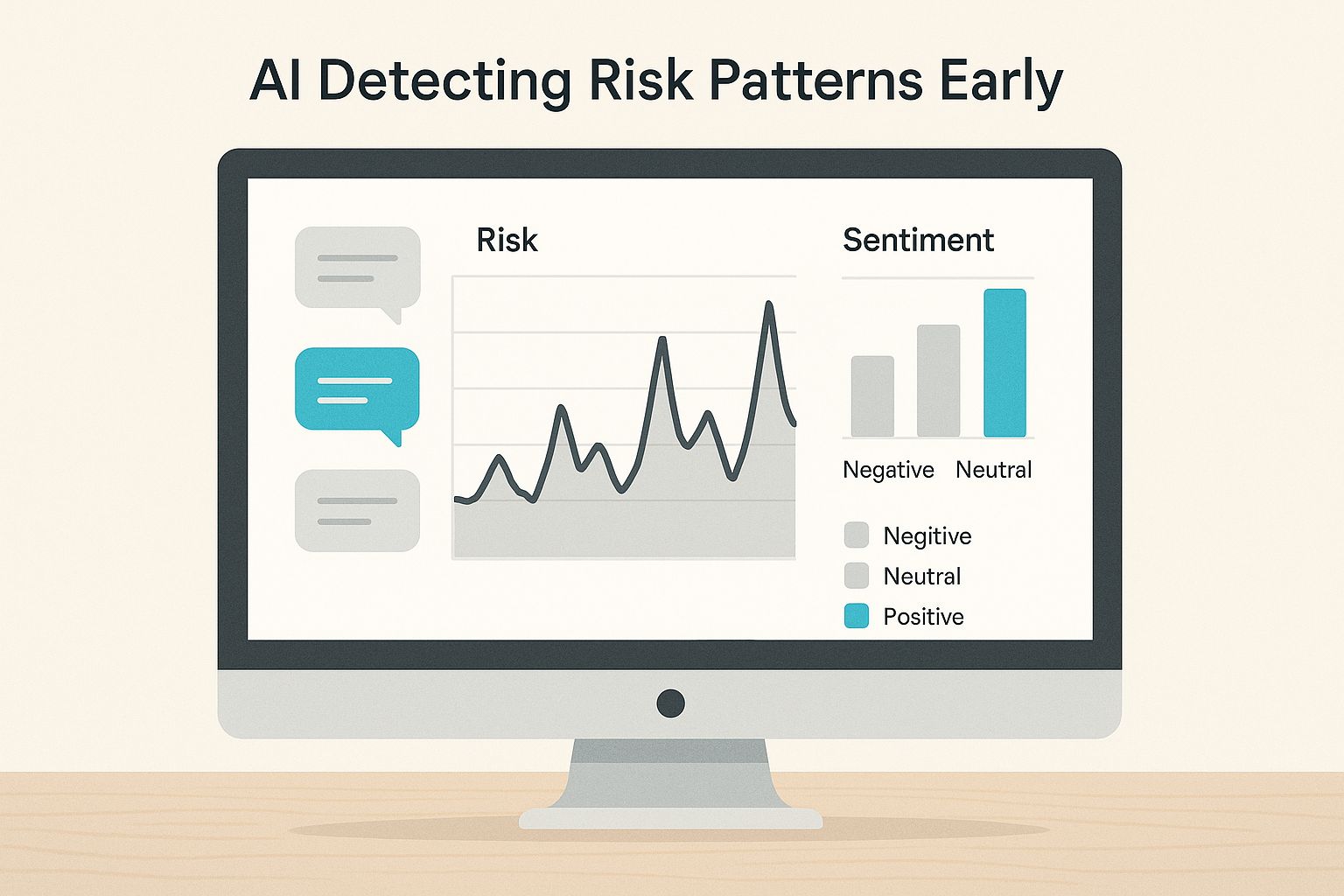
The key takeaway here is that risk isn't a single event. It’s a process. Spotting these behavioral patterns early gives leadership a crucial window to intervene before the dam breaks.
From Detection to Proactive Intervention
Armed with this early warning, HR and compliance leaders can step in. The goal isn’t to point fingers at struggling employees, but to fix the systemic issue causing the pressure in the first place. The conversation shifts from, "Who is failing?" to, "What in our process is broken?"
This non-intrusive method allows organizations to solve root-cause problems—like unrealistic deadlines or resource shortages—before they result in project failure, fraud, or a significant compliance breach.
This proactive stance delivers a clear and measurable ROI. By preventing just one major incident, the system pays for itself many times over. Solutions like our E-Commander and Risk-HR solution platforms are designed specifically to provide these early warnings, both ethically and effectively. To dig deeper into this approach, check out our guide on [detecting insider threats with ethical AI](https://www.logicalcommander.com/post/detecting-insider-threats-with-ethical-ai).
Navigating Ethical AI and EPPA Compliance
Ethics and privacy aren't just features we added on; they are the bedrock of our platform. For artificial intelligence emotional intelligence to be a genuine tool for positive change, it has to operate within a strict ethical framework. That’s precisely why Logical Commander was built from the ground up to comply with regulations like the Employee Polygraph Protection Act (EPPA), along with global privacy standards.
Our commitment is so deep, it even shapes the words we use. You'll never hear us use misleading or EPPA-restricted terms like “trust detection” or “truth verification.” Instead, we focus on measurable, objective indicators of “ethical consistency” and “integrity alignment.” This isn't just about semantics; it’s a direct reflection of our core belief that technology should support people, not surveil them.
A Privacy-First Design
Our entire platform is engineered for privacy. We hold ISO 27001/27701 certifications and adhere to the demanding requirements of GDPR and CPRA, ensuring every piece of data is handled with the highest level of security and respect for individual rights. Our technology gives HR, Compliance, and Legal teams the critical insights they need without resorting to invasive monitoring.
A huge part of deploying AI in sensitive areas is having a solid plan for ensuring legal compliance with AI. This isn't something you figure out later—it has to be built in from the start to build trust.
We believe that a healthy organization is built on trust, and technology should reinforce that trust, not undermine it. Our non-intrusive approach positions our platform as a supportive tool for maintaining a healthy workplace, not a disciplinary one.
The demand for this kind of technology is exploding. The emotional intelligence (EI) tech market is projected to skyrocket from around USD 2.6 billion to USD 23.0 billion by 2035. This massive growth is fueled by a real need for tools that help foster emotionally intelligent cultures, especially as remote work becomes more common.
Building Trust Through Ethical Technology
So, how does it work in practice? Instead of singling out individuals, our approach focuses on aggregated, anonymized patterns that help leaders spot systemic risks. This empowers organizations to get ahead of the root causes—things like excessive pressure on a team or a breakdown in communication—before they escalate into major incidents.
You can dive deeper into this in our article on navigating AI ethics and EPPA compliance in HR.
Thinking about your own ethical AI strategy? Here are a few actionable insights to get you started:
Prioritize Systemic Analysis: Focus on high-level, anonymized data to understand team and departmental health. This keeps the spotlight on fixing organizational issues, not on individual employees.
Be Transparent About AI Use: Clearly communicate how and why AI is being used. Emphasize that its purpose is to improve workplace health and prevent risk, not to monitor personal behavior.
Choose EPPA-Compliant Partners: Vet your technology partners carefully. Make sure they share your commitment to ethical, privacy-first principles and can prove they comply with key regulations.
Our privacy-first, EPPA-compliant approach stands in stark contrast to older, more intrusive methods of employee monitoring. The difference is about building trust versus creating fear.
Ethical AI Framework vs Traditional Surveillance
Feature | Logical Commander (Ethical AI) | Traditional Surveillance Tools |
|---|---|---|
Focus | Systemic risk & organizational health | Individual behavior & rule-breaking |
Data Type | Anonymized, aggregated patterns | Personally identifiable user activity |
Goal | Proactive risk prevention & culture building | Reactive discipline & evidence gathering |
Employee Experience | Supportive, dignifying, and transparent | Intrusive, stressful, and secretive |
Compliance | Built-in EPPA & GDPR compliance | High risk of violating EPPA & privacy laws |
Ultimately, choosing an ethical AI framework isn't just a compliance decision—it's a cultural one. It signals to your employees that you trust them and are invested in creating a healthier, safer workplace for everyone.
Actionable Steps to Strengthen Your Risk Strategy
Understanding the power of AI-driven emotional intelligence is one thing. Actually putting it to work is something else entirely. Moving from a good idea to a real strategy means fundamentally changing how your organization sees and handles human risk. It’s about building a more connected, responsive, and ethical infrastructure from the ground up.
By taking a few concrete steps, you can build a framework that doesn’t just flag risks after the fact but gets to the root causes, strengthening your entire integrity and compliance program. These aren't just theories; they're strategies designed to deliver immediate value and set you up for long-term organizational health.
Break Down Information Silos
The biggest risks almost always grow in the cracks between departments. HR sees the signs of burnout, Security notices odd data access patterns, and Legal is handling a few isolated complaints. When that information never leaves its silo, nobody connects the dots until it’s way too late.
This is where a unified risk dashboard becomes non-negotiable for cross-department collaboration. By creating a single source of truth, platforms like [E-Commander](https://www.logicalcommander.com/e-commander) give HR, Legal, and Security a shared, real-time view of what’s happening across the organization. It finally allows your teams to see the full picture and coordinate a proactive response.
Shifting your focus from individual blame to systemic issues is a cornerstone of ethical risk management. When you see a pattern of stress in a team, the goal is to fix the underlying process, not punish the people working within it.
Leverage a Global Partner Ecosystem
Trying to implement AI-powered risk management across the globe comes with its own set of headaches, from navigating quirky local regulations to understanding deep-seated cultural differences. A one-size-fits-all approach is doomed from the start.
That’s why a strong partner ecosystem is so critical. The global emotion AI market is exploding—North America alone holds about 39.2% of the market share, and the entire market is projected to hit USD 13.4 billion by 2033. This growth isn't just about technology; it’s about the growing demand for localized expertise. Discover more insights about the emotion AI market.
Working with a provider that has a global network means you have people on the ground who get it. Our PartnerLC program connects you with local experts who understand regional compliance and can help tailor the implementation to fit perfectly, ensuring a smooth and effective rollout anywhere in the world. This partner ecosystem for global coverage is a key differentiator that ensures our clients succeed.
If you’re ready to build a more resilient and proactive risk strategy, start here:
Actionable Insight 1: Implement a Unified Dashboard. Centralize risk indicators so HR, Compliance, and Security can finally work together seamlessly.
Actionable Insight 2: Focus on Systemic Fixes. Use AI-driven insights to find and fix the root causes of risk, like unrealistic pressure or broken communication channels.
Actionable Insight 3: Join a Partner Network. Expand your capabilities and ensure global compliance by joining our PartnerLC network, designed for integrators and advisors just like you.
The Future Is Proactive and Ethical
The future of managing internal risk is here, and it’s centered on artificial intelligence emotional intelligence—not as a surveillance tool, but as a system for understanding organizational health. Moving beyond reactive damage control means adopting a proactive, ethical approach that spots risky behavioral patterns long before they escalate into costly incidents. This is exactly what Logical Commander was built to do.
We provide real-time detection and a measurable ROI, all built on a privacy-first, EPPA-compliant foundation. Our platform helps leaders strengthen integrity and build a resilient culture by addressing systemic issues, not monitoring individuals.
Ready to shift your risk strategy from hindsight to foresight?
Request a demo to see how our ethical AI platform transforms internal risk management, or Join our PartnerLC network to bring these innovative solutions to your clients.
Know First. Act Fast. Ethical AI for Integrity, Compliance, and Human Dignity.