%20(2)_edited.png)

compliance risk assessment software: A Guide to Proactive, Ethical Prevention
- Marketing Team

- Dec 7, 2025
- 15 min read
Updated: Dec 11, 2025
If you’re managing compliance risk with a tangle of spreadsheets and manual checklists, you’re not just behind the curve—you're actively exposing your organization to liability. This outdated approach is a relic from a simpler time, completely outmatched by the complexity of modern regulations and the constant reality of human-factor risk.
Moving Beyond Outdated, Reactive Methodologies
Yesterday's risk management strategies were built on a foundation of reaction. The entire model was designed to wait for a compliance failure, a data leak, or an instance of fraud—and then scramble to investigate what went wrong. This after-the-fact approach is a fatal flaw in today’s business landscape. It’s not just inefficient; it’s a costly cycle that forces your compliance, legal, and HR teams into a state of perpetual crisis management instead of strategic prevention.
You’re stuck in a loop of costly investigations long after the damage is done. This reactive posture drains resources, grinds operations to a halt, and often fails to uncover the human-factor root cause of the problem. More importantly, it leaves you vulnerable to crippling penalties and the kind of reputational harm that can take years to repair.
The High Cost of Reactive Investigations
The core issue with these outdated systems is their entire focus is on documenting failure. They are designed to log what went wrong, not to identify the subtle warning signs of human-factor risk that emerge long before a crisis erupts. This creates an endless cycle of investigation, remediation, and waiting for the next incident.
The business impact of this reactive approach is severe:
High Costs: Post-incident forensic investigations are a black hole for capital. You’re suddenly paying for external experts, legal counsel, and hundreds of hours from your own internal teams.
Reputational Damage: A major compliance breach can shatter the trust you’ve built with customers and partners in a single afternoon, impacting future revenue.
Operational Disruption: Investigations pull your best people away from their core responsibilities, stalling projects and killing productivity across the board.
Limited Visibility: A spreadsheet gives you a fragmented, static snapshot of risk. It’s impossible to connect the dots or spot the emerging patterns that signal a systemic human-factor problem.
The New Standard: Proactive, Ethical Prevention
The market is already signaling a clear preference for a new model. The global compliance management software market is expected to explode from roughly USD 60.49 billion in 2025 to USD 102.51 billion by 2029. You can explore the full analysis of this market expansion on Research and Markets. This isn't just growth; it's a massive strategic shift away from obsolete, reactive tools.
Modern compliance risk assessment software represents a new standard of internal risk prevention. It’s built on the principle of proactive mitigation, designed to identify potential human-factor risks ethically and non-intrusively before they escalate into major incidents.
This forward-thinking strategy is about getting ahead of risks tied to the human element without resorting to invasive surveillance or legally toxic techniques. By adopting an EPPA-aligned platform, organizations protect themselves from liability while building a culture of integrity. The goal is to finally stop documenting failures and start actively preventing them, safeguarding both the business and its people.
Core Features of Modern Compliance Risk Assessment Software
Effective compliance risk assessment software is far more than a digital checklist. It's the central nervous system for your risk and compliance functions—the one place you can go to see, understand, and get ahead of internal threats before they become a real problem. While different platforms have their own features, there's a core set of capabilities that separates a modern solution from a glorified spreadsheet.
The best tools aren't just for logging what happened yesterday; they're designed to give you intelligent, forward-looking guidance on what could happen tomorrow.
It starts with a centralized risk register. This isn't just a database; it’s a living inventory of every risk your business faces—operational, financial, regulatory, and especially human-factor risks, all in one place. This single source of truth breaks down the dangerous silos created by scattered spreadsheets, giving decision-makers a complete and consistent picture of the company's risk landscape.
From there, the platform must guide you through a structured assessment. This means mapping risks to specific controls, assigning clear ownership to individuals, and laying out a concrete mitigation plan for each threat. The goal is to draw a straight line from a potential problem to the exact measures protecting you from it.
AI-Driven Automation and Intelligent Analysis
The true power of modern compliance risk assessment software is its ability to automate and analyze. Manual control testing and chasing down evidence for audits are slow, tedious, and prone to human error. Top-tier platforms automate these workflows entirely.
This automation frees up your compliance team to focus on high-level strategy instead of administrative tasks. The software can automatically schedule tests, notify control owners for updates, and gather all necessary evidence for audits in one secure location. Not only does this streamline operations, but it also creates an immutable audit trail that proves due diligence to any regulator.
The biggest leap forward, however, is the use of AI-driven analytics for predictive risk identification. This is a complete departure from the old reactive model. Instead of waiting for a crisis, the system flags potential human-factor risks based on subtle patterns in aggregated data—all without resorting to legally prohibited surveillance or other intrusive methods.
This image drives home the point, showing how moving from spreadsheets to specialized software is a critical step in mitigating real-world business dangers.
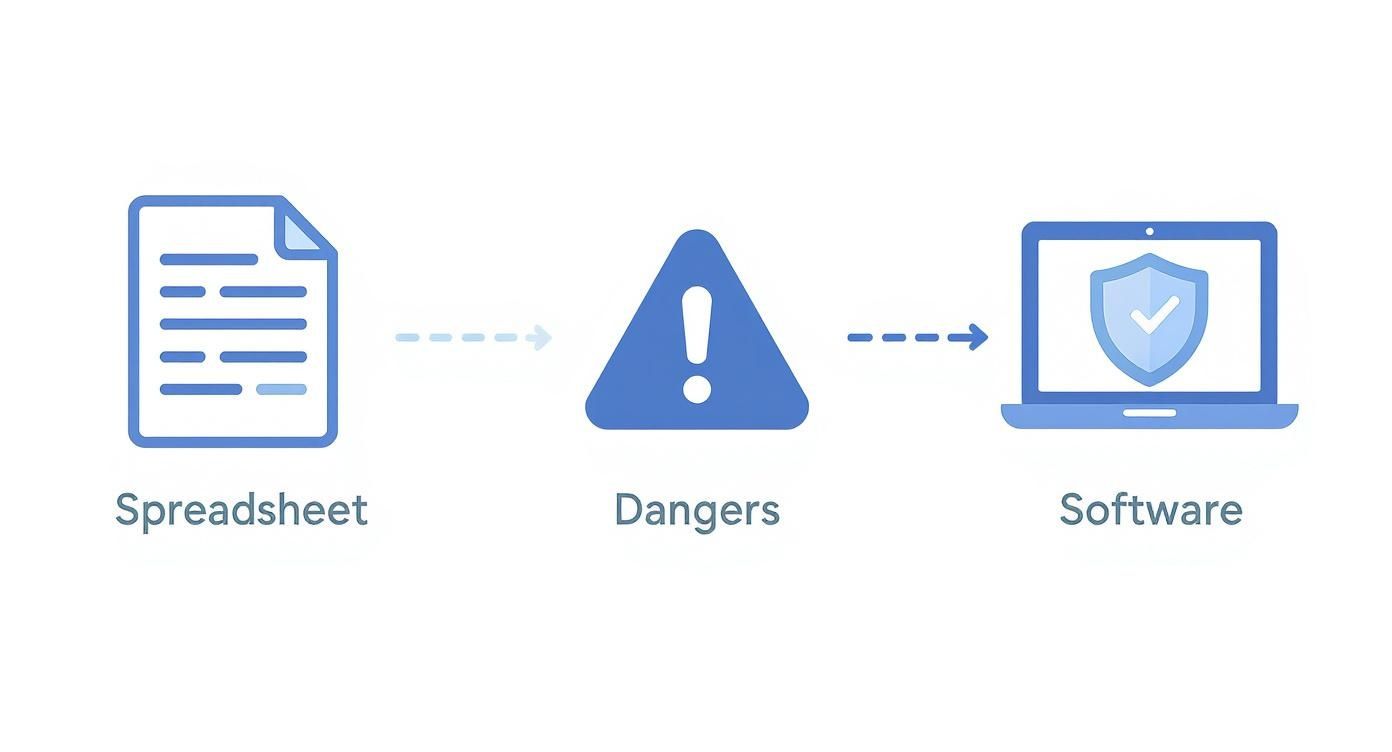
As you can see, clinging to outdated tools creates vulnerabilities. A modern platform acts as a protective shield against the kind of human-factor threats that can escalate in a heartbeat.
The table below breaks down how transformative this shift from old-school methods to a modern platform really is.
Feature Comparison: Traditional vs. Modern Risk Platforms
Capability | Traditional Reactive Approach | Modern Preventive Platform |
|---|---|---|
Risk Identification | Manual assessments, static checklists, and infrequent interviews. Highly subjective. | AI-driven, continuous analysis of risk indicators across the organization. Objective and data-driven. |
Data Silos | Information is scattered across spreadsheets and disconnected systems. No single view of risk. | A centralized platform that integrates data, creating a single, unified source of truth for all human-factor risks. |
Control Testing | A painful, manual process performed periodically. Evidence collection is time-consuming. | Automated control testing schedules, evidence collection, and real-time alerts for failures. |
Reporting | Static, dense reports that are outdated the moment they’re created. Difficult to interpret quickly. | Dynamic, visual dashboards with drill-down capabilities. Clear, actionable insights for leadership. |
Leaving the old, reactive model behind isn't just an upgrade—it's a fundamental change in how you protect the business from internal threats.
Dynamic Monitoring and Reporting
A risk assessment that’s out of date is worthless. Business environments and regulations are always changing, and your risk tools must keep up. Modern compliance risk assessment software is built for this constant motion, with key features you can't operate without:
Regulatory Change Management: The platform monitors updates from thousands of global regulators, alerting you when a change impacts your obligations and mapping it to the controls you need to update.
Continuous Controls Monitoring: By integrating with your core business systems, the software can check control effectiveness in near real-time. It flags a problem the moment it happens, not weeks later during a manual audit.
Real-Time Data Feeds: Advanced platforms are even leveraging real-time data for dynamic risk insights, which provides a much sharper and more current picture of your risk exposure.
Finally, all this intelligence must be communicated clearly. Powerful reporting and dashboarding capabilities are non-negotiable. Executive dashboards give leaders a high-level, visual snapshot of top risks and compliance health, while allowing teams to drill down into the details for an investigation.
This ability to zoom from a 30,000-foot view to ground-level data is essential for both strategic oversight and daily management. To see how these features plug into a broader strategy, take a look at our guide on enterprise risk management software solutions. All these pieces work together to build a compliance framework that is resilient, proactive, and built on a foundation of integrity.
The Move to Ethical Prevention in Risk Management
For years, the playbook for managing internal threats was fundamentally flawed. It was built on intrusive employee monitoring, after-the-fact investigations, and a culture of suspicion. This old model wasn't just ethically questionable; it was a business liability waiting to happen, creating legal exposure and destroying employee morale.
A strategic shift is finally underway—a move away from invasive reaction and toward ethical prevention.
This new standard is built on a simple but powerful truth: internal threats are human-factor risks. They don’t originate in a server room or a firewall; they start with people. But mitigating this human-factor risk doesn't require a confrontational stance. In fact, the most effective compliance risk assessment software does the complete opposite.
Instead of deploying surveillance tools that violate privacy and erode engagement, leading platforms champion a non-intrusive, EPPA-aligned methodology. It's an approach that respects employee dignity by design, operating without secret monitoring or legally prohibited analysis.
The Steep Price of Surveillance-Based Tools
Traditional risk tools that depend on surveillance create a toxic work environment. When employees feel they are constantly being watched, it breeds resentment and disengagement, which ironically increases the very human-factor risks the company is trying to prevent. This methodology isn’t just bad for culture; it's a legal minefield.
These outdated platforms often operate in a legal gray area, exposing the organization to significant liabilities under regulations like the Employee Polygraph Protection Act (EPPA). The financial and reputational fallout from a single compliance failure here can be devastating.
The core failure of surveillance-based tools is that they treat employees as liabilities to be controlled rather than as assets to be supported. This fundamental misunderstanding of the human factor dooms these strategies to fail, as they only address symptoms after the damage is done.
A truly modern approach understands that prevention isn't about policing behavior. It's about addressing the root causes that lead to risk, creating a supportive framework that protects both the organization and its people.
The New Standard of Risk-HR
This evolution has given rise to a new way of thinking about internal governance, often called Risk-HR. It’s a proactive, data-driven strategy that integrates risk awareness directly into your HR and compliance functions. An AI-driven platform like E-Commander is the operational backbone for this new standard.
It provides a framework to spot potential integrity violations or conflicts of interest before they escalate—all while staying strictly compliant with labor laws and ethical guidelines. This transforms risk management from a punitive, after-the-fact exercise into a protective, forward-looking one. For a deeper dive, you can explore our detailed guide on proactive ethical risk management.
This ethical, preventive posture delivers significant business advantages:
Reduced Legal Liability: By strictly adhering to EPPA and avoiding invasive techniques, the organization shields itself from costly litigation and regulatory penalties.
Strengthened Company Culture: A non-intrusive approach builds a foundation of mutual respect and psychological safety—critical for attracting and retaining top talent.
Proactive Mitigation: It allows leadership to get ahead of potential issues early, stopping minor concerns from snowballing into full-blown crises.
Enhanced Reputation: Companies that champion ethical risk management are seen as industry leaders, earning greater customer loyalty and attracting better talent.
Ultimately, the strategic shift to ethical prevention is about playing the long game. It moves beyond the shortsighted tactics of surveillance and embraces a smarter, more sustainable model of governance. By using AI-driven compliance risk assessment software that is ethically designed, organizations can safeguard their assets, protect their reputation, and build a more resilient workforce.
Integrating Compliance Risk Assessment Software into Your GRC Strategy
Compliance risk isn’t an isolated problem you can fence off and deal with separately. It’s a deeply interconnected threat that impacts every corner of your organization. Treating it as a standalone issue is a classic mistake and a recipe for failure.
The most effective compliance risk assessment software doesn't just manage compliance; it acts as the connective tissue within a larger Governance, Risk, and Compliance (GRC) framework.
This integration is where the real strategic value emerges. It’s about tearing down the operational silos that keep Compliance, Legal, HR, and Internal Audit from communicating effectively. When these teams operate from different spreadsheets and conflicting priorities, you get a fractured, incomplete picture of your true risk posture, leaving dangerous blind spots.

An integrated platform shatters these walls by creating a single source of truth for all risk-related data. This unified view provides a cohesive, 360-degree understanding of organizational risk, ensuring everyone is finally working from the same playbook.
Building a Unified View of Human-Factor Risk
A cohesive GRC strategy means insights from one department immediately inform the actions of another. For example, if HR flags a concern about potential misconduct, an integrated system seamlessly correlates that concern with existing compliance controls and potential legal fallout—no manual digging required.
This creates a powerful feedback loop that makes the entire organization smarter and more resilient. The business advantages are immediate:
Smarter Decision-Making: When leadership has a complete and accurate view of human-factor risk, they can make strategic decisions with confidence, backed by data, not guesswork.
Simplified Audits: Imagine having all risk assessments, control evidence, and mitigation actions in one place. Preparing for audits becomes a streamlined process, not a chaotic fire drill.
Consistent Policy Application: An integrated system ensures that compliance policies are understood and applied consistently across every department and location.
The ultimate goal is to make human-factor risk management a central pillar of corporate governance. By embedding risk awareness into daily operations, you transform compliance from a reactive checklist into a proactive, cultural value.
The market is voting with its wallet on this integrated approach. The enterprise GRC market, valued at approximately USD 62.92 billion in 2024, is expected to hit USD 72.42 billion in 2025. It’s projected to grow at a CAGR of around 13.2% through 2030, which shows the high demand for unified platforms that can manage complex regulatory landscapes.
The Role of AI in GRC Integration
Technology is the engine that makes a unified GRC strategy work. A huge piece of this involves the smart application of newer tech, like AI tools for corporate compliance. Modern platforms use AI and automation to connect disparate data points, spot cross-functional risk patterns, and provide a truly holistic view of the organization's health.
For instance, an AI-driven system can detect subtle indicators of an internal threat that would be completely missed when data is siloed. It can correlate seemingly unrelated events to surface a potential conflict of interest or a budding fraud scheme, allowing for intervention before it’s too late.
To dig into how these components fit together, check out our guide on creating a compliance risk management framework. By uniting departments under a single, intelligent platform, organizations can finally move from a fragmented defense to a truly unified and resilient governance strategy.
How to Choose the Right Compliance Risk Assessment Software
Picking the right compliance risk assessment software is a make-or-break decision that will define your company's resilience and integrity. This isn't just about buying a tool; it's about adopting a strategic philosophy of risk prevention. The wrong choice can saddle you with a system nobody uses, one that clashes with your company culture, or—even worse—one that opens you up to new legal liabilities.
The market for these platforms is exploding for a reason. Valued at USD 14.9 billion in 2024, it's projected to more than double to a staggering USD 32 billion by 2034. That growth is driven by a desperate need for smarter, preventive risk visibility. You can discover more insights about the risk management software market on Technavio to see the full picture.
With so many vendors entering the market, decision-makers need a clear evaluation process that cuts through the marketing noise.

Foundational Ethical Alignment: The Non-Negotiable First Step
Before you look at a single feature, you must draw a hard line on ethics. It's the most critical filter. Does the platform help you prevent risk, or does it rely on invasive employee surveillance? This isn't a philosophical debate; it's a direct assessment of your future legal liability.
Any tool built on secret monitoring, invasive data collection, or any analysis mimicking lie detection is an immediate deal-breaker. These methods are ethically bankrupt and often violate regulations like the Employee Polygraph Protection Act (EPPA). Adopting such a platform is like knowingly inviting massive legal penalties and reputational chaos into your organization.
The gold standard for any modern platform is being explicitly EPPA-aligned. This isn't a feature you can toggle on or off. It means the entire methodology is built from the ground up to identify human-factor risk without ever crossing the line into surveillance. It is the foundation of ethical risk management.
Key Evaluation Criteria for Software Selection
Once you've established that non-negotiable ethical baseline, you can start digging into a platform's capabilities. A structured approach is your best friend here. Use this checklist to guide your conversations with vendors and compare solutions effectively.
This framework will help you systematically vet different compliance risk assessment software options and pinpoint the one that truly aligns with your goals for proactive, ethical risk management.
Scalability and Performance: Can the platform keep up as your company grows? You need to know if it can handle more users, more data, and more business complexity without performance degradation.
Integration Capabilities: A risk platform that lives on an island is useless. It must connect with your existing HRIS, ERP, and other core systems to create a single, unified view of human-factor risk.
Reporting and Analytics: The software must deliver clear, actionable insights—not just massive data dumps. Look for dynamic dashboards and customizable reports that let you go from a 10,000-foot view down to granular details in a few clicks.
Focus on Prevention vs. Reaction: Is this tool designed to get you ahead of problems, or is it just another system for documenting failures after the fact? Prioritize platforms that offer AI-driven analytics focused on spotting the early warning signs of internal threats.
By sticking to this framework, you’ll find a solution that doesn't just check technical boxes. You'll choose a partner that reinforces a culture of integrity and shields your organization from the devastating legal and financial blowback of outdated, invasive technology.
Partner with Us to Redefine Risk Prevention
Are you a B2B SaaS company, consultant, or service provider dedicated to delivering solutions that solve real business problems? If your clients are stuck with outdated, reactive risk management, it's time to offer them a powerful, ethical alternative that sets you apart from the competition.
Joining forces with Logical Commander allows you to lead the market shift toward proactive, non-intrusive risk prevention. Our PartnerLC program is built for forward-thinking organizations that see the massive liabilities of traditional internal risk tools. By partnering with us, you can expand your offerings with a unique, EPPA-aligned solution that directly answers the growing demand for ethical internal threat management. This isn't just another add-on; it's a strategic differentiator that positions you as a leader.
Gain a Competitive Edge with Ethical AI
The market for compliance risk assessment software is crowded with vendors pushing surveillance-based tools that create more problems than they solve. These platforms expose your clients to huge legal risks and foster a culture of distrust that poisons the workplace.
By offering an AI-driven, non-intrusive solution, you provide a clear alternative that safeguards their reputation, protects their assets, and respects their workforce. We are actively seeking partners who want to deliver real value and redefine the standards of internal governance.
Our ideal allies include:
B2B SaaS Companies: Integrate our EPPA-aligned capabilities to enhance your existing platform and provide a holistic solution for human-factor risk.
Consulting Firms: Equip your team with a cutting-edge tool to deliver superior risk advisory, compliance, and internal audit services.
Managed Service Providers (MSPs): Expand your portfolio with a high-demand, preventive security offering that protects clients from the inside out.
A Collaborative Path to Success
Partnering with Logical Commander is about more than technology. It's a strategic alliance built on shared values of integrity and prevention. We provide our partners with comprehensive support, training, and co-marketing resources to ensure our mutual success.
You gain access to our E-Commander platform, which is setting the new standard in Risk-HR, enabling your clients to identify and mitigate human-factor risks before they escalate into costly incidents.
A partnership with Logical Commander is a strategic move to deliver innovative, high-demand solutions. It empowers you to protect your clients, differentiate your business, and drive new revenue streams in the ethical risk management space.
This collaboration allows you to meet the sophisticated needs of decision-makers in Compliance, HR, and Legal who are actively searching for better ways to manage human-factor risk. To learn more, explore our Partner Program for AI-Driven Internal Risk Management. Join our growing PartnerLC ecosystem and help us build a future where risk prevention is both effective and ethical.
Your Questions on Compliance Risk Assessment Software, Answered
When evaluating new technology like compliance risk assessment software, decision-makers have questions. It's a significant decision that becomes a core part of how you protect your organization. Here are direct, practical responses to the most common questions we hear from leaders in Compliance, Legal, and HR.
These answers are designed to clarify the business impact and ethical foundation of a modern approach to managing human-factor risk.
What Is the Primary Benefit of a Proactive Approach?
The single biggest benefit is prevention over reaction.
The traditional approach to compliance is to wait for an incident—misconduct, a compliance failure, an internal threat—and then launch a costly, disruptive investigation. This reactive cycle keeps you permanently on the defensive, trying to contain damage that has already been done.
A proactive platform flips that model. It’s designed to spot the subtle warning signs of human-factor risk before they escalate. By using AI-driven internal threat detection in an ethical and non-intrusive way, you get ahead of potential issues. You move from crisis management to strategic prevention, which saves significant money, protects your reputation, and prevents operational disruption.
How Does This Software Differ from Employee Monitoring Tools?
This is a critical distinction for any decision-maker. Employee monitoring or surveillance tools are, by their very nature, invasive. They often operate in a legal gray area, creating massive liability under regulations like the Employee Polygraph Protection Act (EPPA) and fostering a culture of distrust that damages morale and productivity. They are a reactive tool designed to catch people after the fact.
An ethical, EPPA-aligned compliance risk assessment software is fundamentally different. It does not engage in surveillance, secret monitoring, or any kind of analysis that could be interpreted as lie detection. Instead, it identifies risk indicators from aggregated data to flag anomalies and potential conflicts of interest, all while preserving employee dignity and privacy.
The goal is to protect the organization and its people through prevention, not to police them through surveillance. This non-intrusive approach is the new standard for modern, responsible governance.
How Long Does It Take to Implement This Kind of Software?
Implementation times vary based on organizational complexity, but modern SaaS platforms are built for speed. We're not talking about the months-long deployments of old on-premise systems. Most companies start with a phased approach in a specific department or focusing on a key risk area to demonstrate value quickly.
A few factors influence your timeline:
Integration Needs: Connecting the platform to your existing systems, like an HRIS or ERP, is a key step.
Data Migration: If you have existing risk and compliance data, you'll need a plan to import it.
User Training: Getting your teams comfortable and confident with the new tool is essential for success.
Working with a dedicated implementation partner can accelerate this process significantly. It’s common to get a pilot program running in a matter of weeks, not months. The goal is a swift return on investment by addressing the most impactful use cases first.
Ready to move beyond reactive investigations and embrace a proactive, ethical standard for internal risk prevention? Logical Commander Software Ltd. provides the AI-driven, EPPA-aligned E-Commander platform to protect your organization and its people without resorting to invasive surveillance.
Discover how our software can unify your risk intelligence and help you prevent threats before they cause damage.