%20(2)_edited.png)

Your Guide to Ethics and Compliance Software
- Marketing Team
- 3 days ago
- 16 min read
Updated: 16 hours ago
Ethics and compliance software isn't just a fancy tool; it's the central nervous system for a company's integrity. It brings all your risk data under one roof and automates the tedious work, shifting your entire organization from a reactive, fire-fighting mode to a proactive, preventive strategy.
Why Modern Businesses Need Ethics and Compliance Software
In a world of ever-tightening regulations and intense public scrutiny, trying to manage corporate integrity with spreadsheets is like navigating a minefield blindfolded. The risks are just too high, and a single misstep can be catastrophic. That’s why modern ethics and compliance software has become a strategic necessity, not just another operational add-on.
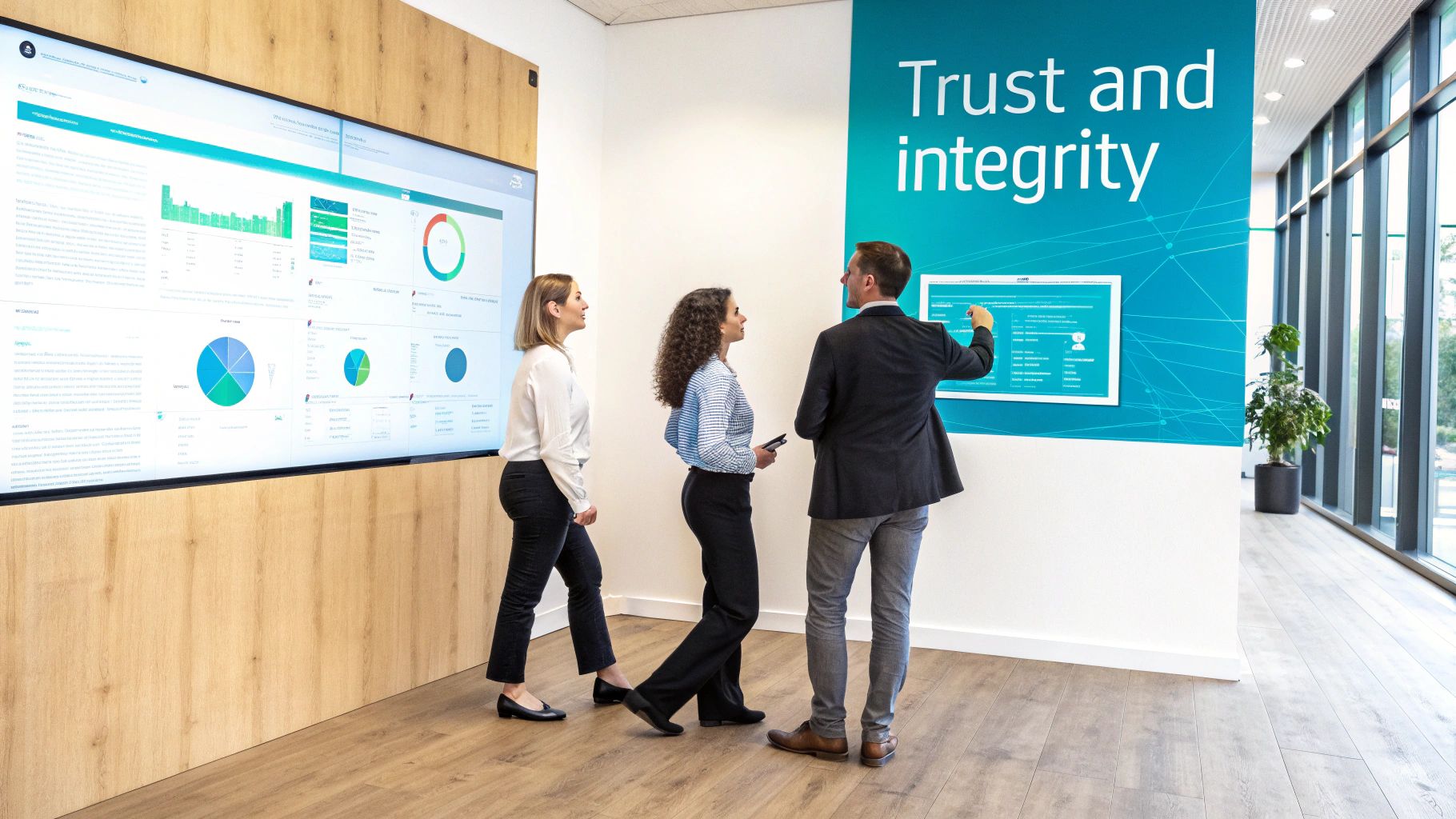
The fallout from non-compliance is staggering, both financially and reputationally. Breaches involving non-compliance factors cost an average of $4.61 million—a figure that should get any leader's attention. This painful reality is fueling explosive demand, with the compliance management software market projected to hit $75.8 billion by 2031. These numbers tell a simple story: investing in compliance is far cheaper than paying for failure.
The Shortcomings of Traditional Methods
Let's be blunt: manual methods are broken. They are a guaranteed recipe for human error, creating siloed departments that can't see the big picture and leaving you without the real-time visibility needed to act decisively.
The weak points are glaring:
Fragmented Data: Information is scattered across the company in different formats. Getting a complete, accurate view of your risk landscape? Impossible.
Slow Response Times: Without automation, investigations crawl along, evidence gets lost, and resolutions are delayed. This slow, clunky process only increases your legal exposure.
Lack of Auditability: Manual processes leave a messy, unreliable paper trail, making it incredibly difficult to prove to regulators that you’ve done your due diligence.
If you really want to grasp the financial upside of automation, just look at the stark difference between manual and automated processes. This analysis of the true cost of manual order screening vs automated restrictions drives home how modern platforms eliminate hidden labor costs and reduce risk.
Shifting from Reaction to Prevention
The single biggest advantage of dedicated software is the cultural shift it enables—moving from a reactive crouch to a proactive stance. Instead of scrambling to clean up the mess after an incident, these platforms help you spot the early warning signs and fix problems before they explode.
This strategic shift is about more than just dodging fines. It's about building a resilient organizational culture where integrity is woven into the fabric of daily operations. You're not just protecting the bottom line; you're protecting your people and your reputation. The goal is to build a foundation of trust so strong it becomes a genuine competitive advantage.
What Does This Software Actually Do?
So what exactly is ethics and compliance software? Forget the idea of just another tool for logging incidents. Think of it instead as the central nervous system for your company’s integrity. Its real job is to connect every team involved in managing risk—HR, Legal, Security, you name it—into a single, intelligent unit.
Instead of critical information getting trapped in departmental silos, this kind of platform gives you a unified, real-time picture of your organization's ethical health. This isn't just about storing data; it’s about turning that data into clear, preventive action. It transforms chaotic manual processes into structured, automated workflows that bring consistency to incredibly sensitive situations.
A Unified Hub for Risk Intelligence
At its core, this software is all about centralizing intelligence. Picture this: an HR manager is looking into a misconduct complaint, a compliance officer is chasing down policy sign-offs, and a security lead is investigating a potential data leak. In most companies, these teams work in separate worlds, using different spreadsheets and tools. Critical connections between these events are almost always missed.
Ethics and compliance software tears down those walls. It pulls all related information into one secure environment, creating a single source of truth for everyone involved.
For example: When a new concern is reported, the platform can instantly cross-reference past incidents, check related employee records, and pull up relevant policies. This gives investigators the full context they need right from the start, instead of forcing them to spend days hunting for information across the organization.
This unified approach means every stakeholder is looking at the same validated information. They start speaking a common operational language and making decisions based on a complete picture of the risk, not just a small piece of it.
Automation That Drives Real Accountability
Another core function is using automation to drive accountability. Let’s be honest, managing investigations and compliance tasks by hand is slow, full of errors, and nearly impossible to audit effectively. Software brings discipline and speed by turning your internal procedures into automated, repeatable processes.
The goal is to build a system where accountability is baked into the process itself. By standardizing how incidents are reported, investigated, and resolved, you create a fair, transparent, and defensible record of every single action taken.
And this automation goes way beyond just investigations. It can manage everything from distributing new policies and tracking employee training to handling conflict of interest disclosures. The system makes sure deadlines are hit, approvals are logged, and nothing ever falls through the cracks. This frees up your teams to focus on actually mitigating risk instead of drowning in administrative busywork.
Ethical by Design, Not Invasive Surveillance
This is the most critical point: modern ethics and compliance software is fundamentally different from invasive surveillance tools. Ethical platforms are built on a foundation of transparency and due process, not employee monitoring. Their purpose is to manage verifiable data and structured risk indicators—not to pry into private conversations or make judgments about an employee's character.
These systems are designed to build trust, not break it. They empower organizations to act on clear, factual information while respecting employee privacy and dignity. By focusing on verifiable actions and procedural fairness, this technology helps you operate with confidence and uphold your company’s values without ever crossing the ethical line into surveillance.
Essential Features Your Platform Must Have
Picking the right ethics and compliance software is about more than just modernizing old processes. It’s about arming your organization with the specific tools needed to build a genuinely resilient and ethical culture. Let's move from theory to the real world and break down the non-negotiable features that separate a powerful, integrated platform from a glorified digital filing cabinet.
This hierarchy shows how the core components of modern E&C software build on each other, moving from foundational functions to a unified, intelligent system that acts as the organization's central nervous system for risk.
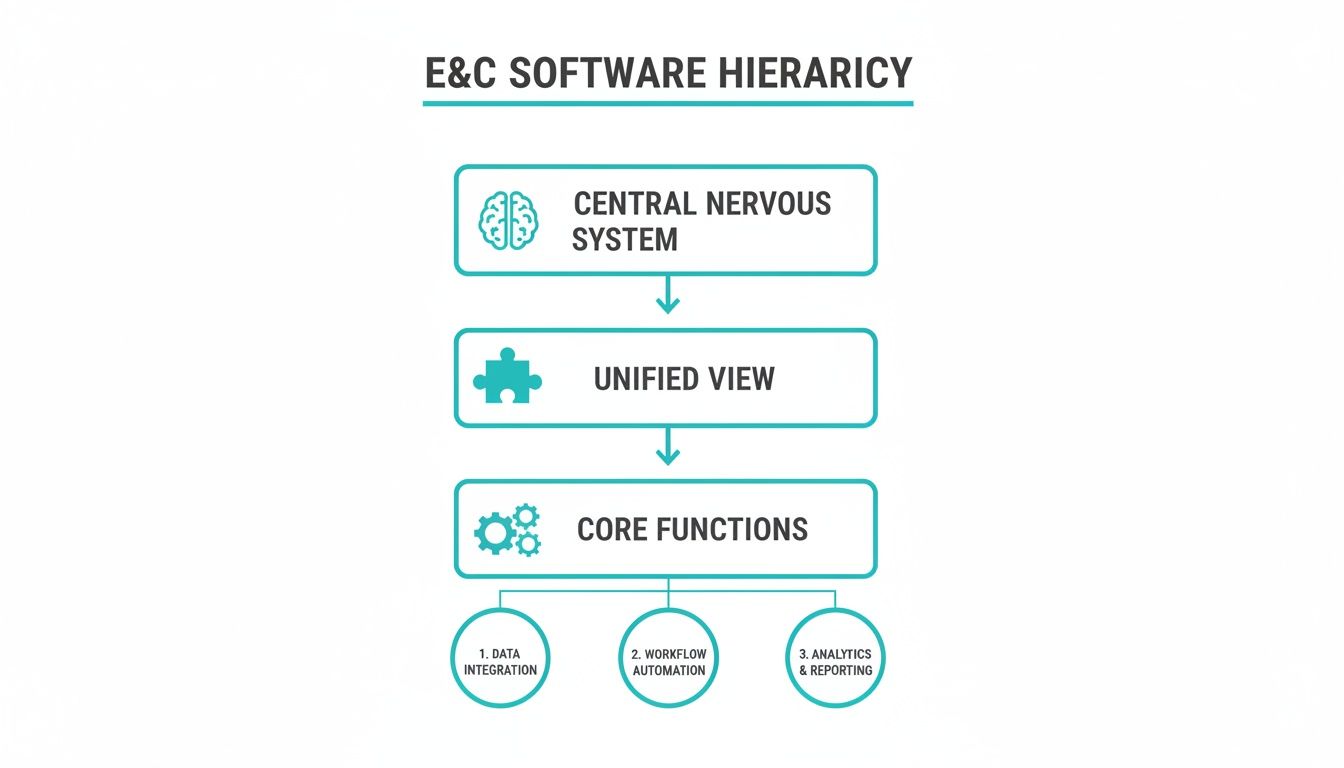
As you can see, essential functions like case and policy management form the base. This leads to a unified view that connects separate data streams, culminating in a central system that delivers holistic risk intelligence.
The shift from manual, siloed methods to a modern software approach is dramatic. One is reactive and prone to failure; the other is proactive and built for resilience.
Traditional vs. Modern Ethics and Compliance Approaches
Aspect | Traditional Approach (e.g., Spreadsheets, Manual) | Modern Software Approach (e.g., E-Commander) |
|---|---|---|
Visibility | Siloed data across departments, creating massive blind spots. | A unified dashboard providing a single, real-time source of truth. |
Process | Inconsistent, manual workflows prone to human error and delays. | Automated, auditable workflows that ensure fairness and consistency. |
Evidence | Disorganized, insecure documentation with a broken chain of custody. | A secure, centralized repository with role-based access controls. |
Risk Focus | Reactive; only addresses issues after they have been reported. | Proactive; uses indicator-based detection to spot risks before they escalate. |
This evolution isn't just a tech upgrade; it’s a fundamental change in how you protect your organization's integrity and bottom line.
Unified Dashboards and Real-Time Insights
Your ethics and compliance platform has to be your single source of truth. A unified dashboard acts as the command center, pulling together data from HR, Legal, Security, and other departments to give you a complete, real-time view of your organization's risk landscape. Without it, you’re stuck managing scattered information and making decisions with half the picture.
This centralized view lets leaders spot trends, identify emerging hotspots, and put resources where they’re needed most. Instead of digging through endless spreadsheets, you can see at a glance:
Case Status: Track the real-time progress of all open investigations.
Policy Adherence: See which employees have completed required training and acknowledged policies.
Risk Indicators: View analytics on potential trouble spots before they blow up.
This immediate visibility transforms your ability to be proactive, turning a mess of data points into clear, actionable intelligence.
Automated Workflows for Case Management
Managing cases manually is slow, inconsistent, and a recipe for human error. A critical feature of any serious platform is the ability to automate workflows based on your company’s exact procedures. This guarantees every reported concern is handled with the same level of care, rigor, and documentation.
By automating the process, you're not just saving time—you're embedding fairness and consistency into your response. Every step, from initial intake to final resolution, is logged, timestamped, and auditable, creating a defensible record that stands up to scrutiny.
For instance, when a report comes in, the system can automatically assign it to the right investigator, notify key stakeholders, and generate a checklist of required actions. This kills the guesswork and ensures crucial deadlines are never missed. That level of structure is fundamental for any organization trying to manage risk seriously.
Secure Evidence and Documentation Handling
The entire integrity of an investigation rests on how you manage evidence and documentation. Your software must provide a secure, centralized vault where all case-related files—documents, interview notes, and other evidence—can be stored with an unbreakable chain of custody. Access must be strictly controlled by user roles, ensuring only authorized individuals ever see sensitive information.
This capability is essential for both internal integrity and external audits. A clean, auditable trail proves your organization followed due process and handled all information responsibly. It's a core component for building trust with employees and regulators alike. To see how this fits into a bigger strategy, check out our guide to the best governance, risk, and compliance software.
Indicator-Based Risk Detection
Finally, a truly forward-thinking platform goes beyond just managing reported incidents. It helps you spot potential risks before they ever materialize. This is done through indicator-based risk detection, which analyzes structured, verifiable data points—not invasive employee monitoring—to flag anomalies that might signal a brewing problem.
These indicators are based on procedural and operational data, like unusual access patterns or repeated policy violations. This ethical approach lets you address vulnerabilities proactively while respecting employee privacy. It's the ultimate shift from reaction to prevention, enabling you to "Know First, Act Fast!" and reinforce a culture of integrity from the ground up.
Navigating Complex Regulations and Privacy Rules
In the world of ethics and compliance, regulations aren’t just annoying red tape—they are the very foundation of trust. Any software operating in this space has to navigate a minefield of complex, ever-changing laws where individual privacy and procedural fairness are king. Think of this legal framework as the non-negotiable rules of the game; it dictates what’s possible, what’s required, and what’s absolutely forbidden.
The explosive growth of this market is directly tied to these mounting legal pressures. Valued at USD 36.22 billion in 2025, the global compliance software market is expected to rocket to USD 65.77 billion by 2030. That’s not just growth; it's a reflection of the immense pressure on businesses to keep up with a dizzying maze of regulations, from GDPR in Europe to CCPA in the U.S. Platforms like E-Commander thrive in this environment by giving leaders a way to centralize risk intelligence without resorting to invasive surveillance, staying perfectly aligned with standards like ISO 27001 and GDPR.
Understanding the Regulatory Red Lines
Modern privacy and labor laws draw a very clear line in the sand. Regulations like the Employee Polygraph Protection Act (EPPA) and data privacy laws like GDPR create a hard stop against any tool that even hints at being a lie detector, performing psychological profiling, or engaging in secret employee monitoring. The entire point is to protect individual dignity and prevent coercive or discriminatory practices from taking root.
Any platform claiming to operate ethically must be "built under regulation," meaning its core design DNA respects these legal boundaries from the ground up. It can't make subjective judgments about an employee’s character, emotions, or honesty. Instead, its focus has to remain squarely on structured, verifiable data and transparent, auditable processes.
A truly compliant platform turns these regulatory constraints into a strategic strength. By adhering strictly to the rules, it shields your organization from devastating legal challenges while simultaneously building a culture of employee trust and psychological safety.
This approach ensures technology strengthens your ethical framework rather than undermining it.
GDPR, CCPA, and Their Impact on Software Design
Regulations like the General Data Protection Regulation (GDPR) in Europe and the California Consumer Privacy Act (CCPA) have completely rewritten the rules for handling personal data. These laws give individuals powerful rights over their information and slap crippling penalties on companies that fail to comply.
For ethics and compliance software, this means several design principles are completely non-negotiable:
Data Minimization: The platform must only collect and process data that is absolutely essential for a specific, legitimate purpose. No fishing expeditions.
Purpose Limitation: Information gathered for a misconduct investigation, for instance, cannot be recycled for performance reviews or other unrelated tasks.
Security by Design: Tough security measures, like end-to-end encryption and strict access controls, have to be baked in from the very beginning, not bolted on as an afterthought.
Right to Access: If an individual asks, the system must be able to produce a clear, auditable trail of how their data was used.
This deep integration of privacy principles is what separates an ethical tool from a massive liability waiting to happen. When you layer on industry-specific rules, like those in healthcare, understanding unique compliance hurdles such as HIPAA SharePoint migration risks becomes critical for maintaining data integrity and avoiding catastrophic failures.
Security Without Sacrificing Human Dignity
The bottom line is that effective compliance technology delivers security without demanding human dignity as payment. The best platforms empower you to spot and shut down risks using objective, indicator-based data—not subjective, invasive judgments. They give you the tools to run fair, consistent, and well-documented investigations that respect due process every step of the way.
This approach allows your organization to act decisively to protect itself while reinforcing its commitment to its people. You can learn more about balancing these priorities in our complete guide to regulatory compliance and risk management. By choosing a platform designed to operate within these legal and ethical guardrails, you build a resilient organization that is both secure and worthy of trust.
How to Implement Your New Platform for Success
Picking the right ethics and compliance software is a huge win, but let’s be honest—it’s only half the battle. The real test of success is in the rollout, a process that’s far more about people and procedures than it is about technology. A world-class platform can fall completely flat if the implementation is disorganized, confusing, or fails to win over the teams who need to use it every day.
A successful launch needs a smart, thoughtful roadmap that connects the technology directly to your company’s culture. It’s all about turning a new tool into an integrated part of your operational DNA, making sure it empowers your people from day one instead of feeling like just another system they’re forced to use.
Align Key Stakeholders From the Start
Before you touch a single setting in the software, your first move is to get your leadership team on the same page. The best implementations always start by bringing together the heads of HR, Legal, Security, and Compliance to hammer out a shared vision and a common language for how you’ll operate.
This initial alignment is absolutely critical for breaking down the departmental silos that so often get in the way of effective risk management. When these leaders agree on the goals, the terminology, and the procedures, they can champion the new platform with a single, consistent voice. This collaboration ensures the software is configured to serve the entire organization's needs, not just one department's pet project.
Define and Configure Your Internal Processes
Your new software should bend to your will, not the other way around. A successful implementation hinges on carefully mapping out your existing internal policies for investigations, reporting, and case management—and then configuring the platform’s workflows to mirror them perfectly.
This process involves a few key steps:
Document Current Workflows: Get it all down on paper. Outline every single step of your current processes, from the moment a report comes in to its final resolution and closure.
Identify Bottlenecks and Gaps: Use this as a chance to find the weak spots in your manual systems. Where are the communication delays? Where is documentation inconsistent? These are the problems the new software is here to fix.
Configure Automated Steps: Set up automated notifications, task assignments, and deadline reminders inside the platform. This ensures every case moves forward consistently, without anyone having to manually nudge it along.
By translating your established governance into automated workflows, you create a system that feels familiar to your teams but is far more powerful and efficient.
The goal is to build a digital framework that embeds your organization's commitment to fairness and due process into every single action. When the system reflects your policies, it reinforces your culture of integrity and provides a clear, defensible audit trail for every decision.
Empower Users Through Thoughtful Training
At the end of the day, the success of your new ethics and compliance software comes down to one thing: user adoption. If your teams feel like they're being monitored, or if they're confused or burdened by the platform, they simply won't use it. Training has to be about empowerment, showing users exactly how the software makes their jobs easier, more secure, and more impactful.
Focus on role-specific training that highlights tangible wins. Show investigators how a centralized evidence repository will save them hours of digging through emails and shared drives. Demonstrate to HR managers how automated workflows guarantee procedural fairness in every single case. Make it crystal clear that the system is a decision-support tool designed to bring clarity and protect the organization, not some kind of surveillance machine.
When people understand the "why" behind the technology and see its direct benefits for them, they shift from being reluctant users to confident advocates. This buy-in is the final, essential piece for turning a software purchase into a lasting strategic asset that delivers on its true potential.
Seeing the Software in Action Across Departments
Theory is great, but let's make these concepts real. The true value of ethics and compliance software comes alive when you see how it solves everyday challenges for the teams on the front lines. A unified platform isn't just a technical upgrade; it's a new way of working that fosters collaboration, clarity, and decisive action across the entire organization.

Let's walk through a few scenarios to see how this plays out. We'll move from the disconnected, high-risk manual processes of the past to a structured, intelligent system that protects both the organization and its people with integrity.
For the HR Manager: A Fair and Documented Investigation
Imagine an HR manager, Sarah, receives a sensitive misconduct complaint. In the past, this meant kicking off a chaotic scramble of manually collecting emails, scheduling interviews, and storing confidential notes in a locked file cabinet. The whole process was slow, impossible to audit, and created a constant fear that a crucial detail would be missed.
With ethics and compliance software, Sarah’s entire world changes.
Centralized Intake: The complaint is logged in a secure, central system, which automatically triggers a predefined workflow. Legal is notified, and Sarah is assigned as the lead investigator—all in an instant.
Guided Workflow: The platform hands her a step-by-step checklist based on company policy, ensuring every required action is completed and timestamped. No more guesswork.
Secure Evidence: All interview notes, documents, and communications are uploaded to a secure digital case file with strict access controls. The chain of custody is perfectly preserved.
The result is an investigation that is not only faster but also demonstrably fair and consistent. Sarah can focus on the human side of the investigation, confident that the process itself is sound, auditable, and completely defensible.
For the Compliance Officer: An Audit Report in Minutes
Now consider David, a Compliance Officer preparing for a regulatory audit. Previously, this was his most dreaded task—a frantic, weeks-long effort to chase down policy acknowledgment forms from hundreds of employees, pull training completion records from a separate LMS, and manually stitch together evidence from scattered spreadsheets.
With an integrated platform, David’s experience is completely different.
He can now generate a comprehensive audit report in minutes. With a few clicks, the system pulls all the necessary data: policy sign-offs, training records, and case resolution metrics, presenting it in a clean, audit-ready dashboard.
This instant access to verifiable data turns a high-stress scramble into a routine, manageable task. It demonstrates to regulators that compliance isn't just a policy on a shelf but a living, breathing part of the organization's daily operations.
For the Security Leader: Early Signals Without Surveillance
Finally, think about Maria, a Corporate Security leader tasked with identifying insider risks. Her only options used to be reactive—investigating after the damage was done—or deploying invasive monitoring tools that eroded employee trust and created legal nightmares.
Ethical software provides a powerful third option. Instead of monitoring people, it analyzes structured, operational data for risk indicators. Maria can see early signals—like unusual access patterns or repeated procedural violations—that flag potential vulnerabilities without ever crossing into surveillance.
This allows her team to address risks proactively, perhaps by providing additional training or clarifying a confusing policy, long before a minor issue becomes a major incident. For a deeper dive into how technology can analyze data ethically, our guide on voice analytics software explores some of these modern approaches.
Globally, 45% of compliance failures stem from human factors like insider misconduct, costing firms an average of $4.61 million per breach when non-compliance is involved. By integrating with existing systems, modern platforms can slash investigation times from weeks to just days, with some companies seeing 30-40% faster risk mitigation. You can find out more about how HCM systems improve compliance workflows and drive these impressive results.
The Future of Workplace Integrity Is Proactive
The long journey from scattered spreadsheets to intelligent, unified platforms marks a fundamental shift in how we think about organizational integrity. For too long, compliance was about damage control—a reactive scramble of audits and investigations that only started after the damage was done. We are finally moving away from that punitive past.
The future is all about proactive prevention, where technology empowers us to build healthier, more resilient cultures from the inside out.
The core lesson is this: the right ethics and compliance software isn't here to replace human judgment, but to amplify it. Think of it as a decision-support tool, built to bring clarity, consistency, and real accountability to the most sensitive parts of managing a modern workforce. It’s designed to turn scattered data points into structured, actionable insights, giving leaders the visibility they need to act early and decisively.
Technology That Upholds Human Dignity
This new generation of technology proves that security and ethics are not opposing forces. Instead of falling back on invasive surveillance or coercive methods that completely erode trust, these platforms are built on a solid foundation of privacy and due process. They focus entirely on verifiable, structured indicators of risk, allowing organizations to manage potential threats while always upholding employee dignity.
This ethical-by-design approach is the key to building psychological safety—the absolute bedrock of any successful speak-up culture. When your employees actually trust the process, they are far more likely to raise concerns early. That gives you the chance to fix small problems before they become catastrophic, company-ending failures.
Ultimately, the goal is to create an environment where integrity is not just a policy buried in a handbook, but a shared operational reality. The right technology helps you embed fairness and transparency directly into your daily workflows, making ethical conduct the path of least resistance for everyone.
A Call to Action for Modern Leaders
For leaders in HR, Risk, and Compliance, the call to action is clear: it’s time to embrace this new paradigm. The sheer complexity of the modern workplace demands a more intelligent and humane approach to managing internal risk. Continuing to rely on outdated, manual processes is no longer just inefficient—it's a direct threat to your organization's reputation, stability, and long-term success.
By adopting a proactive strategy powered by ethical technology, you are not just buying another piece of software. You are investing in a more resilient, trustworthy, and successful future for your entire organization. You are choosing to build a company where people feel safe, respected, and empowered to do the right thing—creating an unshakeable foundation for growth and innovation.
Ready to build a more resilient and trustworthy organization? Logical Commander Software Ltd. provides the unified operational platform you need to shift from reactive damage control to proactive, ethical risk prevention. Learn how to Know First, Act Fast!