%20(2)_edited.png)

Your Guide to Selecting Enterprise SaaS/B2B Risk Platforms

Updated: Feb 14
Picture this: for years, if a company needed specialized software, they had to build a custom car from scratch for every single business trip. It was wildly expensive, painfully slow, and demanded a full-time pit crew just to keep it running. Today, the world of saas/b2b has completely flipped that model on its head. Instead of building the car, you subscribe to an entire fleet of expertly maintained, specialized vehicles, ready whenever you need them.
Why B2B SaaS Is Reshaping Enterprise Risk Management
Not long ago, building custom, on-premise software was the only game in town. This meant massive upfront capital investment, painfully long development cycles, and a dedicated internal team just for updates, security patches, and ongoing maintenance. If the business needed to scale or adapt to new regulations, you were back to square one, burning more time and money.
This old model wasn't just inefficient; it was rigid. In a fast-moving world, especially in sensitive areas like internal risk management, it was a recipe for falling behind.
The shift to Software-as-a-Service (SaaS) isn't just a minor tweak—it's a fundamental change in how businesses get and use technology. Instead of buying a product outright, companies subscribe to a service hosted by experts in the cloud. That simple change has massive implications.
The Power of the Subscription Model
The B2B SaaS model does away with enormous capital expenditures, turning them into predictable operational expenses (OpEx). Suddenly, powerful, enterprise-grade tools are accessible without a budget-breaking initial investment. More importantly, it offloads the immense responsibility of maintenance, security, and updates to a vendor who lives and breathes that specific function.
This is a game-changer for risk management, where staying ahead of compliance changes and security threats is a full-time job in itself. A dedicated SaaS provider is obsessed with keeping their platform current. This focus gives your organization access to best-in-class technology that would be nearly impossible to build and maintain on your own.
The market's explosive growth tells the whole story. The global SaaS market is on track to hit a staggering $315.68 billion in 2025, with projections soaring to $1,482.44 billion by 2034. This isn't just a trend; it's a global move toward smarter, cloud-based solutions. You can explore more of the data on this shift at Fortune Business Insights.
By moving from ownership to access, B2B SaaS lets companies focus on their core mission—running their business—while relying on expert partners to provide the specialized tools they need to operate safely and efficiently.
A New Standard for Managing Internal Risk
Platforms like Logical Commander are the perfect example of this evolution in action, specifically for internal risk. Instead of relying on disconnected spreadsheets and manual processes to track potential misconduct, organizations can subscribe to a unified platform designed for that exact purpose.
This approach delivers immediate, tangible benefits:
Scalability: You can easily add or remove users as your organization grows or changes, without ever worrying about server capacity.
Expertise on Demand: You benefit from a tool built from the ground up to align with complex global standards like GDPR and EPPA.
Rapid Deployment: You can get up and running in a fraction of the time it would take to even scope a custom solution, let alone build it.
This strategic shift to saas/b2b isn't just about cutting costs. It’s about gaining agility, accessing deeper expertise, and building a more resilient organization ready to handle the real challenges of the modern world.
A Practical Framework for SaaS Procurement and Implementation
Bringing a new B2B SaaS solution into your company can feel like a huge undertaking, but it really boils down to a clear, methodical process. Forget the jargon for a second and think of it this way: you’re hiring a highly specialized employee. You wouldn’t bring someone on board without defining their role, checking their references, and running a trial period. The exact same logic applies here.
The journey from spotting a need to having everyone on board is paved with critical decisions. Getting these steps right is the difference between a tool that solves a real problem and one that becomes a lasting asset for your organization. This framework breaks that journey into two distinct phases: smart procurement and seamless implementation.
This visual shows the strategic shift companies are making—moving away from building clunky in-house systems and embracing specialized SaaS platforms for critical functions like risk management.
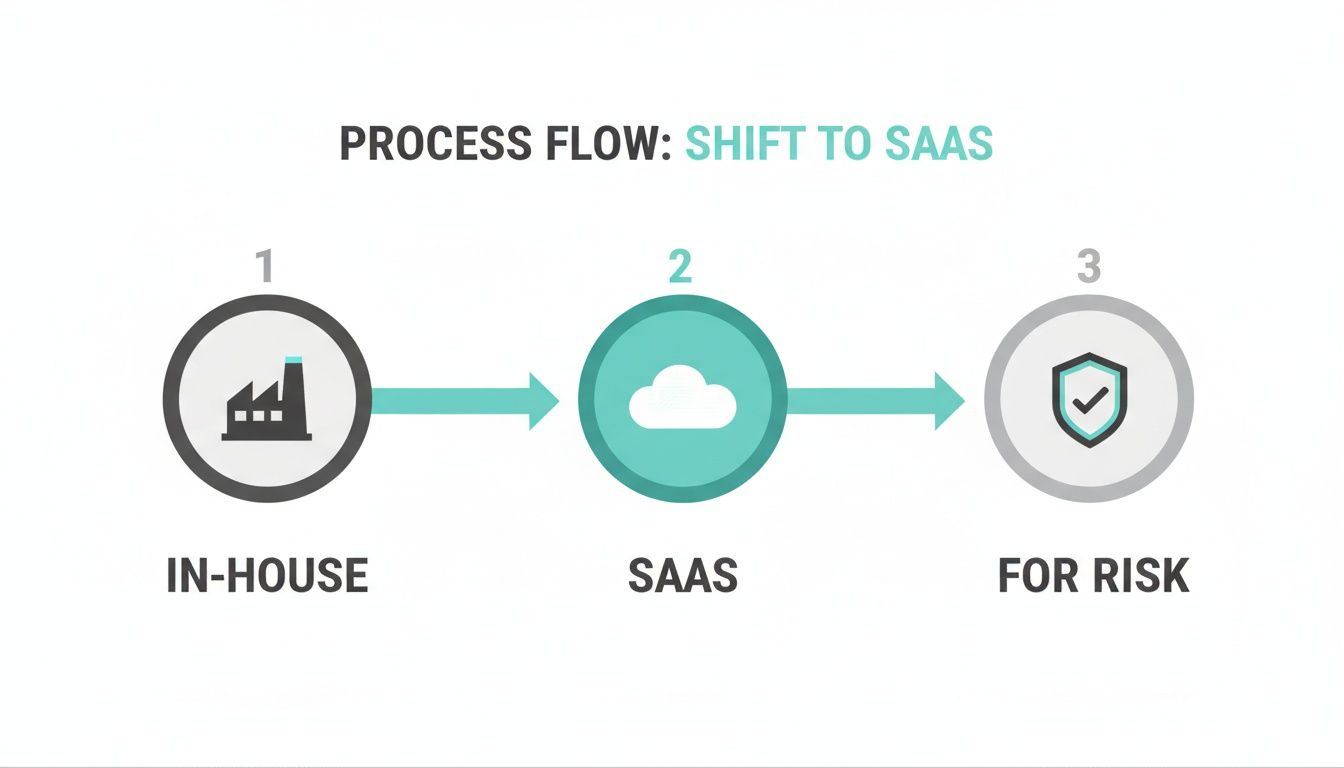
This evolution from an internal "factory" model to a cloud-based service highlights how modern enterprises delegate specialized tasks to expert providers who live and breathe this stuff.
The Procurement Roadmap
Procurement isn’t just about shopping for the lowest price; it’s about finding the perfect fit. A rushed decision here often leads to what we call "shelfware"—software that gets paid for but never actually used. To dodge that bullet, you need a structured evaluation that puts your unique business needs and security requirements front and center.
First thing’s first: assemble a cross-functional team. You need stakeholders from HR, IT, Security, and Legal in the same room. This group will be responsible for defining the absolute "must-have" features versus the "nice-to-haves." This list becomes your north star during vendor discussions.
Next, you have to vet potential vendors—rigorously. Go beyond their shiny marketing materials and ask the tough questions about their security posture, data handling policies, and how responsive their support team really is. Look for certifications like ISO 27001 or SOC 2 compliance, as these are solid indicators of a mature security program. To get a better feel for how a well-integrated system actually works, our guide on risk management API integration platforms is a great resource.
Finally, you must insist on a Proof-of-Concept (POC). A POC is your chance to test-drive the software in a real-world, controlled environment before you sign on the dotted line.
Define Clear Success Criteria: What, exactly, must the platform achieve for the POC to be considered a home run?
Use Real (Anonymized) Data: Test the platform with scenarios that mimic your actual day-to-day headaches.
Involve Your End-Users: Get feedback from the people who will be in the tool every single day. Their buy-in is absolutely crucial for adoption.
A successful POC gives you the confidence to move forward, knowing the tool genuinely works for your team and your workflows.
A Blueprint for Smooth Implementation
Once you’ve picked your B2B SaaS partner, the focus shifts to implementation. A great tool with a poor rollout is destined to fail. The goal here is to integrate the new platform into your existing ecosystem with minimal disruption and maximum user adoption.
Your implementation plan should be a collaborative effort between your internal team and the vendor’s customer success team. A strong partnership at this stage is absolutely essential.
A thoughtful implementation plan is the bridge between a powerful tool and tangible business value. Without it, even the best software can't deliver on its promise.
Key steps in this phase include:
Data Migration: Work hand-in-hand with the vendor to securely transfer existing data into the new system. This step requires careful planning to ensure data integrity and full compliance with privacy regulations.
Configuration and Customization: This is where you make the tool truly your own. Tailor the platform to match your specific internal policies, approval workflows, and reporting needs.
User Training and Onboarding: Don't just show users how to click buttons. Explain the "why" behind the new tool—how it makes their jobs easier and contributes to the organization's goals. Role-based training is almost always the most effective approach.
Go-Live and Support: If you can, plan a phased rollout starting with a pilot group. Make sure a clear support channel is established so users know exactly where to go with questions or issues once the system is live.
By following this two-phase framework, you can turn the complex task of SaaS adoption into a manageable, predictable process that delivers real, measurable results.
Getting Security and Compliance Right in B2B SaaS
When your company partners with a SaaS/B2B provider, you're doing more than just buying software. You're handing over some of your most sensitive data. That requires a massive amount of trust—a trust built not on marketing promises, but on a rock-solid foundation of security and unwavering compliance.
These aren't just legal checkboxes to tick. They are the very pillars that support a safe, ethical, and sustainable partnership.
For any business leader, navigating the alphabet soup of global regulations can feel overwhelming. Frameworks like the General Data Protection Regulation (GDPR) in Europe and the Employee Polygraph Protection Act (EPPA) in the U.S. set strict, non-negotiable rules on how data is handled. One misstep can lead to crippling financial penalties and reputational damage that takes years to repair.
Beyond Compliance: An "Ethical by Design" Philosophy
True data stewardship goes far beyond meeting the bare minimum legal requirements. The best B2B SaaS platforms adopt an "Ethical by Design" philosophy, engineering privacy and compliance into their core architecture from day one.
This means the system is built to uphold regulatory boundaries and protect individual dignity by default, not as an afterthought. It's a fundamental shift away from tools that rely on invasive surveillance or monitoring.
Instead of tracking every keystroke, an ethically designed platform identifies structured risk indicators based on predefined, transparent rules agreed upon by your organization. It gives decision-makers the insights they need without violating employee privacy, building a culture of integrity rather than one of suspicion.
The market's rapid growth only highlights the urgent need for this kind of responsible innovation. SaaS's B2B dominance is undeniable, with forecasts predicting that over 40% of public cloud spending will go to SaaS apps in 2024, growing at a 16.5% CAGR through 2028.
This growth fuels innovation in compliance-focused platforms like Logical Commander, which was designed from the ground up under EPPA, GDPR, ISO 27001, and OECD principles to prevent insider threats the right way.
An 'Ethical by Design' platform isn't just a feature; it's a strategic commitment. It ensures that technology serves the organization's goals while respecting the rights and dignity of its people, turning compliance from a burden into a competitive advantage.
This commitment is crucial when selecting a partner. A vendor that prioritizes ethical data handling is showing you they have a long-term vision focused on sustainable, trustworthy operations.
Key Frameworks and What They Mean for You
Understanding the major regulatory and security frameworks is essential for vetting any B2B SaaS vendor. While this isn't an exhaustive list, here are some of the most critical standards and what they really signify:
GDPR (General Data Protection Regulation): This EU law sets the global benchmark for data privacy. A GDPR-compliant vendor demonstrates a serious commitment to transparency, data minimization, and giving individuals control over their personal information.
EPPA (Employee Polygraph Protection Act): A U.S. federal law, EPPA prohibits most private employers from using lie detector tests. A platform built in alignment with EPPA principles will explicitly avoid any form of lie detection, psychological profiling, or coercive methods.
ISO 27001: This is the leading international standard for information security management. Certification tells you a vendor has implemented a systematic, risk-based approach to managing sensitive company and customer data. You can learn more about how global standards like ISO 27001 align with AI-powered risk detection in our related article.
When evaluating a B2B SaaS platform, don't just ask if they are compliant. Ask how their system is designed to uphold these principles.
Asking the Right Questions During Vendor Evaluation
To ensure you choose a platform that is a fortress for your data, not a liability, your procurement team needs to probe deeply into a vendor's security and compliance posture.
Here are the essential questions you need to be asking:
Data Governance: How is our data encrypted, both at rest and in transit? Who within your organization has access to it, and under what specific circumstances?
Regulatory Alignment: Which specific global regulations (like GDPR, EPPA, CCPA) was your platform designed to comply with from its inception?
Third-Party Audits: Do you undergo regular, independent security audits or penetration tests? Can you share the results or certifications (e.g., SOC 2, ISO 27001)?
Incident Response: What is your documented plan for handling a data breach? How and when would our team be notified?
A vendor's ability to provide clear, confident, and detailed answers to these questions is a powerful indicator of their maturity and commitment to being a trustworthy partner in your SaaS/B2B ecosystem.
How to Measure the True ROI of Your SaaS Investment
Justifying a new B2B SaaS investment, especially for something as critical as internal risk management, can't just be about a simple cost-benefit analysis. That approach barely scratches the surface. To prove the platform’s real worth, you have to move beyond direct cost savings and measure its impact on your organization's efficiency, resilience, and even its growth.
The key is to frame the tool as a strategic driver, not just another line item on an expense report. This means you need a clear framework for tracking both the tangible and the intangible returns. For a risk management platform, it’s all about quantifying how it empowers your teams to work smarter, faster, and with far greater confidence.
Establishing Your Baseline Metrics
Before you can show improvement, you have to know your starting point. The first step in measuring the return on investment (ROI) of any saas/b2b platform is to establish clear baseline metrics before you flip the switch. This pre-adoption data becomes the yardstick against which all future performance is measured.
Think of it as taking a "before" picture. You need to capture exactly how your teams operate now to later demonstrate a clear and compelling "after."
Key areas to measure include:
Investigation Timelines: How many hours or days does it take, on average, to investigate and resolve an internal incident from start to finish?
Audit Preparation Time: How much time do your compliance and legal teams burn gathering documentation and evidence for audits?
Incident Response Lag: What’s the average time between a potential risk being flagged and a formal response actually being initiated?
Cross-Departmental Friction: How often do information silos or clunky manual handoffs cause delays or errors in critical processes?
Tracking Strategic KPIs Post-Implementation
With your baseline established, you can start tracking the Key Performance Indicators (KPIs) that directly reflect the platform's strategic impact. These metrics provide the hard data needed to show clear value to leadership, connecting the software directly to tangible business outcomes.
The true ROI of a risk management platform isn't just about preventing losses; it's about building a more efficient, agile, and resilient organization. It transforms risk from a reactive problem into a source of strategic insight.
A well-structured set of KPIs will help you measure both the operational improvements and the bigger strategic wins. This data connects the dots between the platform's features and the bottom-line benefits that matter most to the business.
Key Performance Indicators for a Risk Management SaaS Platform
The following table outlines the kind of KPIs that truly demonstrate the platform's value, moving the conversation from cost to strategic impact.
KPI Category | Metric | Business Impact |
|---|---|---|
Operational Efficiency | Average reduction in investigation time | Frees up HR and security personnel for proactive initiatives. |
Compliance & Audit | Decrease in hours spent preparing for internal audits | Reduces administrative burden and improves audit outcomes. |
Risk Mitigation | Faster incident response and resolution rates | Minimizes potential financial and reputational damage. |
Collaboration | Increased speed of cross-departmental case management | Breaks down silos and creates a unified response process. |
Strategic Insight | Number of proactive risks identified and mitigated | Shifts the organization from a reactive to a preventive posture. |
These KPIs are designed to tell a clear story of progress, making it easy to show leadership how the investment is paying off in concrete ways.
Ultimately, measuring the ROI of a sophisticated saas/b2b platform is about telling a compelling story backed by data. It's the story of how a single investment streamlined workflows, strengthened compliance, and empowered your organization to act with greater speed and clarity. This evidence-based approach turns the conversation from, "How much does it cost?" to, "How much more effective have we become?"
What B2B Risk Platforms Look Like in the Real World
Theory is fine, but what really matters is seeing a platform solve the messy, tangible problems that HR, Legal, and Security teams face every day. Let's walk through a few practical scenarios where a specialized B2B SaaS platform becomes the linchpin for turning scattered data points into clear, actionable intelligence.
This isn’t just about smarter software. It’s about giving leaders the ability to ‘Know First, Act Fast’ while always upholding employee dignity. By seeing these use cases in action, you can start to picture exactly how a solution like this would tackle the challenges inside your own organization.

Proactively Flagging a Conflict of Interest
Imagine a senior procurement manager is reviewing a big vendor bid. What they don't realize is that the bid was submitted by a close family member. There’s no bad intent, but the potential for a serious conflict of interest is staring them in the face. With old-school methods, this would probably only surface after the contract is signed—or worse, during an audit months down the line.
A dedicated risk platform completely changes this dynamic. Instead of relying on manual disclosure forms that are easily forgotten or ignored, the system is built to spot structured risk indicators automatically.
The Signal: The platform flags a potential connection between the manager and the vendor, based on predefined rules your organization approves. It’s not an accusation; it's a neutral, objective signal that something needs a closer look.
The Action: A quiet alert goes to the designated compliance officer or HR business partner. This allows them to have a confidential chat with the manager, verify the situation, and if needed, recuse them from the decision.
The Outcome: The organization sidesteps a major ethical breach, protects its reputation, and keeps the procurement process fair. The entire interaction is logged in a secure, auditable trail, proving due diligence was done right.
This proactive move turns a potential crisis into a simple, managed event.
Managing a Sensitive Misconduct Investigation
An employee comes forward with a serious misconduct allegation against a colleague. This is a high-stakes situation that demands absolute confidentiality, a perfectly documented process, and tight collaboration between HR, Legal, and sometimes Security. Trying to manage this with emails, shared drives, and spreadsheets is a recipe for disaster.
Information gets misplaced, access controls are shaky at best, and piecing together a coherent, auditable case file is a nightmare.
A unified saas/b2b risk platform provides a secure, centralized "digital war room" for exactly these kinds of sensitive investigations. It guarantees every piece of evidence, every interview note, and every decision is logged in a tamper-evident, chronological record.
This structured environment provides a few critical advantages:
Strict Access Control: Only authorized individuals can see or edit case information, protecting the privacy of everyone involved.
Complete Audit Trail: Every action taken inside the platform is automatically logged, creating an unassailable record for legal review or regulatory scrutiny.
Streamlined Collaboration: HR, Legal, and Security can share notes and documents in a single, secure place, killing off fragmented communication and making sure everyone is working from the same facts.
The platform doesn’t just store data; it provides the procedural backbone for a fair, compliant, and defensible investigation.
Navigating Human Capital Risks During a Merger
Mergers and acquisitions are loaded with human capital risks. You’re trying to blend two different cultures, identify the talent you can't afford to lose, and manage widespread employee uncertainty—all at once. Relying on gut feelings or incomplete spreadsheets can lead to losing your best people and derailing the entire strategic goal of the merger.
This is where a risk platform’s ability to analyze structured indicators becomes a powerful strategic asset. It helps leaders spot potential integration challenges before they blow up. For instance, the system might flag departments with unusually high procedural violations or a sudden spike in policy exceptions, signaling potential cultural clashes or disengagement.
The modern enterprise is a complex web of applications and systems. It's no surprise that businesses worldwide are so reliant on SaaS, with companies averaging 106 applications per organization in 2025. This sprawl is exactly what platforms like Logical Commander’s E-Commander are designed to address by centralizing risk intelligence into a single source of truth. You can find more insights on the growth of SaaS applications on sellerscommerce.com.
By turning scattered signals into structured dashboards, leadership gets a clear, objective view of the human landscape. This enables them to make smarter decisions about integration, communication, and talent retention.
Choosing a Partner for the Future of Ethical SaaS
Picking a B2B SaaS platform is so much more than a simple transaction; it's a strategic alliance. The most powerful features in the world mean nothing if the company behind them doesn’t share your long-term vision and your core values. As we've seen, the software is only one piece of the puzzle. The real, lasting value comes from choosing a partner who is just as committed to ethical practices, transparent operations, and a human-centric approach to problem-solving as you are.
At the end of the day, this decision is about building trust. In a crowded market, it’s all too easy to get distracted by flashy dashboards and endless feature lists. But the most critical things you need to evaluate are often less visible: the vendor's commitment to data privacy, their design philosophy, and their dedication to being a true partner in your success. You aren't just buying a tool; you're entrusting a critical business function to an outside expert.
Shifting Focus From Features to Partnership
True partnership moves beyond a simple customer-vendor relationship. It means your provider understands the unique challenges of your industry, aligns with your compliance needs, and proactively helps you stay ahead of risks. This is especially vital in sensitive areas like internal risk management, where an ethical foundation is completely non-negotiable.
When you're vetting potential vendors, ask the questions that reveal their character and long-term strategy:
What is your philosophy on ethical AI and data handling? This question probes beyond their privacy policy and gets to their core principles.
How do you incorporate customer feedback into your product roadmap? A real partner listens and evolves with its clients’ needs.
What does your customer success program look like beyond the initial onboarding? Look for a commitment to ongoing support and strategic guidance, not just a setup crew.
Getting answers to these questions helps you figure out if you’re just choosing another vendor or truly gaining an ally.
The ultimate measure of a B2B SaaS provider isn't just the problems their software solves today, but their commitment to helping you navigate the challenges of tomorrow with integrity and foresight.
Your Next Steps for a Successful Evaluation
When you start viewing your next software adoption as a strategic alliance, it frames the entire process differently. It elevates the conversation from just price and features to alignment and trust. As you get ready for your evaluation, remember the key takeaways: the saas/b2b landscape is vast, but the exceptional value is found in specialized, compliant, and ethically grounded solutions.
To make sure you forge a successful, lasting partnership, your next steps should be deliberate and thorough. Start by building your internal business case, focusing not just on potential cost savings but on the strategic value of an integrated risk management solution.
Then, engage potential partners with a clear set of expectations that go far beyond a technical checklist. Frame your questions around their values, their vision for the future, and their definition of a successful partnership. This approach will help you identify the providers who are not only capable of meeting your needs today but are also worthy of your trust for years to come.
Your Questions, Answered
When you're evaluating a new platform for something as critical as enterprise risk, you’re bound to have questions. Let's dig into some of the most common ones we hear from leaders trying to get this decision right.
How Secure Is Our Data in a B2B SaaS Environment?
This is always the first question, and it should be. The short answer is: a high-quality B2B SaaS provider treats your data security as its absolute top priority. It isn't just a feature on a checklist; it's the entire foundation their business is built on.
Leading platforms use a defense-in-depth security model to keep your sensitive information locked down. This usually includes:
Encryption at Rest and in Transit: Your data is essentially scrambled and unreadable, both when it’s sitting on a server and when it's moving across the internet.
Strict Access Controls: Think of it like a digital "need to know" system. Robust permissions ensure only authorized people in your organization can see specific data based on their role.
Regular Audits and Certifications: Reputable vendors go through intense third-party audits to earn certifications like ISO 27001 and SOC 2. These aren't just badges; they're proof that their security practices meet tough international standards.
Think of it like a bank vault. The vendor builds the vault, installs state-of-the-art security, and has a dedicated team watching it 24/7. This frees you up to focus on your actual business.
By partnering with a specialized SaaS provider, you're often getting a security upgrade. These companies live and breathe cybersecurity, with dedicated teams and resources that typically go far beyond what an in-house team can manage alone.
Can SaaS Platforms Integrate With Our Existing Systems?
Absolutely. A modern B2B SaaS platform is designed to connect, not to exist in a silo. Integration is a core part of the design, ensuring the new tool fits into your established workflows instead of blowing them up. Most of this happens through APIs (Application Programming Interfaces).
An API is just a secure bridge that lets different software systems talk to each other automatically. For example, a risk management platform could integrate with your HR system to keep employee data perfectly in sync. This kills manual data entry and cuts down the risk of human error.
How Does the Platform Scale as Our Organization Grows?
Scalability is one of the biggest wins of the SaaS/B2B model. With old-school on-premise software, growth meant buying and installing more physical servers—a slow and expensive headache. SaaS platforms are built on flexible cloud infrastructure that gets rid of that problem entirely.
This means the system can grow or shrink right along with your needs. Whether you’re adding ten new users or expanding into a new country, the platform handles the extra load without skipping a beat. This elasticity ensures the solution you choose today will still be the right fit years from now, making it a smart, sustainable investment.
Ready to see how a proactive, ethical risk management platform can transform your organization? Explore how Logical Commander Software Ltd. helps you Know First, Act Fast! Discover our unified platform at https://www.logicalcommander.com.