%20(2)_edited.png)

A Guide to Unethical Behavior in a Workplace: The New Proactive Standard

Updated: Jan 20
Unethical behavior in the workplace isn't just an HR headache; it's a critical enterprise risk that can quietly dismantle a business from the inside out. This behavior, a key component of human-factor risk, covers everything from small lapses in integrity to catastrophic compliance failures, triggering a domino effect of financial, legal, and reputational damage.
The real cost goes far beyond initial penalties. It poisons morale, crushes productivity, and threatens long-term stability. Relying on outdated reactive investigations is a sign of strategic failure. The new standard is proactive, AI-driven prevention—an ethical, non-intrusive alternative that mitigates internal threats before they escalate.
Understanding the True Cost of Workplace Misconduct

When leaders think about unethical behavior in a workplace, their focus often narrows to the immediate fallout of a single event—a lawsuit, a fine, or a messy termination. This view completely misses the bigger, more destructive picture. The real damage is systemic, eroding the very foundation of the organization and exposing it to significant liability.
It’s like finding a single crack in a dam. The immediate leak might seem manageable, but it’s a warning sign of a deeper, structural failure that threatens a total collapse.
This escalating risk is playing out in real-time. Just look at the trends. Discrimination, harassment, and retaliation claims in workplaces recently hit an all-time high of 14.7 issues per 1,000 employees. This surge points to a troubling pattern of human-factor risk that reactive, after-the-fact measures simply can't contain.
The Hidden Financial and Reputational Toll
The financial drain from misconduct goes way beyond legal fees. Think about the compounding costs that pile up long after the initial incident:
High Employee Turnover: Replacing a skilled employee is a huge expense, often costing 1 to 2 times their annual salary when you factor in recruitment, onboarding, and lost productivity.
Lost Productivity: A toxic environment breeds disengaged employees, leading to massive productivity losses that bleed the company dry day after day.
Brand and Reputation Damage: A single high-profile scandal can permanently tarnish a company’s image, scaring off customers, partners, and the top talent you’re trying to attract.
Beyond the emotional toll on everyone involved, it's crucial to understand the legal and financial consequences of mishandling terminations, like the specifics of wrongful dismissal. These aren't just isolated HR issues; they are symptoms of much deeper organizational vulnerabilities and internal threats.
The most significant cost of unethical behavior is the loss of institutional integrity. When misconduct is tolerated, it sends a clear signal that governance doesn't matter, leading to a breakdown in compliance and accountability that can take years to repair.
Ultimately, tackling this problem requires a fundamental shift in perspective. Proactive prevention isn't just an ethical nice-to-have; it's a strategic imperative. By identifying and neutralizing the precursors to misconduct, organizations can protect their assets, reputation, and future. Managing these pervasive human capital risks is absolutely central to building a resilient and well-governed enterprise.
Identifying the Spectrum of Unethical Behaviors
To shut down misconduct, you first have to see it for what it is. Unethical behavior in a workplace isn't a single, dramatic event; it's a huge spectrum of actions that can slowly or suddenly destabilize your entire organization. Thinking about it in narrow, legalistic terms is a critical mistake. A far more practical approach is to classify these behaviors by their actual business impact.
This mindset shift allows Compliance, Risk, and HR leaders to move beyond dry dictionary definitions and focus on the tangible threats that disrupt operations, poison the culture, and create massive liability. These actions can be subtle, like an employee quietly misusing company software for a personal side hustle, or they can be overt, like systemic bullying that hollows out a whole department.
Every act, no matter how small it seems, adds to a cumulative human-factor risk profile. If left unchecked, that risk can weaken the entire enterprise. By understanding the distinct categories of misconduct, you can develop a much clearer lens to spot and classify the diverse internal threats that challenge your stability.
Four Core Categories of Workplace Misconduct
Most unethical conduct falls into four primary buckets, each carrying its own set of risks and consequences. This framework helps leaders pinpoint where their vulnerabilities are and how different behaviors connect directly to operational, financial, and reputational damage.
Integrity and Asset Violations: This is the most direct form of unethical behavior, involving the deliberate misuse or theft of company resources. It covers everything from sophisticated financial fraud and embezzlement to simpler acts like padding expense reports or using company equipment for a side business.
Interpersonal Misconduct: These are the behaviors that directly attack the psychological safety and cohesion of your workforce. This category is home to harassment, discrimination, bullying, and the creation of a hostile work environment. These actions destroy morale and are a primary driver of employee turnover.
Conflicts of Interest: This happens when an employee's personal interests interfere—or even just appear to interfere—with the best interests of the company. Classic examples include nepotism in hiring, accepting inappropriate gifts from vendors, or steering procurement decisions toward a family member's business.
Compliance and Policy Failures: This category covers any action that violates internal policies, industry regulations, or the law. It can range from mishandling sensitive customer data in violation of privacy laws to ignoring critical safety protocols on a manufacturing floor.
These categories rarely stay in their own lane. They often overlap, creating complex and layered risk scenarios. For instance, an employee accepting a kickback from a vendor (a conflict of interest) might also falsify invoices to cover their tracks (an integrity violation), creating a multi-faceted problem that’s much harder to untangle.
The table below breaks down these categories with specific examples to show how seemingly different actions all lead back to tangible business harm.
Types of Unethical Workplace Behavior and Their Business Impact
Category of Misconduct | Specific Examples | Primary Business Impact |
|---|---|---|
Integrity & Asset Violations | Financial fraud, embezzlement, theft of IP, expense report padding, misuse of company software/hardware. | Direct financial loss, legal penalties, loss of competitive advantage, damaged investor confidence. |
Interpersonal Misconduct | Harassment, discrimination, bullying, intimidation, creating a hostile work environment, verbal abuse. | High employee turnover, decreased productivity, legal liability, severe reputational damage, toxic culture. |
Conflicts of Interest | Nepotism, accepting improper gifts from vendors, self-dealing in procurement, insider trading. | Compromised decision-making, financial loss, eroded trust, regulatory fines, reputational harm. |
Compliance & Policy Failures | Data privacy violations (GDPR/CPRA), safety protocol breaches, anti-bribery violations, failure to report incidents. | Steep regulatory fines, operational shutdowns, loss of licenses, legal battles, damage to public trust. |
Seeing these connections is the first step. When you can map a specific action to its ultimate consequence, you move from simply reacting to incidents to proactively managing internal risk.
From Minor Infractions to Major Threats
Interpersonal misconduct, especially bullying, is one of the most widespread forms of unethical behavior in a workplace, yet it’s often dismissed or downplayed until it explodes into a full-blown crisis. The numbers are staggering: an estimated 52.2 million U.S. workers have been directly bullied at work. When you add the 26 million who have witnessed it, you're looking at a toxic environment affecting a total of 74.8 million people. You can discover more insights about these workplace statistics on cake.com. This isn't just "drama"—it's a pattern of verbal abuse, intimidation, and power imbalances that systematically dismantles productivity and operational integrity.
These actions are often a clear pattern of counterproductive work behavior, signaling much deeper weaknesses in your culture or internal controls. If you want to dive deeper, you can check out our guide on counterproductive work behaviors and their impact.
The real danger of unethical behavior lies in its ability to normalize. A "minor" policy violation that goes unaddressed sets a new, lower standard for everyone, creating a permissive environment where more significant misconduct can take root.
Ultimately, recognizing the full spectrum of misconduct is the foundational step in building a proactive prevention strategy. It's not about policing employees; it's about understanding the human-factor risks that can silently undermine your organization from the inside out. By identifying these behaviors early, leaders can step in before a small ethical lapse spirals into a catastrophic failure. This is the core of modern, ethical risk management—addressing the cause, not just reacting to the symptoms.
Why Reactive Investigations Are a Sign of Failure
For decades, the standard playbook for dealing with unethical behavior in a workplace has been the internal investigation. A problem surfaces, a report gets filed, and a team is scrambled to piece together what happened after the damage is done.
This "wait and investigate" model isn't just outdated; it’s a glaring sign of a failed risk management strategy.
Think of it this way: an investigation is the organizational equivalent of firefighting. Sure, you need firefighters to put out the blaze, but their very presence means all your fire prevention systems—the smoke detectors, the sprinklers, the fire-resistant walls—have already failed. Relying on investigations as your main defense means you're stuck managing disasters instead of preventing them in the first place.
When your company is forced to launch a formal investigation, it’s a public admission that your preventive controls and ethical culture have broken down. The misconduct has already happened, trust has been shattered, and the organization is now in a defensive crouch, trying to minimize losses that were entirely avoidable.
The True Price of a Reactive Stance
The cost of a reactive investigation goes far beyond legal fees and billable hours. It unleashes a cascade of hidden damages that can poison morale, tank productivity, and tarnish a company's reputation for years to come.
When misconduct is allowed to fester until it explodes into a formal incident, employees check out. In fact, workers who witness unethical behavior in a workplace are 2.7 times more likely to be actively disengaged. That’s a clear signal that faith in leadership and governance has completely eroded.
This disengagement triggers a chain reaction with severe consequences:
Plummeting Morale: Formal investigations often breed a culture of suspicion and anxiety, destroying team cohesion and the psychological safety needed for people to do their best work.
Skyrocketing Turnover: Good people won't stick around in a toxic or untrustworthy environment. This leads to costly turnover, and replacing just one employee can cost anywhere from one to two times their annual salary.
Lasting Brand Erosion: A public scandal or a high-profile lawsuit can inflict permanent damage on your brand, making it incredibly difficult to attract top talent and keep customers loyal.
The necessity of an investigation is an admission that the organization's risk sensors are offline. It means critical warning signs were missed, allowing a human-factor risk to escalate into a full-blown crisis.
By the time an investigation wraps up, the financial and cultural damage is already deeply embedded. This reactive cycle traps risk and compliance teams in a constant state of damage control, making it impossible to focus on building a resilient, ethical foundation for the business.
Shifting from Post-Mortem to Prevention
A proactive approach completely reframes risk mitigation. It moves it from a reactive cost center to a strategic imperative. Instead of dissecting what went wrong, the focus shifts to identifying the conditions that allow unethical behavior in a workplace to take root in the first place. This requires moving beyond old-school methods that depend on someone speaking up after an incident has occurred.
Modern, AI-driven risk management platforms offer a new way forward. These EPPA-compliant systems provide early, non-intrusive warnings by analyzing operational risk signals—not by monitoring people. This allows organizations to address potential conflicts of interest or policy deviations long before they spiral into major integrity violations. It's the difference between diagnosing a chronic illness and promoting a healthy lifestyle to prevent it entirely.
For a deeper analysis, you can learn more about the true cost of reactive investigations and see why a proactive strategy is no longer optional.
Ultimately, every investigation represents a missed opportunity for prevention. By adopting an ethical, forward-thinking approach to internal threat detection, organizations can protect their people, their reputation, and their bottom line—transforming risk management from a reactive burden into a powerful strategic advantage.
Connecting Global Risks with Internal Team Actions
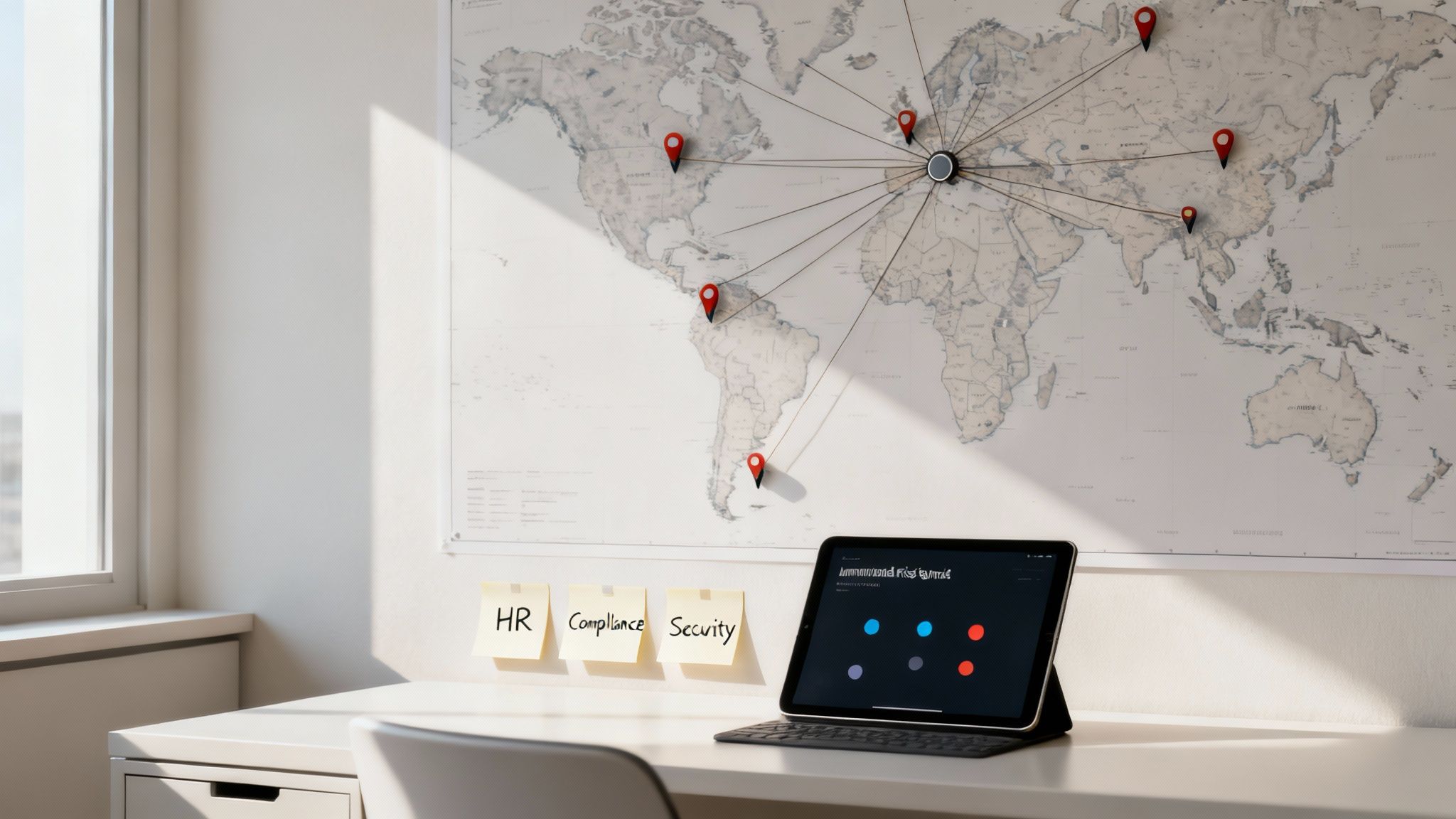
The fallout from unethical behavior in a workplace is never a contained event. It’s a ripple effect. Misconduct that starts in one department—or even with a supplier halfway around the world—will inevitably spread, creating systemic risk across the entire enterprise.
But too many organizations still operate in silos. HR, Compliance, and Security teams each manage their own data sets, completely blind to how these different risk signals connect. This fragmented approach isn't just inefficient; it's a massive vulnerability. A compliance failure in the supply chain and an internal conflict of interest might seem worlds apart, but they often grow from the same root cause: a complete lack of unified oversight.
When critical information is scattered, the early warning signs of internal threats are almost always missed.
The Global Supply Chain: A Canary in the Coal Mine
If you want a stark, large-scale example of this danger, just look at the global supply chain. Consider the pervasive issue of migrant worker abuse. In a single year, the Business & Human Rights Resource Centre documented a staggering 665 cases of alleged abuse.
The top violations were wage theft (34%), occupational health and safety failures (39%), and predatory recruitment practices (36%). These aren't just overseas problems; they represent huge compliance and human rights failures directly tied to the supply chains of major global companies. You can learn more about these migrant worker analysis findings on business-humanrights.org.
This kind of widespread misconduct thrives where oversight is weak and accountability is fragmented. The same organizational blindness that lets these external issues fester is mirrored internally, creating the perfect environment for misconduct inside your own four walls.
Breaking Down the Silos with Unified Risk Intelligence
To get a real handle on unethical behavior in a workplace, leaders have to see the entire risk landscape in one coherent view. The only way to do that is to break down those departmental silos and connect the dots between seemingly unrelated events. A centralized risk intelligence platform makes this possible.
Picture this scenario:
The Security Team flags an employee accessing sensitive project files well after midnight.
HR receives a quiet, confidential report about that same employee bullying junior staff.
Compliance notes that this employee, who is responsible for vetting vendors, just fast-tracked a new, unvetted supplier.
In a siloed company, these are three separate, low-level alerts that likely go nowhere. But when unified, they paint a crystal-clear picture of a high-risk situation involving potential data theft, misconduct, and a serious conflict of interest. This holistic view is what turns isolated incidents into actionable intelligence, letting you step in before a crisis erupts.
A siloed approach to risk management creates dangerous blind spots. True prevention requires a unified operational layer where HR, Compliance, and Security intelligence converges to reveal the full context of human-factor risk.
This unified approach is a cornerstone of strong corporate governance best practices. It shifts an organization from a reactive posture, where teams only collaborate during a painful investigation, to a proactive one where they share intelligence to stop incidents from ever happening in the first place.
By creating a single source of truth for all human-factor risk data, you finally gain the ability to spot the patterns and correlations that were always invisible in isolation. This is the foundation of a modern, proactive defense against the complex threats posed by unethical behavior in a workplace. It’s how you ensure no critical signal gets lost in the noise.
Adopting the New Standard of Proactive Risk Prevention
Moving beyond a reactive posture isn’t just a shift in mindset—it demands a whole new class of technology. For years, the tools for tackling unethical behavior in a workplace have fallen into two dangerous camps. On one side, you have reactive tools like hotlines and investigations, which only kick in after the damage is done. On the other, you have invasive employee surveillance software.
Both of these approaches are fundamentally broken. They either leave you scrambling to clean up a mess or create massive legal liabilities while destroying the very trust you need to run a healthy business. These surveillance tools are often misaligned with EPPA regulations and create a culture of fear, not prevention.
The future of internal risk management is a third way: an ethical, non-intrusive, and genuinely proactive model. This new standard empowers organizations to get ahead of human-factor risks before they cause harm, all while upholding employee dignity and staying firmly within the lines of regulations like the Employee Polygraph Protection Act (EPPA). This is AI-driven preventive risk management.
The Problem with Invasive Technologies
Many so-called "internal threat" solutions on the market today are built on a foundation of pure surveillance. These tools monitor employee emails, private chats, and network activity, often using vague "sentiment analysis." This methodology isn't just a gross violation of employee privacy; it’s a legal and ethical minefield. They are the opposite of an EPPA-aligned approach.
These platforms are fundamentally at odds with EPPA regulations because they can create immense psychological pressure and act as a form of continuous, unauthorized monitoring. They operate on a presumption of guilt, treating every single employee like a potential suspect. This approach has severe consequences:
Destroys Psychological Safety: Constant monitoring and spying technology creates a culture of fear and paranoia, killing the collaboration and innovation needed to compete.
Creates Legal Nightmares: These tools can easily run afoul of labor laws and privacy regulations, inviting lawsuits and crippling regulatory fines.
Fails to Prevent: Surveillance often catches misconduct as it’s happening or after the fact. It might give you a digital trail for an investigation, but it does nothing to prevent the initial damage.
A proactive, ethical framework respects employee dignity by analyzing anonymized risk signals, not by monitoring people. The goal is to identify patterns correlated with high-risk behaviors, empowering organizations to protect their governance and reputation while fostering a culture of integrity.
Ultimately, a critical step in adopting a new standard of proactive risk prevention is to implement effective strategies to improve workplace culture, creating an environment where ethical behavior is the norm and invasive tools are unnecessary.
An EPPA-Aligned, AI-Driven Alternative
The new standard, embodied by platforms like Logical Commander, rejects surveillance completely. Instead of policing people, our AI-driven Risk Assessments Software analyzes operational data—things like access logs, procurement records, and policy attestations—to spot statistical anomalies. This ethical framework is built on a few core principles:
Non-Intrusive Analysis: The system works with existing, anonymized business data. It never monitors personal communications or tracks individual activity.
Focus on Risk Signals: It identifies patterns that suggest a heightened risk of a policy breach or a conflict of interest, not someone's personal attributes or emotions.
Strict EPPA Alignment: By completely avoiding any form of lie detection, psychological evaluation, or coercive analysis, the platform ensures full compliance with legal and ethical standards.
Preservation of Dignity: The approach maintains a clear, hard line between an organization's legitimate need to manage risk and an employee's fundamental right to privacy.
This method allows for AI human risk mitigation that is both incredibly effective and deeply ethical. It provides risk managers with actionable intelligence—like identifying a vendor approval process that routinely bypasses multiple compliance checks—without ever needing to know the content of an employee's emails.
Comparing Internal Risk Management Approaches
When you lay them side-by-side, the difference between these approaches is stark. One path leads straight to a culture of suspicion and legal exposure, while the other builds a resilient organization founded on proactive governance. Logical Commander represents the new standard.
Approach | Methodology | Primary Focus | EPPA Compliance Risk | Employee Trust Impact |
|---|---|---|---|---|
Reactive Investigations | Manual, after-the-fact forensic analysis of incidents. | Damage control and remediation. | Low (but follows a failure). | Neutral to Negative |
Invasive Surveillance | Monitoring emails, chats, and employee activity. | Policing behavior and detecting keywords. | High to Severe | Severely Negative |
Ethical AI Prevention (Logical Commander) | Anonymized analysis of operational risk signals. | Proactive risk identification and prevention. | None (EPPA-Aligned) | Positive to Neutral |
Adopting this new standard is about more than just a technology upgrade; it's a commitment to a more ethical and sustainable way of managing the human-factor risks baked into any organization. It is the definitive move from firefighting to fire prevention, making sure the conditions for unethical behavior in a workplace are identified and addressed long before a spark can ever ignite.
Building Your Proactive Risk Prevention Framework
If you’re still putting out fires, you’re losing. Shifting from a reactive, firefighting mode to a proactive culture takes more than good intentions; it demands a structured, actionable plan. For leaders in Compliance, HR, and Security, building a framework that gets ahead of unethical behavior in a workplace is the ultimate strategic goal. It’s about creating clear policies, unifying your risk intelligence, and giving your teams the right tools and training to prevent disasters before they happen.
This proactive approach is worlds away from invasive or reactive models. The hierarchy below paints a clear picture of this shift, placing proactive prevention right at the top where it belongs.
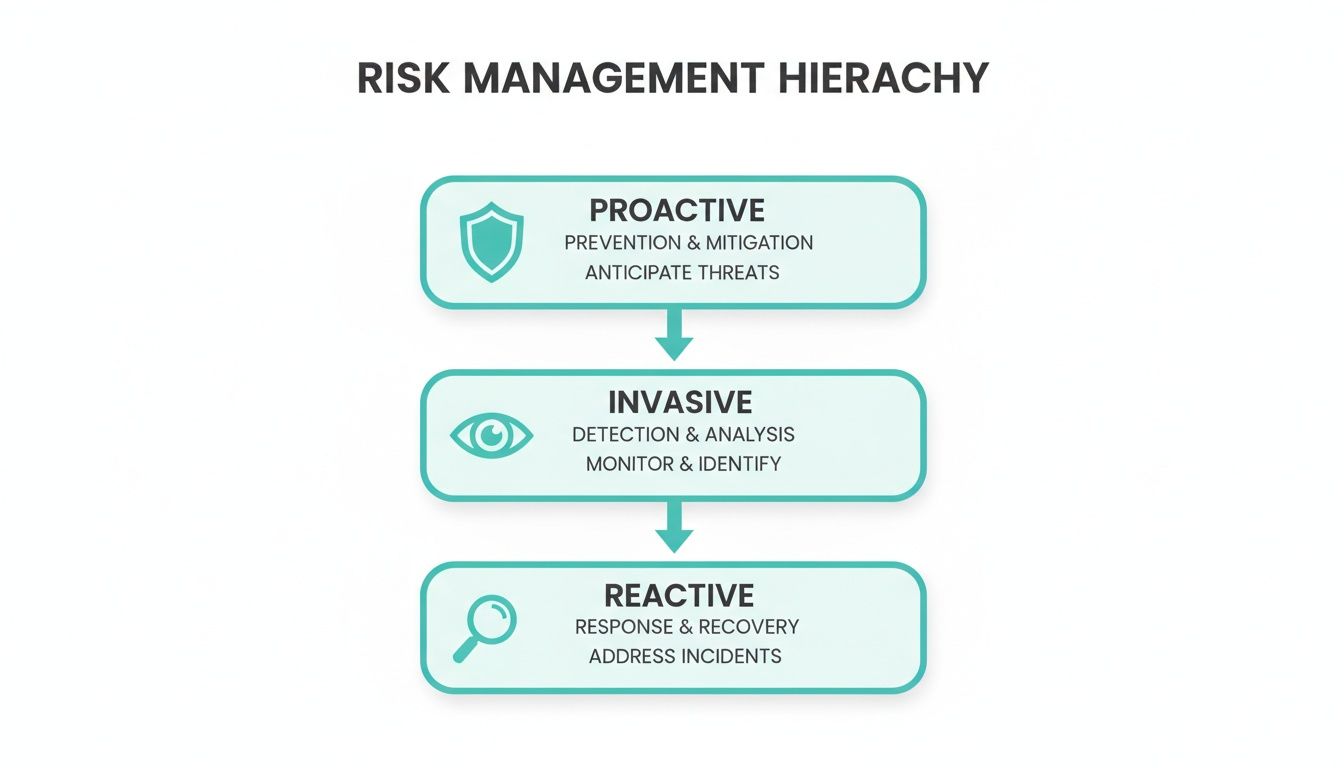
As the model shows, a shield-first strategy is far superior to invasive surveillance or after-the-fact investigations. Those methods only address the symptoms—prevention tackles the root cause.
Unifying Risk Intelligence with a Centralized Platform
The first and most critical step is to tear down the information silos that let risks fester unnoticed. A centralized platform that brings together intelligence from HR, Security, and Compliance is the foundation of any modern prevention framework. This single source of truth connects all the disparate risk signals, giving you a complete view of potential human-factor risk across the entire enterprise.
Instead of trying to make sense of fragmented data, this unified model allows you to:
Identify Cross-Functional Patterns: Connect the dots between a security alert, an HR complaint, and a compliance flag that would have otherwise been missed.
Enable Coordinated Action: Get all your risk management teams working from the same playbook for a consistent and effective response.
Generate Actionable Insights: Stop just collecting data and start generating real intelligence that informs your preventive measures.
Leveraging Continuous and Ethical Risk Assessment
Once you have unified data, the next layer is continuous, non-intrusive risk assessment. This is where an EPPA compliant platform like E-Commander with its Risk-HR module becomes indispensable. It uses AI to analyze operational data for statistical anomalies that correlate with high-risk behaviors—all without ever resorting to employee surveillance. It’s an ethical and effective early warning system that lets you address potential issues before they spiral out of control.
The goal of a proactive framework is not to police employees, but to strengthen organizational systems and controls. It's about identifying and mitigating the environmental factors that enable misconduct, creating a culture where ethical behavior is the path of least resistance.
Expanding Your Capabilities with Strategic Partnerships
Building this kind of framework can be complex, which is where the right partnerships make all the difference. For consultants and B2B SaaS providers, joining an ecosystem like our PartnerLC program is a powerful way to deliver advanced, ethical risk management solutions to your clients. By partnering with us, you can equip organizations with the new standard in internal threat prevention, expanding your services while helping your clients build more resilient and ethical workplaces.
Your Questions on Workplace Misconduct, Answered
When you're trying to get a handle on unethical behavior, you're bound to have questions. It’s a complex issue. Let's tackle some of the most common ones we hear from leaders, focusing on real-world, practical answers that reinforce the shift toward proactive, ethical prevention.
What Is the First Step to Address Unethical Behavior in a Workplace?
The single most effective first step is to get out of a reactive mindset. Stop waiting for something to break. Instead, you need to establish a crystal-clear code of conduct and—this is the crucial part—implement a system that can spot the early warning signs of risk.
This means breaking down the walls between HR, Compliance, and Security. When you unify their risk intelligence, you can finally connect the dots and detect the subtle patterns—like policy deviations or undeclared conflicts of interest—before they snowball into a full-blown crisis.
How Can AI Help Prevent Misconduct Without Violating Employee Privacy?
This is a critical question, and it gets to the heart of what separates a modern, ethical platform from an outdated surveillance tool. Ethical AI human risk mitigation platforms are built from the ground up to be non-intrusive and fully EPPA-compliant. They don't use surveillance, and they absolutely do not monitor personal communications.
Instead, they analyze anonymized and aggregated operational data to spot statistical anomalies that are known to correlate with high-risk behaviors. This gives risk managers the actionable intelligence they need to intervene, all while completely respecting employee dignity and privacy.
An ethical AI approach is about strengthening your organization's systems, not policing individuals. It offers a powerful internal threat detection capability that shines a light on vulnerabilities in your processes and controls. This allows you to take preventive action that actually builds trust and stays firmly aligned with EPPA guidelines.
Are Anonymous Reporting Systems Enough to Manage Unethical Behavior?
While they’re a valuable piece of the puzzle, anonymous reporting systems are fundamentally reactive. They rely on an employee witnessing something serious after it has already happened and then feeling safe enough to report it. A truly comprehensive strategy has to include proactive measures that identify risk signals before an incident ever occurs.
The strongest defense is a multi-layered one. When you combine a proactive risk detection system, like dedicated Risk Assessments Software, with a safe and accessible reporting channel, you create a far more resilient shield against unethical behavior.
Ready to move from reactive firefighting to proactive prevention? Logical Commander provides the new standard in ethical, non-intrusive internal risk management. Our AI-driven platform helps you identify human-factor risks before they cause damage, all while respecting employee privacy and upholding EPPA compliance.
Request a demo to see our platform in action and get free access.
Join our PartnerLC program and become an ally in promoting modern risk management solutions.
Contact our team to discuss an enterprise deployment.