%20(2)_edited.png)

10 Pervasive Unethical Behavior Examples in the Workplace for 2026
- Marketing Team

- 2 hours ago
- 17 min read
In today’s complex business environment, unethical behavior is more than just overt fraud; it manifests in subtle, corrosive ways that can cripple an organization's culture, finances, and reputation. From digital misconduct to quiet compliance failures, understanding these risks is the first step toward building a resilient and ethical workplace. Identifying these integrity violations before they escalate requires moving beyond generic definitions and developing a more nuanced understanding of how they take root.
This guide breaks down 10 critical unethical behavior examples, moving past surface-level descriptions to provide actionable insights. For each example, you will find:
Early-Warning Signals: Specific indicators that help detect potential issues early.
Potential Impacts: A look at the legal, regulatory, and reputational consequences.
Mitigation Tactics: Practical, non-coercive strategies for prevention.
We will explore how to identify potential integrity violations and implement preventative measures that strengthen governance while respecting employee dignity. This approach is designed for Human Resources, Internal Threats, and Corporate Security teams aiming to shift from a reactive stance to one of proactive, ethical prevention. The goal is to equip you with the strategic tools needed to dissect complex scenarios involving everything from intellectual property theft to retaliation, turning abstract ethical principles into a concrete operational framework. By understanding these specific unethical behavior examples in depth, you can build a more robust defense against internal risks and foster a culture of unwavering integrity.
1. Financial Fraud and Embezzlement
Financial fraud and embezzlement are among the most damaging unethical behavior examples, involving the intentional misappropriation of company funds or assets for personal gain. This can range from seemingly small infractions like padding expense reports to complex schemes involving fictitious vendors, manipulated accounting records, or outright theft of company funds. These actions betray trust, violate legal statutes, and can inflict severe financial and reputational harm on an organization.

High-profile cases like the Enron scandal, where executives manipulated financial statements to hide massive debts, or Bernie Madoff's massive Ponzi scheme, underscore the catastrophic potential of this behavior. For a detailed understanding of how such deceptive practices operate, explore an article explaining what is a Ponzi scheme and how to spot one. These examples serve as critical reminders of the importance of robust internal controls.
Strategic Mitigation and Prevention
Proactive detection is key to preventing financial misconduct. Organizations must establish and consistently enforce clear financial policies and procedures to minimize opportunities for fraud.
Early Warning Signals: Be vigilant for red flags such as unusual expense reimbursement patterns, transactions with unfamiliar vendors, or an employee's sudden, unexplained lifestyle upgrade. Resistance to financial audits or providing documentation is another significant warning sign.
Actionable Takeaways: Implement a system of checks and balances, such as requiring dual authorization for significant transactions and conducting regular, unannounced audits of financial records. Foster a transparent culture where employees feel safe reporting suspicious activities without fear of reprisal.
Legal & Regulatory Impact: Financial fraud can lead to severe consequences, including criminal charges, hefty fines from regulatory bodies like the SEC, and costly civil litigation.
A structured approach to identifying and mitigating these risks is crucial. Conducting a comprehensive fraud risk assessment helps organizations pinpoint vulnerabilities and strengthen their internal defenses against these unethical behaviors.
2. Research Data Fabrication and Scientific Misconduct
Research data fabrication and scientific misconduct represent a severe breach of ethical standards, involving the intentional creation, alteration, or misrepresentation of research data to support desired conclusions. This form of unethical behavior can manifest as cherry-picking results, plagiarizing others' work, or failing to disclose significant conflicts of interest. Such actions fundamentally undermine the integrity of the scientific process, erode public trust, and can lead to harmful real-world consequences based on fraudulent findings.

High-profile cases of scientific misconduct serve as stark warnings. The now-retracted study by Andrew Wakefield fraudulently linking the MMR vaccine to autism caused lasting public health damage. Similarly, social psychologist Diederik Stapel's career ended after it was discovered he had fabricated data for dozens of studies, leading to 58 retractions. These incidents highlight the devastating impact that a single researcher's dishonesty can have on their field and society at large, underscoring the critical need for rigorous verification and ethical oversight in all research endeavors.
Strategic Mitigation and Prevention
A culture of transparency and methodological rigor is the primary defense against scientific misconduct. Institutions must champion ethical research practices and establish clear channels for reporting suspected fraud without fear of retaliation.
Early Warning Signals: Be alert for major inconsistencies between raw data and published results, an unusual lack of variability (e.g., missing standard deviation) in reported data, or statistical patterns that appear too perfect. An extreme reluctance to share raw data or methodology details for peer review is also a significant red flag.
Actionable Takeaways: Implement mandatory peer review processes for all internal and published research. Establish a clear data integrity policy that requires researchers to maintain and provide access to original datasets. Promote an environment where questioning results and replicating studies is viewed as a standard part of the scientific process, not a personal attack.
Legal & Regulatory Impact: Scientific misconduct can result in severe consequences, including retraction of publications, loss of funding from bodies like the NIH, termination of employment, and professional debarment. In cases where fraudulent research leads to public harm, civil and even criminal liability can arise.
3. Conflict of Interest and Self-Dealing
Conflict of interest and self-dealing represent a core ethical breach where an individual’s personal interests, relationships, or financial holdings compromise their professional judgment and duties. This unethical behavior occurs when an employee or executive prioritizes personal gain over the organization’s best interests. It can manifest as nepotism, accepting undisclosed gifts from vendors, or steering business decisions to benefit a company in which they have a personal stake. Such actions erode trust, fairness, and can lead to significant financial and reputational damage.
High-profile situations, such as when consulting firms advise government agencies on regulations that affect their other private-sector clients, illustrate the severe impact of these conflicts. For instance, McKinsey & Company faced scrutiny for advising Purdue Pharma on boosting opioid sales while also consulting for the FDA. These scenarios underscore the critical need for transparent and enforceable policies to manage and prevent such ethical compromises.
Strategic Mitigation and Prevention
A proactive and transparent approach is essential to managing conflicts of interest. Organizations must create a culture where disclosure is expected and policies are clearly communicated and consistently enforced.
Early Warning Signals: Be alert for decision-makers who have undisclosed financial interests in competing firms or suppliers. Other red flags include the hiring or promotion of less-qualified individuals with close personal ties to management, or employees receiving lavish gifts or entertainment from business partners.
Actionable Takeaways: Implement a mandatory disclosure process for all potential conflicts of interest upon hiring and on an annual basis. Establish clear rules on gift acceptance and recusal procedures for individuals with a conflict. Organizations can learn how to build robust guidelines by reviewing a comprehensive conflict of interest policy.
Legal & Regulatory Impact: Undisclosed conflicts of interest can violate fiduciary duties and lead to shareholder lawsuits, regulatory investigations, and contract invalidations. In government contracting, such conflicts can result in debarment, criminal charges under anti-corruption statutes, and significant financial penalties.
4. Harassment, Bullying, and Hostile Work Environment
Harassment, bullying, and the creation of a hostile work environment are deeply destructive unethical behavior examples. This category includes repeated, unwelcome conduct such as verbal abuse, intimidation, social exclusion, or threats that make the workplace offensive or intimidating for an individual or group. It encompasses specific forms like sexual harassment, racial discrimination, and retaliation against those who report misconduct, fundamentally undermining psychological safety and professional respect.

High-profile cases, such as the numerous scandals at Fox News and the cultural reckonings at companies like Uber, demonstrate how pervasive harassment can poison an organization from the top down. These incidents reveal the severe damage to employee morale, brand reputation, and legal standing that results from failing to address such toxic behaviors.
Strategic Mitigation and Prevention
A zero-tolerance policy, backed by consistent action, is essential for preventing a hostile work environment. Leaders must actively model and enforce respectful communication and behavior at all levels.
Early Warning Signals: Pay attention to informal complaints or concerns raised by employees to trusted colleagues. Watch for sudden changes in a potential victim's behavior, emotional state, or attendance. If multiple witnesses reference troubling comments or conduct by a specific individual, it warrants immediate attention.
Actionable Takeaways: Implement mandatory, regular anti-harassment training that includes clear examples and reporting procedures. To proactively address hostile work environments and harassment, implementing robust and effective bullying prevention programs can provide a foundational framework for fostering respect. Establish multiple confidential channels for reporting incidents and ensure all complaints are investigated promptly and impartially.
Legal & Regulatory Impact: Creating or allowing a hostile work environment can lead to significant legal liability under regulations enforced by the Equal Employment Opportunity Commission (EEOC). Consequences include costly lawsuits, substantial settlement payouts, and government-mandated oversight.
5. Intellectual Property Theft and Trade Secret Misappropriation
Intellectual property (IP) theft and trade secret misappropriation involve the unauthorized use, copying, or theft of a company's proprietary information. These unethical behavior examples include stealing patents, copyrighted materials, or confidential business strategies like source code and product designs for personal use or sale to competitors. Such actions breach trust, violate intellectual property laws, and can severely undermine a company's competitive advantage and market position.
Landmark cases like the long-standing disputes between Apple and Samsung over patent and design infringement highlight the high stakes involved in protecting unique innovations. Similarly, the case where a Tesla employee stole proprietary battery manufacturing data demonstrates how a single insider can compromise years of research and development. These incidents underscore the critical need for robust IP protection protocols and vigilant monitoring of sensitive data.
Strategic Mitigation and Prevention
A proactive and layered security approach is essential to safeguard against the theft of valuable intellectual assets. Organizations must combine technological controls with clear policies to create a strong defense against these specific unethical behavior examples.
Early Warning Signals: Watch for employees downloading large volumes of sensitive files, especially before departure, or accessing data outside their normal job responsibilities. Other red flags include the transfer of confidential materials to personal email accounts or storage devices and competitors launching suspiciously similar products shortly after hiring a former employee.
Actionable Takeaways: Implement strict access controls based on the principle of least privilege, ensuring employees can only view data essential to their roles. Utilize Data Loss Prevention (DLP) software to monitor and block unauthorized data transfers. Require all employees to sign comprehensive non-disclosure and confidentiality agreements.
Legal & Regulatory Impact: IP theft can result in severe legal repercussions, including civil lawsuits seeking damages and injunctions, and criminal charges under laws like the Economic Espionage Act. The reputational damage and loss of market share can often be as devastating as the direct legal penalties.
6. Cybersecurity Violations and Unauthorized System Access
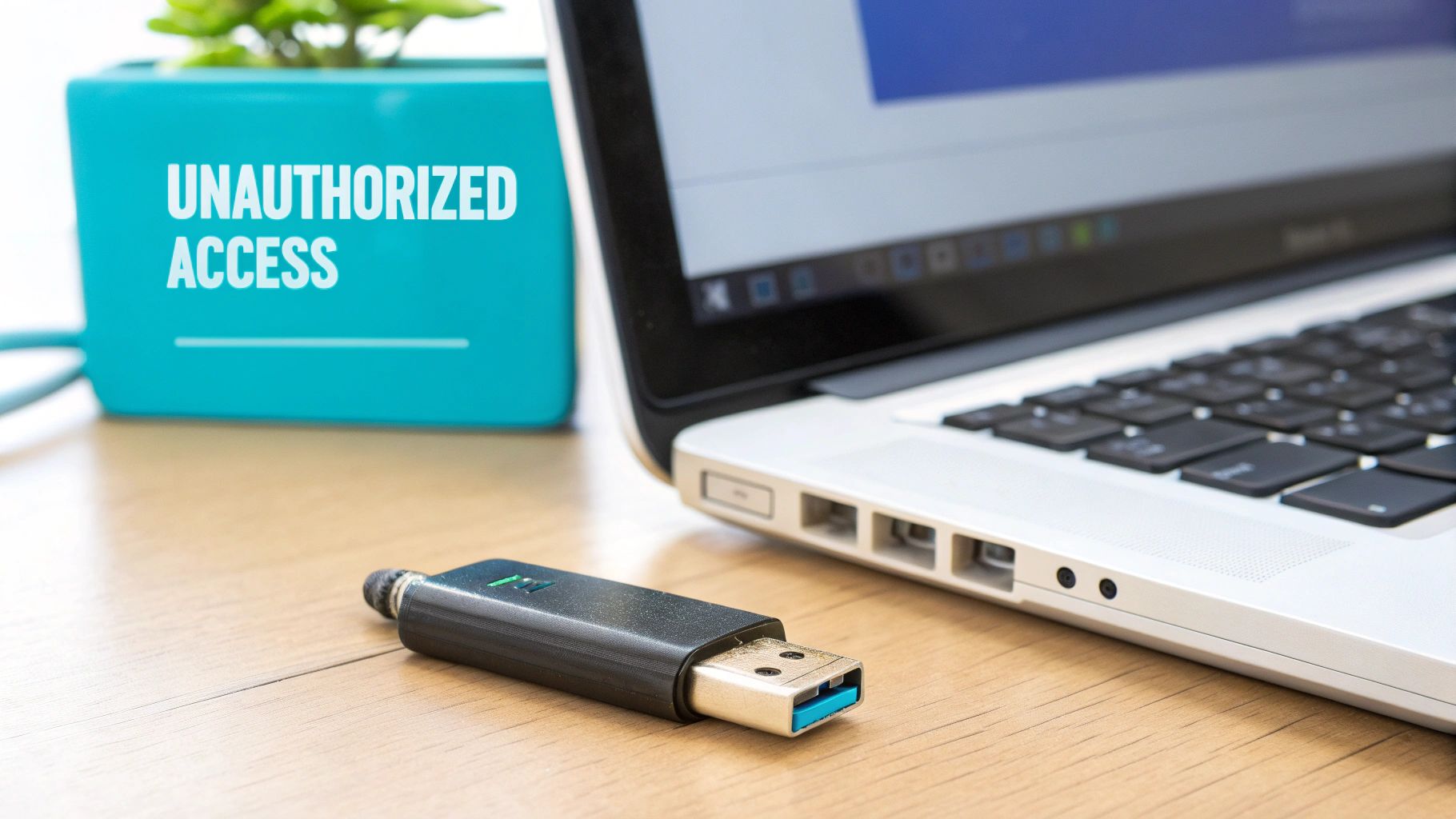
Cybersecurity violations involve the deliberate or negligent breach of security protocols, creating significant vulnerabilities for an organization. These unethical behavior examples range from employees sharing passwords or circumventing security controls to unauthorized access of sensitive systems and data. Such actions, whether malicious or careless, can expose an organization to catastrophic data breaches, financial loss, and severe reputational damage by compromising its digital infrastructure.
Landmark cases like Edward Snowden's disclosure of NSA surveillance programs or Chelsea Manning's leak of classified intelligence underscore the immense impact of insider-driven breaches. More common corporate examples include the 2013 Target data breach, which was initiated through credentials stolen from a third-party vendor. These events highlight how a single point of failure can lead to widespread system compromise, affecting millions of customers and costing the company dearly.
Strategic Mitigation and Prevention
A robust security posture requires more than just technology; it demands a culture of vigilance and adherence to clear policies. Proactive monitoring and employee education are foundational to preventing unauthorized access and data exfiltration.
Early Warning Signals: Be alert for red flags such as unusual login times or multiple failed authentication attempts, especially from atypical locations. Monitor for access to systems or data outside an employee’s normal job functions, the use of administrative credentials by non-administrators, or the sudden transfer of large data volumes.
Actionable Takeaways: Enforce a principle of least privilege, ensuring employees only have access to the data and systems essential for their roles. Implement mandatory, regular cybersecurity training and utilize multi-factor authentication (MFA) across all critical systems to add a crucial layer of security.
Legal & Regulatory Impact: Unauthorized system access can lead to severe penalties under regulations like GDPR or CCPA, involving substantial fines. Breaches can also trigger industry-specific consequences, such as HIPAA violations in healthcare, and may result in criminal charges and civil lawsuits.
7. Regulatory Violations and Compliance Breaches
Regulatory violations and compliance breaches involve the intentional or negligent failure to adhere to laws, regulations, or internal policies. This category of unethical behavior examples covers a vast spectrum, from environmental and safety standards to labor laws and financial reporting requirements. Such actions not only expose an organization to severe legal and financial penalties but also fundamentally damage its public trust and social license to operate.
A stark illustration is the Volkswagen emissions scandal, where the company deliberately programmed its diesel engines with "defeat devices" to cheat on emissions tests. This deception violated environmental regulations across the globe, leading to billions in fines and a catastrophic loss of consumer confidence. Similarly, the creation of millions of unauthorized accounts at Wells Fargo was a direct breach of banking regulations, driven by a high-pressure sales culture that ignored ethical boundaries.
Strategic Mitigation and Prevention
A proactive and deeply embedded compliance culture is the primary defense against regulatory breaches. Organizations must move beyond a check-the-box mentality and foster a genuine commitment to ethical conduct at all levels.
Early Warning Signals: Be alert for gaps or inconsistencies in compliance documentation, a pattern of "near-miss" safety incidents that go unreported, and frequent deviations from standard operating procedures. Complaints from employees about inadequate safety training or pressure from management to cut corners to meet targets are critical red flags.
Actionable Takeaways: Implement a robust and continuous compliance training program that is relevant to specific job roles. Conduct regular audits and risk assessments to identify and address vulnerabilities. Establish a clear, confidential reporting mechanism for employees to raise compliance concerns without fear of retaliation.
Legal & Regulatory Impact: Consequences are severe and multifaceted. They include substantial fines from agencies like the EPA or OSHA, potential criminal charges against executives, costly civil lawsuits, and the possible suspension or revocation of operating licenses.
Developing a systematic framework for identifying, assessing, and controlling these risks is essential. A comprehensive approach to regulatory compliance risk management provides the structure needed to build a resilient and ethically sound organization.
8. Expense Fraud and Misuse of Company Resources
Expense fraud and the misuse of company resources represent a common yet corrosive category of unethical behavior. This involves the deliberate misrepresentation of expenses for personal reimbursement or the unauthorized use of company assets, from office supplies to corporate vehicles. It ranges from falsifying expense reports by claiming personal meals as business meetings to using the company jet for family vacations. These actions, while sometimes perceived as minor, erode trust and can accumulate into significant financial losses for an organization.
High-profile cases often highlight the scale of this problem, such as executives charging lavish personal spending to company accounts. For instance, the case of former Tyco International CEO Dennis Kozlowski involved using company funds for extravagant personal items, demonstrating how unchecked expense abuse can signal deeper corruption. These incidents are stark reminders that even small-scale misuse of resources can be indicative of broader ethical failings within a company's culture.
Strategic Mitigation and Prevention
A clear and consistently enforced expense policy is the foundation for preventing this type of fraud. Organizations must create an environment where accountability is expected and misuse is easily identified and addressed.
Early Warning Signals: Look for red flags like expense reports frequently submitted without original receipts, a pattern of claims for generic or vaguely described items, or submissions with consistently rounded-off numbers. Also, be wary of employees whose entertainment expenses are disproportionately high compared to their peers or business results.
Actionable Takeaways: Implement a mandatory receipt policy for all expenses over a certain threshold and conduct regular, randomized audits of expense reports. Utilizing expense management software can automatically flag duplicate claims or non-compliant spending, streamlining the approval process and increasing oversight.
Legal & Regulatory Impact: While often handled internally, significant expense fraud can lead to termination and civil lawsuits to recover funds. In severe cases, particularly when it involves large sums or attempts to defraud investors or tax authorities, it can result in criminal charges for theft and fraud.
Proactive monitoring is crucial. A well-defined insider risk management framework helps organizations establish the policies and controls needed to detect and deter the misuse of company resources, protecting both assets and integrity.
9. Retaliation and Whistleblower Suppression
Retaliation and whistleblower suppression are insidious forms of unethical behavior that involve punishing employees who report misconduct, safety violations, or other protected activities. This adverse action can manifest as termination, demotion, harassment, or undesirable reassignment. The primary goal is to silence internal reporting, which allows unethical or illegal activities to persist and creates a toxic culture of fear.
Prominent cases, such as the retaliation against Wells Fargo employees who reported the creation of unauthorized customer accounts, demonstrate the severe consequences of this behavior. Similarly, Boeing faced scrutiny for allegedly retaliating against engineers who raised critical safety concerns about its aircraft. These examples highlight how suppressing internal dissent not only harms individuals but also poses significant risks to the public and the organization's integrity.
Strategic Mitigation and Prevention
A robust anti-retaliation framework is essential for fostering an ethical workplace where employees feel secure speaking up. Organizations must move beyond mere policy and actively cultivate a culture of psychological safety.
Early Warning Signals: Be alert to the timing of adverse employment actions that closely follow an employee's report of misconduct. Other red flags include sudden negative performance reviews for previously high-performing employees, exclusion from key meetings, or increased, unjustified scrutiny of their work.
Actionable Takeaways: Establish a clear, confidential, and anonymous reporting channel managed by an impartial party, like an ethics or compliance office. Train managers to recognize and prevent retaliatory behavior, ensuring they understand their responsibility to support, not penalize, employees who raise concerns.
Legal & Regulatory Impact: Retaliation is illegal under numerous laws, including the Sarbanes-Oxley Act (SOX) and the Whistleblower Protection Act. Violations can result in costly lawsuits, reinstatement of terminated employees with back pay, and significant fines from agencies like the Occupational Safety and Health Administration (OSHA).
Protecting whistleblowers is not just a legal obligation; it is a critical component of risk management. Implementing a formal whistleblower protection policy is a foundational step in building an organization resilient to these unethical behavior examples.
10. Discrimination and Bias in Employment Decisions
Discrimination and bias in employment decisions represent a profound ethical and legal failure, occurring when choices about hiring, promotion, pay, or termination are based on protected characteristics rather than merit. This includes biases related to race, gender, age, religion, disability, or national origin. Such actions violate fundamental principles of fairness and equality, undermine workplace morale, and expose organizations to significant legal and reputational risks.
Prominent examples of these unethical behavior examples include allegations against major tech companies, such as Amazon's AI recruiting tool that showed bias against women or lawsuits faced by companies like Google over race and gender disparities in pay and promotions. These cases highlight how even unintentional, systemic biases can lead to discriminatory outcomes. To understand the legal framework, the U.S. Equal Employment Opportunity Commission (EEOC) provides clear guidelines on prohibited practices, serving as an essential resource for compliance.
Strategic Mitigation and Prevention
Preventing discrimination requires a deliberate and multi-faceted strategy focused on objectivity and accountability in all employment processes. Organizations must actively work to identify and eliminate both conscious and unconscious bias.
Early Warning Signals: Monitor for statistical disparities in hiring, promotion, or termination rates across different demographic groups. Be alert to subjective decision-making without clear, documented business justifications, inconsistent application of company policies, and any reports of discriminatory comments or behavior.
Actionable Takeaways: Implement structured, standardized interview processes using objective criteria for all candidates. Conduct regular pay equity audits to identify and rectify compensation gaps. Provide mandatory, ongoing training on unconscious bias and diversity for all employees, especially managers and hiring personnel.
Legal & Regulatory Impact: Discrimination can result in costly lawsuits, significant financial settlements, and penalties from regulatory bodies like the EEOC. It also leads to severe reputational damage, making it difficult to attract and retain top talent.
Fostering an inclusive culture is a critical defense. Establishing a comprehensive diversity and inclusion program is not just a compliance measure but a strategic initiative to ensure fairness and leverage the full potential of a diverse workforce.
Comparison of 10 Unethical Behaviors
Issue | 🔄 Implementation Complexity | ⚡ Resource Requirements & Speed | 📊 Expected Outcomes | 💡 Ideal Use Cases |
|---|---|---|---|---|
Financial Fraud and Embezzlement | High — complex schemes, possible collusion 🔄 | High — forensic accounting, AI monitoring, frequent audits ⚡ | 📊 Significant loss reduction; ⭐ stronger controls & compliance | Unexplained transactions, audit anomalies; tip-offs 💡 |
Research Data Fabrication & Scientific Misconduct | Medium–High — needs specialist review & reproducibility checks 🔄 | Medium — data forensics, peer review, preregistration ⚡ | 📊 Restored research credibility; ⭐ reliable/replicable results | Inconsistent raw vs published data, replication failures 💡 |
Conflict of Interest & Self‑Dealing | Medium — disclosure, recusal and procurement controls 🔄 | Low–Medium — declarations, vendor transparency, relationship mapping ⚡ | 📊 Fairer decisions; ⭐ preserved governance integrity | Board/vendor influence, preferential hiring or contracting 💡 |
Harassment, Bullying & Hostile Work Environment | Medium — sensitive investigations with privacy protections 🔄 | Medium — training, confidential reporting channels, HR investigations ⚡ | 📊 Improved morale & retention; ⭐ safer inclusive workplace | Repeated complaints, behavioral changes, witness reports 💡 |
IP Theft & Trade Secret Misappropriation | High — digital forensics, cross‑jurisdiction enforcement 🔄 | High — DLP, access controls, legal actions, forensic teams ⚡ | 📊 Protection of competitive advantage; ⭐ enforceable IP rights | Large downloads pre‑departure, competitor emergence of similar tech 💡 |
Cybersecurity Violations & Unauthorized Access | Medium–High — continuous monitoring & incident response 🔄 | High — MFA, SIEM/UBA, SOC, threat hunting ⚡ | 📊 Reduced breach risk; ⭐ stronger data security posture | Anomalous logins, bulk data transfers, privileged credential misuse 💡 |
Regulatory Violations & Compliance Breaches | Medium — process remediations and audits 🔄 | Medium–High — compliance programs, audits, external advisors ⚡ | 📊 Avoid fines/shutdowns; ⭐ maintain licenses and regulator trust | Deviations from SOPs, false filings, safety lapses 💡 |
Expense Fraud & Misuse of Company Resources | Low–Medium — policy enforcement and targeted audits 🔄 | Low–Medium — expense controls, automated flags, periodic reviews ⚡ | 📊 Recover funds and reduce costs; ⭐ increased accountability | Missing receipts, round‑number claims, repeat high expenses 💡 |
Retaliation & Whistleblower Suppression | Medium — requires timing analysis and confidentiality safeguards 🔄 | Medium — secure reporting channels, monitoring, legal support ⚡ | 📊 Preserved reporting integrity; ⭐ increased reporter protection | Adverse actions following reports, sudden performance downgrades 💡 |
Discrimination & Bias in Employment Decisions | Medium — statistical audits and policy redesign 🔄 | Medium — bias training, pay equity analysis, diverse panels ⚡ | 📊 Fairer hiring/promotions; ⭐ improved diversity & legal compliance | Statistical disparities, subjective unexplained decisions 💡 |
From Awareness to Action: Building an Ethical Framework
Navigating the landscape of unethical behavior requires far more than a simple list of "don'ts." As we've detailed through ten distinct unethical behavior examples - from financial fraud and intellectual property theft to harassment and whistleblower retaliation - recognizing a problem is merely the initial step. The real work lies in transforming this awareness into a dynamic, proactive, and sustainable ethical infrastructure.
The core lesson from these scenarios is that unethical acts are rarely sudden, isolated events. They are often the culmination of overlooked warning signs, systemic pressures, and cultural blind spots. A reactive stance, where action is only taken after significant damage has occurred, is a failed strategy. It not only exposes the organization to severe financial, legal, and reputational harm but also erodes the very foundation of employee trust.
Shifting from Policing to Prevention
A truly effective ethical framework moves beyond a compliance-centric, "policing" mindset. Instead, it focuses on creating an environment where integrity is the path of least resistance. This involves a fundamental shift in approach, prioritizing early signal detection and structured, non-coercive intervention.
The key is to connect disparate data points into a coherent picture of risk. For instance, the warning signs for expense fraud (e.g., policy violations, lack of receipts) might seem minor on their own. However, when correlated with other indicators from HR or compliance systems, they could reveal a larger pattern of misconduct that demands early, supportive intervention rather than punitive action later.
Strategic Insight: The most resilient organizations don't just enforce rules; they build systems that make ethical choices easier and unethical actions harder. This is achieved by centralizing risk intelligence from siloed departments like HR, Legal, and Compliance to gain a unified, holistic view of potential threats before they escalate.
Actionable Next Steps for Building Your Framework
Mastering the concepts explored in these unethical behavior examples provides a strategic advantage. It allows leaders to protect assets, foster a positive culture, and build a reputation for unwavering integrity. Here are the actionable steps to translate these insights into a robust organizational framework:
Centralize Risk Intelligence: Break down departmental silos. Integrate data from HR information systems, compliance reports, legal holds, and internal audit findings into a single, unified platform. This creates a comprehensive view of emerging risks without resorting to invasive employee monitoring.
Focus on Structured Indicators: Move away from subjective judgments and "gut feelings." Define and track objective, structured indicators of risk for each category of unethical behavior. This ensures that interventions are based on concrete data, promoting fairness and consistency.
Implement a 'Know First, Act Fast' Protocol: Equip leaders with the tools to see early warning signs. A proactive protocol empowers management to intervene constructively at the earliest stage, mitigating potential harm while upholding employee dignity and trust. For example, a system that flags a conflict of interest based on vendor data and employee disclosures allows for a conversation long before it becomes a legal issue.
Embed Ethics into Operational DNA: Go beyond annual training sessions. Weave ethical considerations into performance reviews, promotion criteria, and daily operational workflows. When integrity is a core component of how work gets done, it becomes a self-reinforcing cultural norm.
By adopting this proactive, intelligence-driven approach, you are not just preventing negative outcomes; you are actively building a more resilient, trustworthy, and high-performing organization. The goal is to create a culture where ethical conduct is not just expected but is systematically supported by the very structure of the business. This transforms ethics from a reactive, compliance-driven task into a proactive, strategic imperative that protects both the organization and its most valuable asset: its people.
Ready to move from reactive problem-solving to proactive risk mitigation? Logical Commander Software Ltd. provides a centralized intelligence platform that helps organizations connect the dots between disparate data sources to identify and address unethical behavior examples before they escalate. Discover how you can 'Know First, Act Fast!' by visiting Logical Commander Software Ltd. to build a more resilient and ethical organization.